

As a financial planner, one of the most common anxieties I hear from families in 2026 centres on how to start investing amidst chaotic global markets.
The headlines are always daunting, aren’t they? One day the market is up, the next it’s down. It feels like a minefield.
This is precisely where a clear, disciplined approach becomes your greatest asset. This guide is designed to give you that clarity by focusing on a powerful, yet simple, technique: budgeting for dollar cost averaging into global markets.
We will break down the practical steps of using DCA and explore how implementing a dollar-cost averaging (DCA) strategy in global investment markets can help you build long-term wealth without the stress of trying to ‘time the market’.
My philosophy has always been that financial plans must be simple and sustainable, and this method is a perfect embodiment of that principle.
What is Dollar Cost Averaging (DCA) and Why Use It for Global Markets?
Pro Tip: Dollar Cost Averaging (DCA) is an investment strategy where you invest a fixed amount of money at regular intervals, regardless of market fluctuations. By doing this, you automatically buy more shares when prices are low and fewer shares when prices are high, which can lower your average cost per share over time. It is a strategy that favours discipline over speculation.
Defining Dollar Cost Averaging: A Simple Explanation
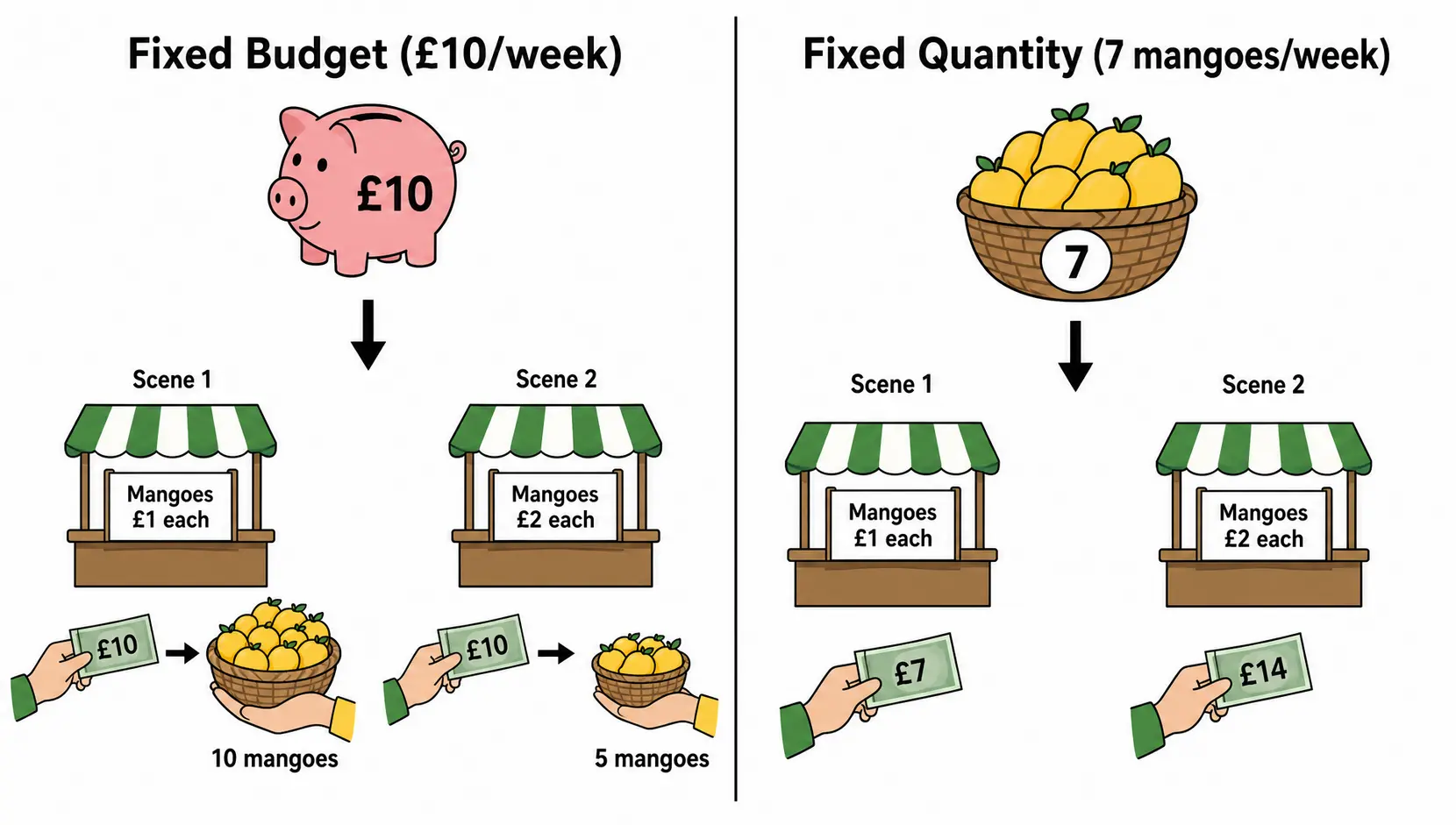
Imagine you’re at your local market buying mangoes. Some weeks they are £1 each, other weeks they are £2.
If you decide to spend exactly £10 every week on mangoes, you’d get 10 mangoes when they are cheap but only 5 when they are expensive.
Over time, your average cost per mango would be lower than if you had bought a fixed number of mangoes each week. That, in essence, is Dollar Cost Averaging.
You are committing to a fixed monetary amount, not a fixed number of shares. This disciplined approach removes emotion from the investment process.
As Investopedia clearly puts it, DCA is designed to reduce the impact of volatility on the purchase of assets. Instead of trying to find the ‘perfect’ time to invest a large sum, you break it down into manageable, regular contributions.
The Core Benefits: Mitigating Risk and Smoothing Out Volatility
The primary appeal of DCA, especially for global markets, is its ability to smooth out the inevitable bumps in the road.
Global markets are influenced by countless factors: geopolitical events in one region, economic policy changes in another, and currency fluctuations across the board. For a household investor, this can be overwhelming.
By investing systematically, you average out your purchase price. This means you avoid the risk of investing all your capital at a market peak. While you also miss out on putting all your money in at the absolute bottom, the strategy’s strength lies in risk mitigation.
For most families planning for long-term goals like retirement or children’s education, avoiding a catastrophic loss is far more important than chasing a speculative gain.
This systematic approach to global investing helps you build a position in world-class companies gradually and reduces the anxiety associated with market volatility.
How to Create a Budget for Your Dollar Cost Averaging Strategy
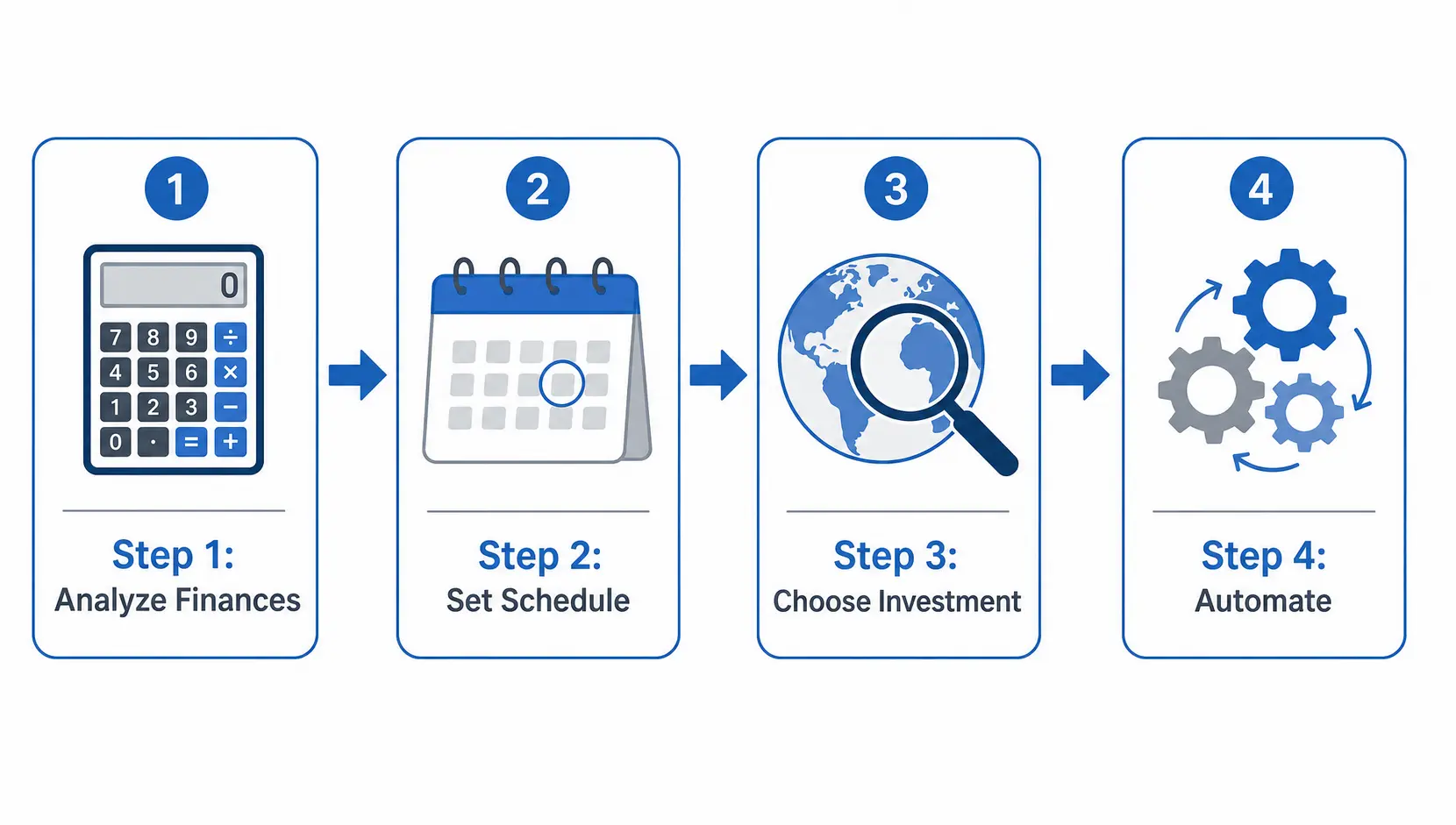
Summary Paragraph: Creating a budget for your DCA strategy is a straightforward, four-step process. First, analyse your household finances to determine your true investable capital.
Second, decide on a realistic investment frequency and amount. Third, select a suitable low-cost global Exchange-Traded Fund (ETF) or mutual fund. Finally, automate the entire process to ensure consistency and discipline.
Step 1: Determine Your Total Investment Capital
Before you invest a single pound, you must understand your household’s financial landscape. A successful investment plan starts with a solid budget.
I often advise my clients to use the 50/30/20 rule as a starting point: 50% of your after-tax income for ‘Needs’ (housing, bills, groceries), 30% for ‘Wants’ (hobbies, dining out), and 20% for ‘Savings & Debt Repayment’.
Your DCA investment amount should come from the ‘Savings’ portion. However, you must prioritise two things first: building an emergency fund (typically 3-6 months of essential living expenses) and paying off high-interest debt (like credit cards or personal loans).
What remains after these allocations is your ‘true investable capital’. Starting with a realistic, even small, amount that you can comfortably commit to is far better than overstretching your finances.
Step 2: Set Your Investment Frequency and Amount (Weekly, Monthly, Quarterly)
Once you know your monthly investable amount—let’s say it’s £200—you need to decide how often to invest it.
The most common frequency is monthly, as it aligns with most people’s salary schedules. A monthly investment of £200 is a fantastic, manageable start.
- Monthly: The most practical and popular option. It’s easy to automate from your paycheque.
- Weekly: This can smooth out your purchase price even more, but the difference over the long term is often minimal. It can also be more complex to manage and may incur more transaction fees depending on your broker.
- Quarterly: Less frequent, which means fewer transaction fees. However, it gives your money less time in the market compared to a monthly schedule.
For most families, a monthly DCA plan provides the best balance of simplicity, consistency, and cost-effectiveness. The key is to choose a schedule you can stick with for years to come.
Step 3: Choosing the Right Global ETFs or Mutual Funds
With your budget and schedule set, it’s time to choose your investment vehicle. For accessible, diversified exposure to global markets, Exchange-Traded Funds (ETFs) are an excellent choice.
An ETF is a fund that holds a collection of assets (like stocks) and trades on an exchange, just like an individual stock.
A ‘global ETF’ aims to track an index representing the entire world’s stock market, such as the FTSE All-World or MSCI World Index.
By buying just one ETF, you are instantly investing in thousands of companies across dozens of countries, including giants like Apple, Microsoft, and Samsung, as well as companies in Europe, Japan, and emerging markets.
This provides immense diversification, which is a cornerstone of sound investing.
When selecting a global ETF, pay close attention to:
- The Index Tracked: Does it cover both developed and emerging markets (like the FTSE All-World) or just developed markets (like the MSCI World)? Broader is often better for true global exposure.
- Total Expense Ratio (TER): This is the annual fee the fund manager charges. Look for low-cost options, ideally below 0.25%. High fees can significantly erode your returns over time.
- Domicile and Currency: For UK investors, it’s often simpler to choose UK-domiciled ETFs that trade in GBP to avoid currency conversion fees on your platform.
- Accumulating vs. Distributing: An ‘Accumulating’ (Acc) ETF automatically reinvests dividends back into the fund, which is ideal for long-term growth. A ‘Distributing’ (Dist) ETF pays dividends out to you as cash.
| Feature | Vanguard FTSE All-World UCITS ETF (VWRP) | iShares Core MSCI World UCITS ETF (SWDA) |
|---|---|---|
| Index | FTSE All-World Index | MSCI World Index |
| Geographic Exposure | Developed & Emerging Markets (~4,000 stocks) | Developed Markets Only (~1,500 stocks) |
| TER (Ongoing Charge) | ~0.22% | ~0.20% |
| Dividend Policy | Accumulating (Reinvests dividends) | Accumulating (Reinvests dividends) |
| Primary Audience | Investors seeking maximum global diversification in one fund. | Investors wanting to focus on developed markets, potentially adding an emerging markets ETF separately. |
Step 4: Automating Your Investments for Consistency
This is the final, crucial step. Automation is the secret sauce that makes DCA so powerful. Once you’ve chosen your platform (like Vanguard Investor, Hargreaves Lansdown, or AJ Bell in the UK) and your ETF, set up a regular investment instruction.
This is usually a standing order or direct debit from your bank account to the investment platform, which then automatically purchases your chosen ETF on a specific day each month.
By automating the process, you:
- Enforce Discipline: You are not tempted to skip an investment if the market looks scary.
- Remove Emotion: You avoid the classic behavioural finance traps of ‘panic selling’ or ‘greedy buying’.
- Pay Yourself First: The investment happens automatically, just like a bill payment, ensuring you prioritise your future self.
DCA vs. Lump Sum: Which is Right for You?
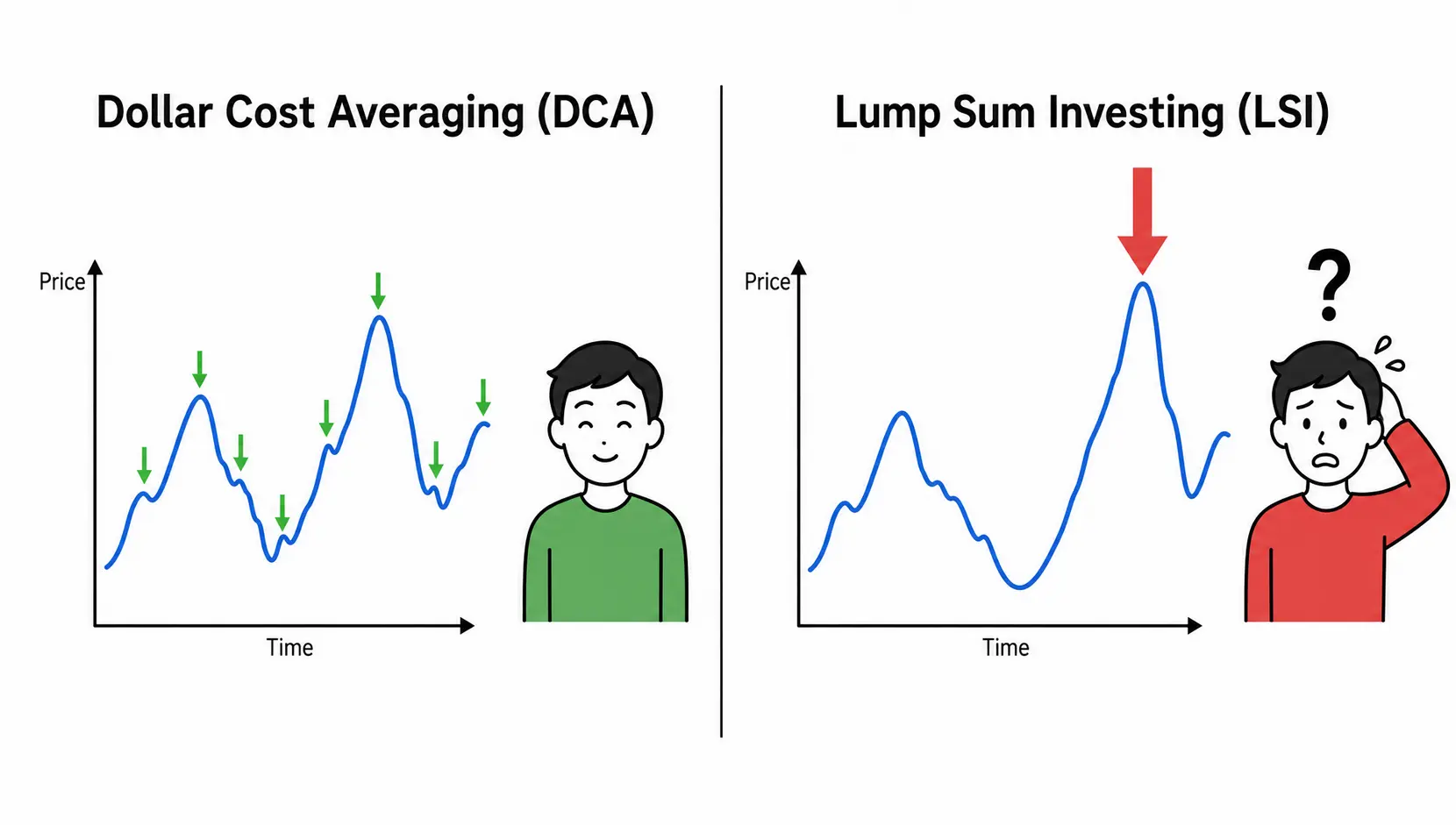
Summary Paragraph: The ‘DCA vs. Lump Sum’ debate is common. Statistically, investing a lump sum (LSI) as soon as possible has historically outperformed DCA about two-thirds of the time because markets tend to rise over the long term. However, DCA is often the superior strategy from a behavioural and practical standpoint, as it mitigates the risk of poor timing and aligns with how most people earn and save money.
Comparing the Scenarios: When Lump Sum Might Be Better
Let’s be clear: academic research often favours Lump Sum Investing (LSI). A well-known analysis from Vanguard shows that, on average, LSI has delivered higher returns than DCA across global markets.
The logic is simple: markets have a long-term upward bias. Therefore, the sooner you get your money fully invested, the more time it has to compound and grow.
LSI can be a powerful option if you receive a one-off sum (like an inheritance or bonus) and have a strong stomach for risk and a long investment horizon.
If you invest a lump sum and the market immediately enters a sustained bull run, you will be significantly better off than if you had dripped the money in via DCA.
Why DCA is Often Recommended for Long-Term Investors
Despite the statistical edge of LSI, I recommend DCA to the vast majority of my clients. Why? Because we are human, not robots.
The biggest risk in investing is often our own emotional reactions.
- Mitigation of Regret: The worst-case scenario for an LSI investor is investing their entire windfall right before a major market crash. The psychological pain of seeing a large sum of money halve in value can lead to panic selling at the worst possible time. DCA helps you sleep at night by smoothing the entry point and reducing the risk of ‘bad timing’ regret.
- Practicality: Most people don’t have a large lump sum to invest. They invest from their monthly income. DCA is the natural, practical application of this reality. Budgeting for dollar cost averaging into global markets is the default sensible strategy for the salaried professional.
- Discipline Building: The regular, automated nature of DCA builds a healthy, long-term financial habit, which is arguably more valuable than any short-term performance gain.
| Factor | Dollar Cost Averaging (DCA) | Lump Sum Investing (LSI) |
|---|---|---|
| Potential Return | May underperform LSI in consistently rising markets as less money is invested early on. | Historically higher average returns as capital is in the market for longer. |
| Risk Management | Lower short-term risk. Reduces the impact of investing at a market peak. | Higher short-term risk. Maximum exposure to a potential market downturn immediately after investing. |
| Psychological Ease | High. Reduces anxiety and the fear of ‘getting it wrong’. Promotes consistency. | Low to moderate. Can cause significant stress and regret if the market falls after investing. |
| Best Suited For | Regular savers, investors with a low-to-medium risk tolerance, and those starting out. | Investors with a large sum of capital, a long time horizon, and a high tolerance for risk. |
Frequently Asked Questions
1. What is the best frequency for dollar-cost averaging (weekly, monthly)?
For most people, investing monthly is the most practical and effective frequency. It aligns with salary payments and is easy to automate.
While weekly investing might offer slightly more ‘smoothing’, the long-term performance difference is generally negligible and it can complicate your accounting.
The key is consistency, so choose the frequency that you are most likely to maintain without fail.
2. Can dollar-cost averaging still lose money?
Yes, absolutely. DCA is a strategy for investing, not a guarantee against loss. If the market you are investing in experiences a prolonged decline, the value of your portfolio will fall.
However, the strategy ensures you are buying more units at a lower price during this decline, which can lead to a stronger recovery when the market turns positive. It mitigates risk; it does not eliminate it.
3. How much money do I need to start dollar-cost averaging in global markets?
One of the great advantages of DCA with modern investment platforms is the low barrier to entry. Many platforms in the UK allow you to start a regular investment plan with as little as £25 per month.
The most important thing is to start with an amount that is sustainable for your budget, even if it seems small. You can always increase the amount later as your income grows.
4. What are the risks of using DCA in global markets?
The primary risks include general market risk (the chance of the entire market declining) and currency risk (the chance that fluctuations in exchange rates will negatively impact the value of your overseas investments).
There is also the risk that DCA will underperform a lump sum investment, particularly in a strong bull market. Finally, it requires a long-term commitment; the benefits are eroded if you stop the strategy during a downturn.
David Lim’s Final Thoughts
Sources & Methodology
David Lim strictly relies on primary regulatory data and authoritative official information to ensure accuracy. Data cited in this guide is sourced from:
*Disclaimer: The content of this article represents the personal views of the author (David Lim) and is for educational and reference purposes only. It does not constitute professional investment or financial advice. Trading and investing involve significant risk; proceed with caution.*
