

As a trader who’s been in the game for over a decade, I’ve seen enough Friday closes turn into Monday morning disasters to know that the weekend is where unprepared accounts go to die.
Many traders fixate on finding the perfect entry, but they neglect the critical calculation of setting safe margin levels for holding US dollar trades over weekend positions.
This isn’t just about avoiding a margin call; it’s about capital preservation in the face of weekend market volatility.
This guide is built on practical experience, designed to give you a clear framework for protecting your capital when holding USD trades, ensuring you’re managing risk, not gambling on the opening price come Monday.
Understanding Margin and Weekend Risk
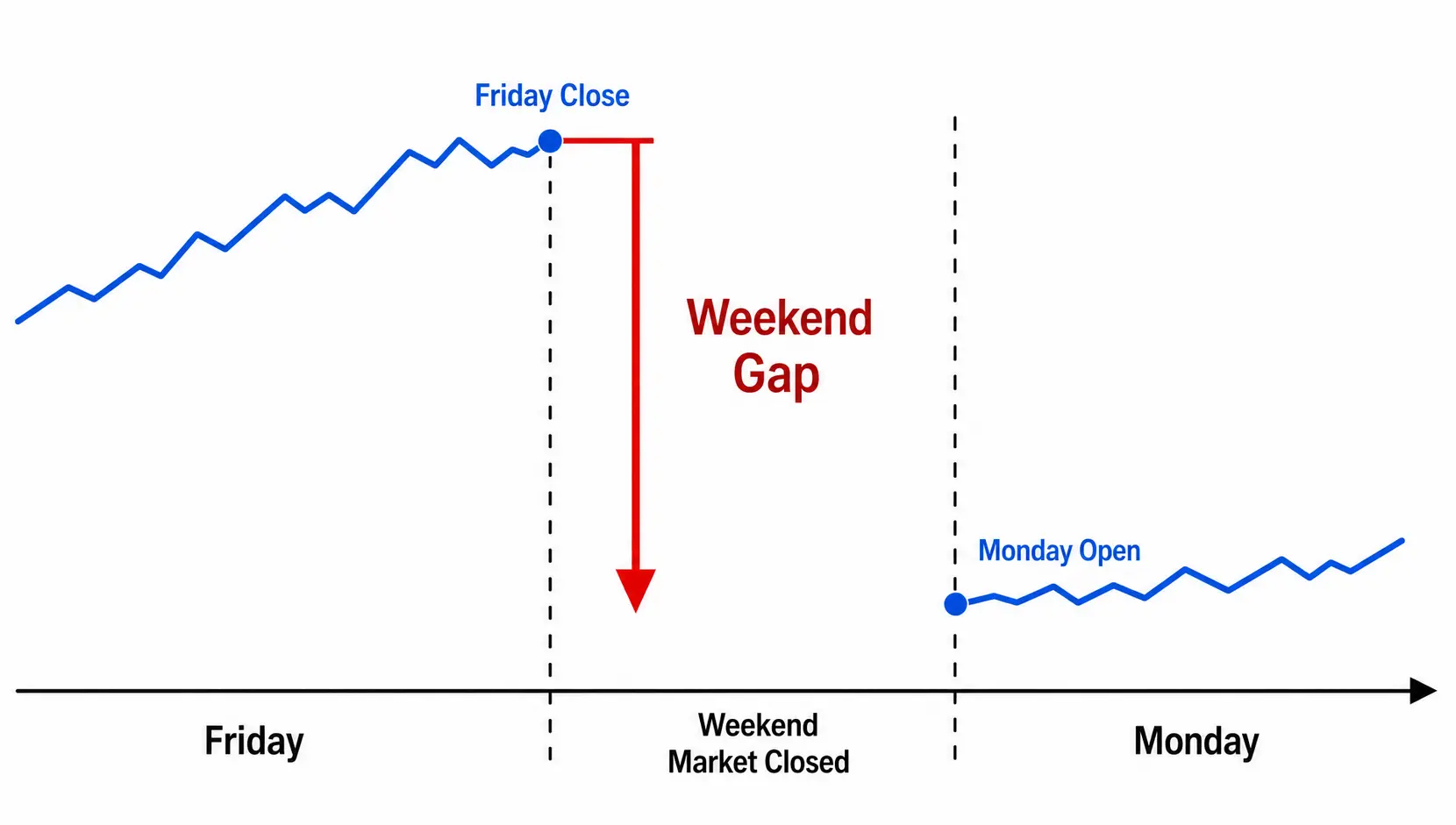
Pro Tip: Think of your margin level as the ‘health’ of your trading account. Over the weekend, when the market is closed, unforeseen geopolitical or economic news can cause the market to ‘gap’ at the Monday open, drastically changing your account’s health before you can react. A higher margin level is your buffer against this sudden shock.
Before we can talk about ‘safe’ levels, we need to be crystal clear on what margin is and why the 48-hour period when the retail market is closed represents a unique and amplified threat to your capital.
What is Margin and Why Does it Matter Over the Weekend?
In the simplest terms, margin is the portion of your account equity set aside by your broker to open and maintain a leveraged position. It’s not a fee; it’s a good-faith deposit.
Your ‘Margin Level’ is a dynamic metric, expressed as a percentage, calculated as: (Equity / Used Margin) x 100.
During the week, you can actively manage this. You see your position moving, and you can close it, reduce it, or add funds. But the weekend is different.
Your positions are locked in, but the world is not. Economic data can be released, political tensions can flare up, and central bankers can give speeches.
These events build up a pressure cooker of buying or selling interest that is all released at once when the market opens in Sydney on Monday morning (or late Sunday evening in the UK).
The Dangers of Weekend Gaps and Illiquidity in Forex Markets
A ‘weekend gap’ occurs when the opening price on Monday is significantly different from the closing price on Friday. This happens because, while the retail trading platforms are offline, the interbank market does not entirely cease to exist.
Institutional players and central banks can still react to major weekend news.
How to Determine a Safe Margin Level for USD Trades
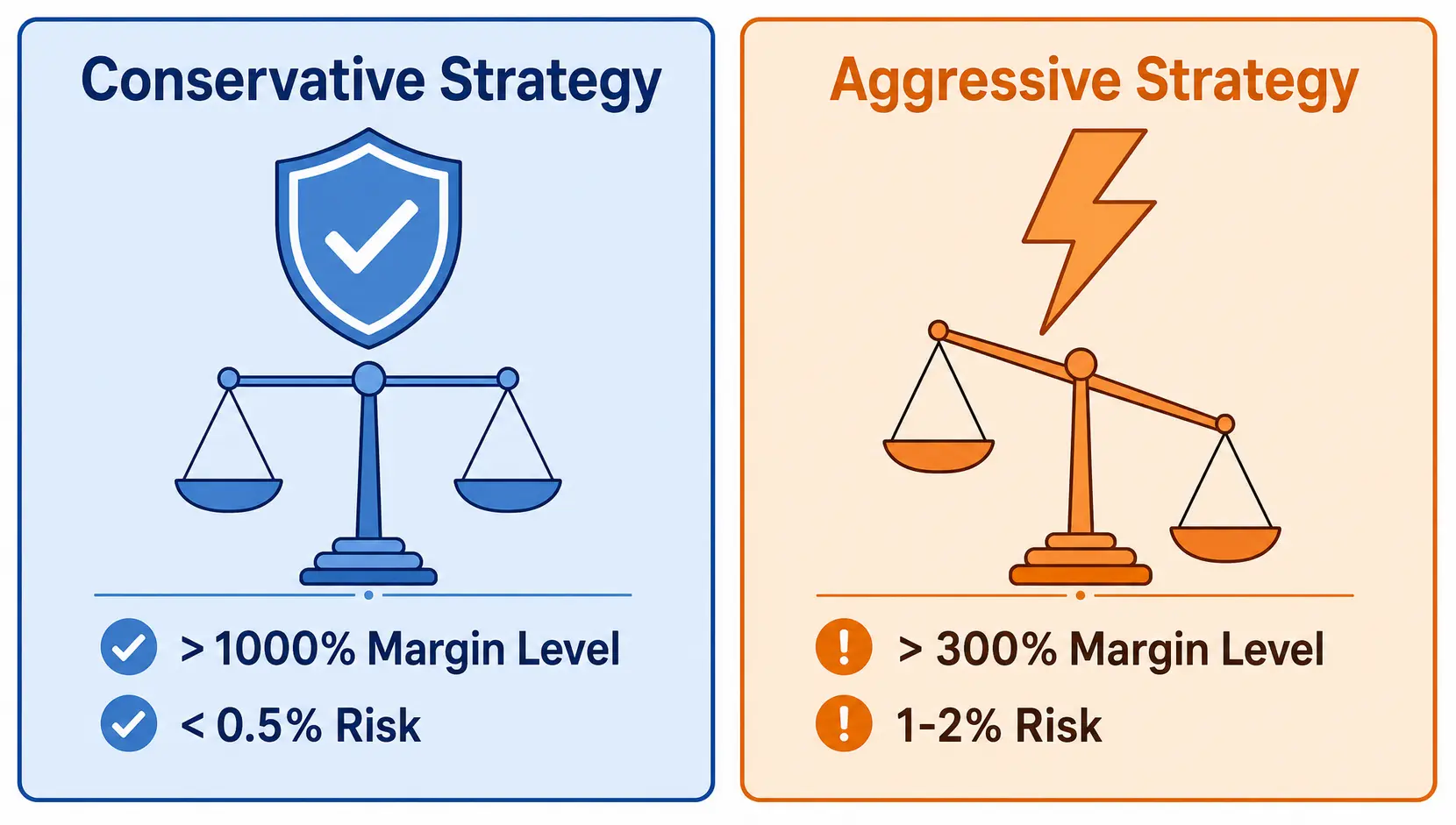
Pro Tip: There is no single ‘safe’ number. A safe level for you depends on your risk tolerance, your strategy, and the instrument’s volatility. However, a general rule of thumb for holding positions over a weekend is to ensure your margin level is comfortably above 500%, with many conservative traders aiming for 1000% or more.
Calculating this requires a more structured approach than just guessing. It’s a two-step process: calculating your baseline margin and then stress-testing it for potential volatility.
A Step-by-Step Method to Calculate Your Required Margin
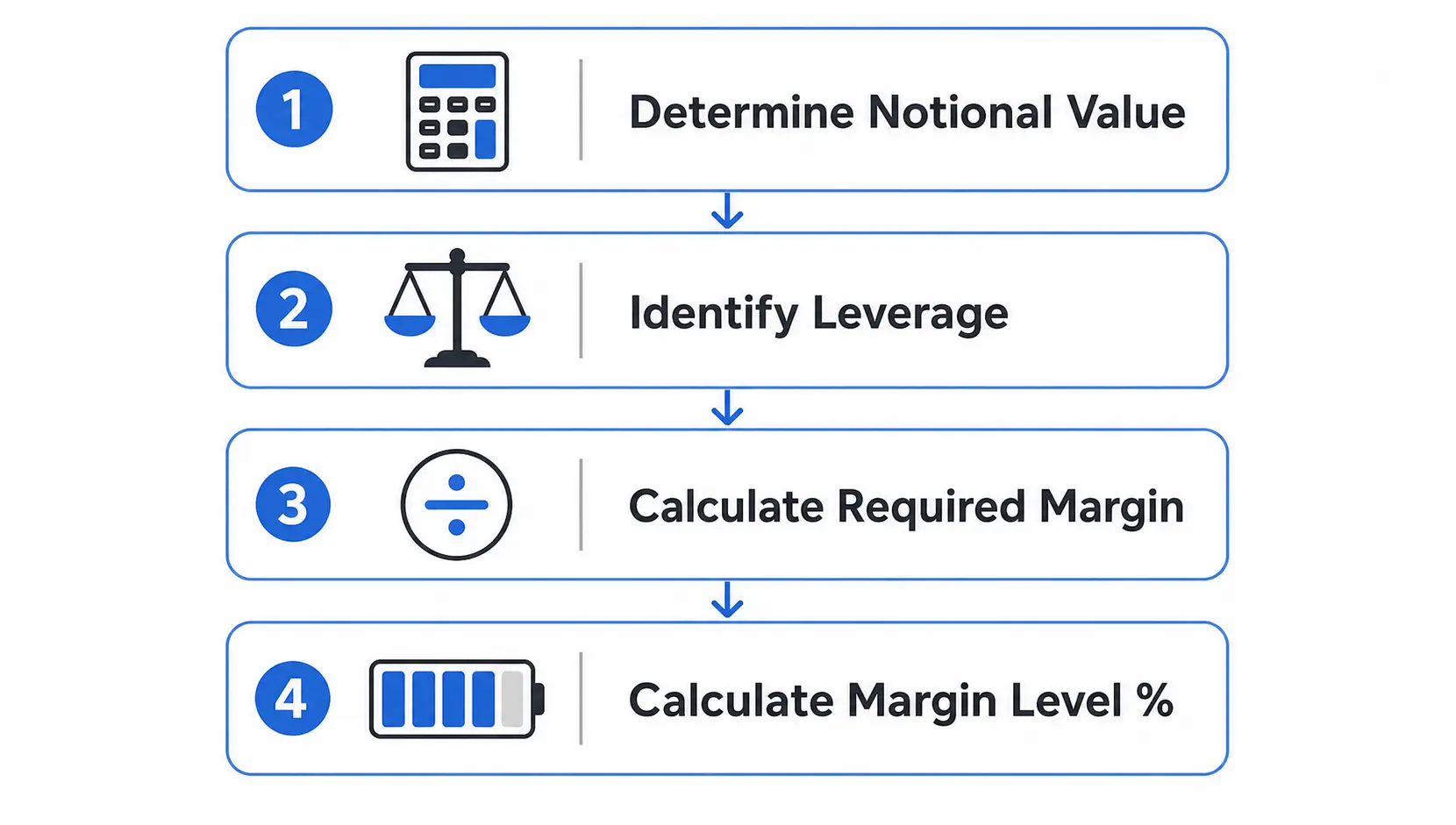
Let’s walk through a practical example. The formula for the required margin is:
Required Margin = (Notional Value of Trade) / Leverage
- Determine Notional Value: This is the total value of your position. For 1 standard lot (100,000 units) of EUR/USD at a price of 1.0800, the notional value is $108,000.
- Identify Your Leverage: This is set by your broker. Let’s assume a leverage of 1:30, which is standard for major pairs under FCA regulation.
- Calculate Required Margin: $108,000 / 30 = $3,600. This is the ‘Used Margin’ for this single position.
- Calculate Margin Level: If your account equity is $15,000, your margin level is ($15,000 / $3,600) * 100 = 416.7%.
Many broker platforms offer tools to simplify this. For example, the FOREX.com margin calculator is a useful resource for running these numbers quickly.
While 416.7% might seem high, is it ‘safe’ for a weekend hold? That’s where our next tool comes in.
Using Average True Range (ATR) to Adjust for Volatility
The Average True Range (ATR) is a technical indicator that measures market volatility. It doesn’t tell you the direction of the price, only the degree of price movement. This is exactly what we need to plan for a potential weekend shock.
| Factor | Conservative Approach | Aggressive Approach |
|---|---|---|
| Minimum Margin Level | > 1000% | > 300% |
| Position Sizing | Risking < 0.5% of equity per trade | Risking 1-2% of equity per trade |
| ATR Shock Multiplier | 3x Daily ATR | 1.5x Daily ATR |
| Action | Halve position size or close trade if margin level is below target | May hold with tighter stop-loss and accept higher risk |
Strategies for Managing Weekend Exposure to Limit Risk
Pro Tip: The best strategy is often the simplest: if in doubt, get out. No trade is worth blowing up your account. If a high-impact event like a major election or central bank meeting is scheduled for the weekend, the prudent move is almost always to flatten your book.
Position Sizing Rules for Weekend Holds
Your number one tool for risk management is position size. Holding a trade over the weekend is an explicit acceptance of higher risk, and your position size should reflect that.
A common rule is to reduce your standard trade size by at least 50% if you intend to hold it over the weekend.
For example, if you normally trade 1.0 standard lots, you should not hold more than 0.5 lots over the weekend. This single action drastically increases your margin level and your ability to withstand a gap.
The Role of the US Dollar as a ‘Safe Haven’ and Its Impact on Your Strategy
The US Dollar is traditionally considered a ‘safe-haven’ currency. In times of global uncertainty, investors often flee to the perceived safety of the USD.
This can work in your favour if you are holding a long USD position (e.g., short EUR/USD, long USD/JPY) when negative global news breaks over the weekend.
When to Hold vs. When to Close Before the Market Closes
The decision to hold or close is a trade-off between potential profit and undeniable risk. Here’s a simple decision-making framework I use.
| Scenario | Danny’s Recommended Action | Rationale |
|---|---|---|
| Hold: You are in a long-term trend trade with a significant profit buffer. | Consider holding, but reduce position size to lock in some profit and lower risk. | The profit buffer can absorb a potential gap. Reducing size is prudent risk management. |
| Close: You are in a short-term trade with a small profit or a loss. | Close the position before the market shuts. | The risk of a weekend gap wiping out your small profit (or massively increasing your loss) is not worth the potential reward. |
| Close: A major, scheduled risk event is happening over the weekend (e.g., G7 meeting, national election). | Close all relevant positions, regardless of profit/loss. | This is not trading; it’s gambling on a binary event. The outcome is unpredictable and the potential for extreme gapping is high. |
| Hold: You have a hedge position in place (e.g., long USD/CHF and long XAU/USD). | Can consider holding, but ensure you understand the correlation risks between the assets. | A hedge can mitigate some risk, but correlations can break down during crisis events. It’s an advanced strategy that requires careful management. |
Frequently Asked Questions
1. What is a typical margin requirement for major currency pairs like the USD?
For retail traders under FCA (UK) or similar European regulations, the margin requirement for major forex pairs is typically 3.33%, which corresponds to a maximum leverage of 1:30.
This means for every $30 of exposure, you need $1 of margin. However, professional clients or traders in other jurisdictions might have access to higher leverage, which means lower margin requirements but significantly higher risk.
2. Can I lose more than my account balance holding a trade over the weekend?
Yes, it is possible, though regulated brokers in regions like the UK and EU are required to provide negative balance protection, which prevents this.
An extreme weekend gap can cause such significant slippage that your losses exceed your account equity. If your broker does not offer this protection, you could theoretically end up owing them money.
This is why understanding your broker’s terms and conditions is not just paperwork – it’s a critical part of your risk management.
3. How does high-impact news on Saturday or Sunday affect my open positions?
This is the direct cause of weekend gaps. Imagine a G20 meeting concludes on a Sunday with a surprise policy announcement. While you can’t trade, institutional and bank traders are adjusting their pricing.
When the market opens for retail traders in Sydney, the price will open at a new level that reflects this news, gapping up or down.
Your position will immediately reflect this new price, and if the gap was against you, your margin level will have dropped significantly before you had any chance to react.
4. Should I avoid trading on Fridays altogether to avoid weekend risk?
Not necessarily. Many opportunities can arise on a Friday. The key is to have a clear plan.
My rule is simple: I do not enter new trades in the last few hours of the Friday session unless they are part of a long-term strategy and I have already accounted for the weekend hold.
For day trades, I ensure everything is closed at least an hour before the market close to avoid being caught by last-minute volatility and spreads widening.
Danny’s Final Thoughts
Holding a position over the weekend is an advanced move that requires a shift in mindset from hunting for profit to actively managing catastrophic risk. It’s not about being right about the direction; it’s about having enough capital and a low enough leverage to survive being wrong. New traders are often seduced by the idea of a ‘set and forget’ trade. The reality of weekend holds is ‘set and stress-test’. Analyse the volatility, calculate your buffer, slash your position size, and always, always know when to fold. The market will be there on Monday. The most important thing is to make sure your account is too.
Sources & Methodology
Danny strictly relies on primary regulatory data and authoritative official information to ensure accuracy. Data cited in this guide is sourced from:
*Disclaimer: The content of this article represents the personal views of the author (Danny) and is for educational and reference purposes only. It does not constitute professional investment or financial advice. Trading and investing involve significant risk; proceed with caution.*
