

As a financial planner, one of the most common anxieties I see from parents is the escalating cost of higher education. It feels like a mountain, doesn’t it?
You want to give your child the best start in life, but the figures you see in the news can be truly daunting. This is why having a clear strategy is not just helpful, it’s essential.
This guide is designed to give you that clarity, focusing on a powerful and practical method: planning a child’s education fund with US Index Funds.
We will explore not just the investment itself, but also how to use index funds within a college savings plan to maximise your efforts.
By the end of this, you will have a solid understanding, based on actionable steps and a grasp of the comparisons of different education savings accounts, empowering you to build a secure future for your child without the sleepless nights.
Why US Index Funds are a Smart Choice for Education Savings
When you’re saving for something as important as your child’s future, the choice of investment vehicle is critical. It needs to be robust, reliable, and aligned with your long-term horizon.
US index funds tick all of these boxes, and as a planner, I frequently recommend them to families for this very purpose. Let’s break down exactly why they are such a compelling choice.
The Power of Long-Term Growth and Diversification
The single greatest advantage you have when saving for a young child is time. Time allows the magic of compound growth to work. Think of it like a snowball rolling down a hill; it starts small but gathers more snow as it goes, growing larger at an accelerating rate.
Investing in US index funds allows your money to do the same. By investing in a fund that tracks a major US index like the S&P 500, you are not just buying one stock; you are buying a small slice of 500 of the largest and most influential companies in the United States.
This is instant diversification.
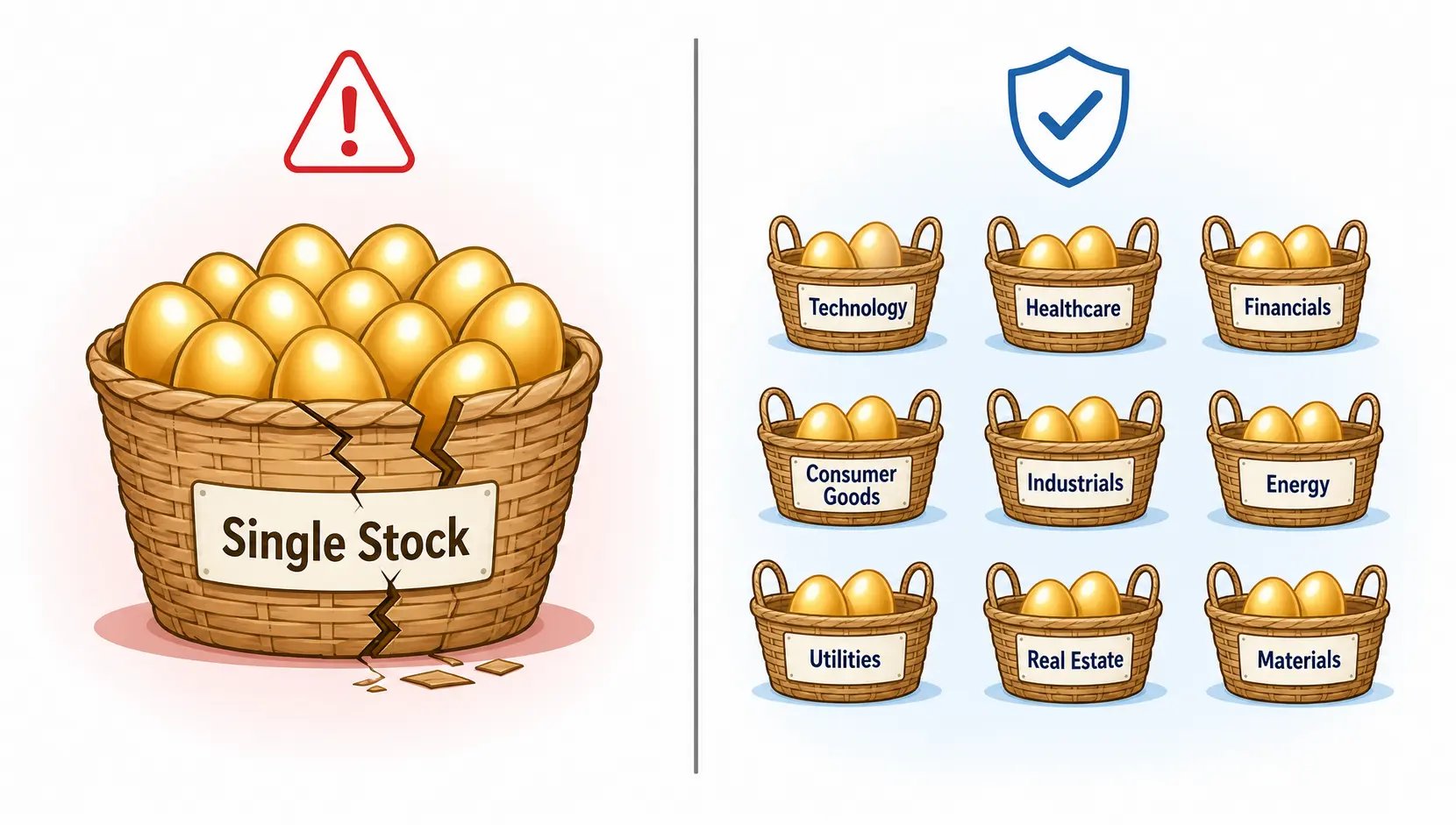
Why is diversification so important? Imagine if you put all your savings into a single company’s stock. If that company performs poorly, your entire education fund is at risk.
By spreading your investment across hundreds of companies in various sectors—technology, healthcare, finance, consumer goods—you significantly reduce the impact of any single company’s poor performance.
An index fund does this for you automatically. This diversification provides a buffer against volatility and is a cornerstone of prudent long-term investing for a goal like your child’s university tuition.
Low Costs and Passive Management Benefits
Every percentage point of fees you pay on an investment is a percentage point that isn’t compounding for your child’s future. This is where index funds truly shine.
Because they are ‘passively’ managed—meaning they simply aim to replicate a market index rather than trying to beat it—their operating costs are exceptionally low. These costs are expressed as an ‘expense ratio’.
Furthermore, the ‘passive’ nature is a huge benefit for busy parents. You don’t need to spend hours researching individual stocks or worrying about a fund manager’s performance.
The strategy is simple: own the market, keep costs low, and let time and the broader economy do the heavy lifting. This simplicity makes it a sustainable plan you can stick with for decades.
Choosing the Right Account: A Comparison of 529 Plans and Other Options
Once you’ve decided that US index funds are the right engine for your savings plan, the next question is which ‘garage’ to park them in. The type of account you use can have significant implications for tax and control. While options exist, the 529 plan is purpose-built for this goal.
The Unmatched Tax Advantages of a 529 Plan
A 529 plan is an investment account specifically designed to encourage saving for future education costs. It’s named after Section 529 of the US Internal Revenue Code. Its primary power lies in its tax treatment.
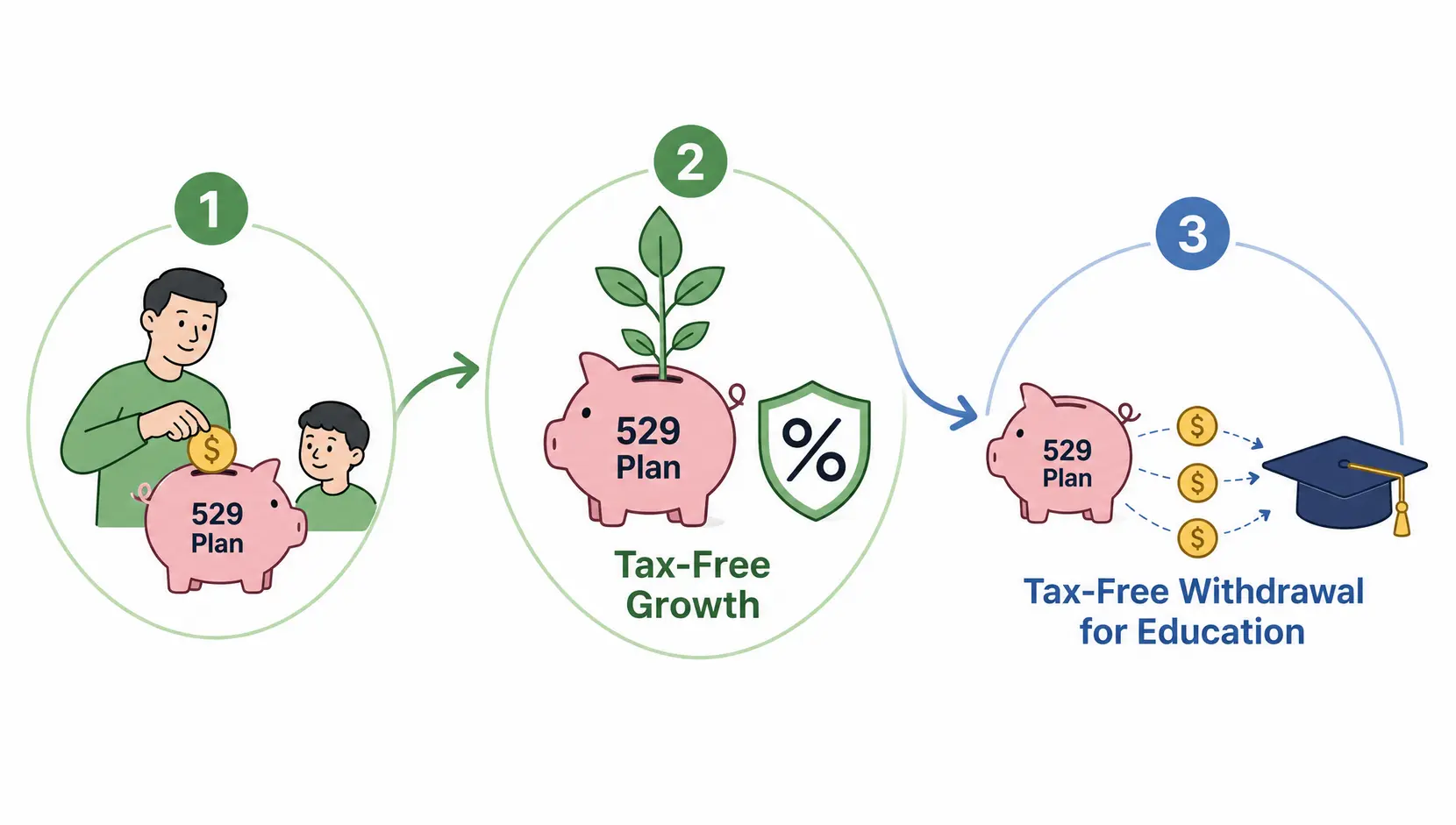
Here’s how it works: while your contributions are generally made with after-tax money, the investments within the plan grow completely free from federal income tax.
Then, when you withdraw the money to pay for qualified education expenses—such as university tuition, fees, books, and even accommodation—those withdrawals are also free from federal income tax.
This ‘tax-free in, tax-free out’ structure is a tremendous accelerator for your savings. All the growth your US index funds generate over the years is shielded from taxes, allowing the full power of compounding to work for you.
Many US states also offer a state tax deduction or credit for contributions, adding another layer of benefit. For international investors, while state deductions may not apply, the federal tax-free growth remains a powerful incentive.
It is crucial to use an account that is structured to minimise tax drag on your returns. As confirmed by the US Internal Revenue Service (IRS), these plans are a congressionally authorized tool for this very purpose.
For official details, you can always refer to guidance from authoritative sources. The IRS provides a detailed Q&A on 529 Plans that outlines these rules.
Alternatives: Custodial Accounts (UTMA/UGMA) and Roth IRAs
While the 529 plan is often the star player, it’s worth understanding the alternatives. Custodial accounts, known as UTMAs (Uniform Transfers to Minors Act) or UGMAs (Uniform Gifts to Minors Act), are another way to save for a child.
When you contribute to a UTMA/UGMA, you are making an irrevocable gift to the minor. The assets are legally the child’s property, managed by you as the custodian until they reach the age of majority (typically 18 or 21).
The main drawback is the loss of control; once the child comes of age, they can use the money for anything they wish, not just education. Furthermore, the tax treatment is less favourable than a 529 plan.
A Roth IRA is a retirement account, but its flexibility allows contributions (not earnings) to be withdrawn tax-free and penalty-free at any time, for any reason. Some parents consider using it as a backup education fund.
However, this should be approached with extreme caution. Using retirement funds for education can jeopardise your own financial security. Your child can get loans for university, but you cannot get a loan for retirement.
| Feature | 529 Plan | Custodial Account (UTMA/UGMA) | Roth IRA |
|---|---|---|---|
| Primary Purpose | Education Savings | Gift to a Minor | Retirement Savings |
| Tax on Growth | Tax-deferred | Taxable at the child’s rate (‘kiddie tax’) | Tax-deferred |
| Tax on Withdrawals | Tax-free for qualified education expenses | Taxable (capital gains) | Contributions are tax-free; earnings may be taxed/penalised if for education |
| Account Control | Owner (parent) retains control | Assets transfer to child at age of majority | Owner (parent) retains control |
| Use of Funds | Must be used for education to get tax benefits | Unrestricted use by the child after transfer | Best used for retirement; depleting for education is risky |
How to Build Your US Index Fund Portfolio in a 529 Plan
Opening the account is the first step, but what do you actually invest in? Most 529 plans offer a menu of investment options, which almost always includes index funds. Here’s a simple, practical approach to building your portfolio.
Selecting the Right Index Funds (e.g., S&P 500, Total Stock Market)
For a long-term goal, simplicity is your friend. You do not need a complicated mix of exotic funds. The core of your education fund can be built on one or two excellent US index funds:
- S&P 500 Index Fund: This fund tracks the 500 largest publicly traded companies in the US. It is a benchmark for the health of the US stock market and provides excellent diversification across major industries. It is a fantastic ‘set it and forget it’ option for the growth-focused years of your plan.
- Total Stock Market Index Fund: This is even broader. It includes not just the large-cap companies of the S&P 500 but also thousands of mid-cap and small-cap companies. It offers maximum diversification across the entire US equity market.
When your child is young (0-10 years), having 100% of your contributions go into a US Total Stock Market or S&P 500 index fund is a common and aggressive growth strategy. The long time horizon allows you to ride out any market downturns.
Age-Based vs. Static Portfolios: Which is Right for You?
Within your 529 plan, you will typically be presented with two main portfolio management choices: Age-Based or Static.
An Age-Based Portfolio (also known as a Target-Date Portfolio) is a fully automated option.
You select the portfolio that corresponds to the year your child is expected to start university. When your child is young, the portfolio is heavily invested in equities (like US index funds) for maximum growth.
As your child gets closer to university age, the portfolio automatically and gradually shifts its allocation away from equities and towards more conservative investments like bonds and cash.
This ‘de-risking’ is designed to protect the capital you’ve accumulated from a sudden market drop right before you need it for tuition fees.
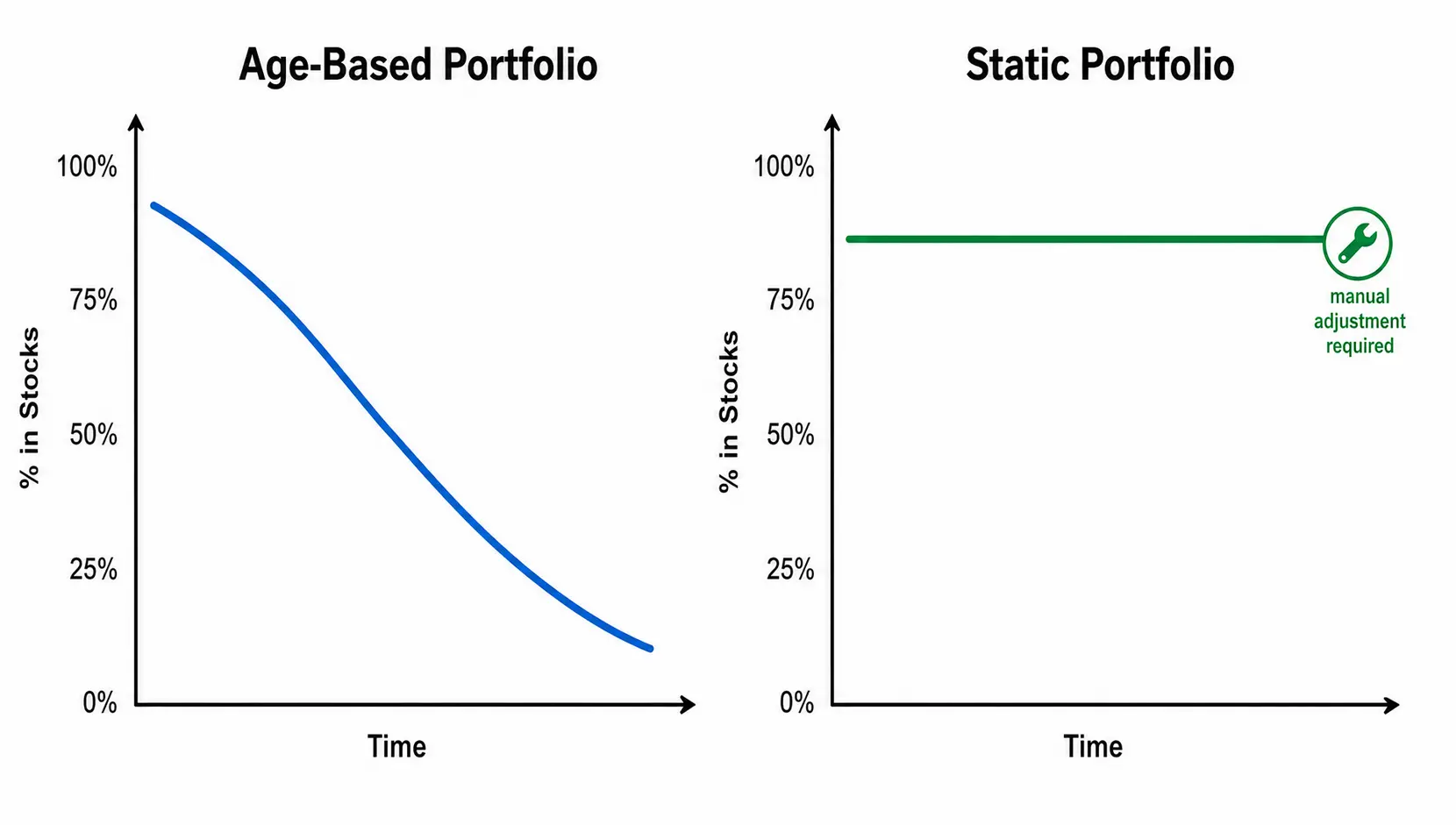
A Static Portfolio is a ‘do-it-yourself’ approach. You choose a specific mix of funds (e.g., 100% S&P 500 Index Fund, or perhaps 80% US Index Fund and 20% International Index Fund) and that allocation remains fixed until you manually change it.
This approach offers more control but requires more hands-on management, as you will be responsible for de-risking the portfolio yourself as the years go by.
| Portfolio Type | Pros | Cons | Best For |
|---|---|---|---|
| Age-Based (Target-Date) | – Automatic rebalancing and de-risking – ‘Set it and forget it’ simplicity – Aligned with education timeline |
– Can be less aggressive than some prefer – Less control over specific fund choices – May have slightly higher fees than pure index funds |
Parents who want a simple, hands-off approach that manages risk automatically. |
| Static (DIY) | – Full control over fund selection and allocation – Can maintain an aggressive allocation longer – Potentially the lowest cost option |
– Requires manual rebalancing and de-risking – Can lead to emotional decision-making – Forgetting to de-risk can be catastrophic |
Parents who are comfortable with investing, understand risk management, and want to actively manage their portfolio. |
Frequently Asked Questions
1. Can I set up an index fund for my child?
Absolutely. You can’t open an investment account directly in a minor’s name, but you can do so on their behalf. The most effective way is to open a dedicated savings account like a 529 plan or a Custodial Account (UTMA/UGMA) and then select index funds as the underlying investment.
From a planning perspective, the 529 plan is superior for education goals because of its significant tax advantages.
2. What is the best way to invest money for my child’s college education?
While ‘best’ is personal, a highly effective and proven strategy is to consistently invest in low-cost, diversified index funds within a tax-advantaged account like a 529 plan.
The combination of market growth potential from index funds and the tax-free growth and withdrawals from the 529 plan creates a powerful engine for building an education fund over the long term.
The key is to start early, be consistent with your contributions (automating them is a great idea), and choose an appropriate risk level for your timeline.
3. What are the main differences between a 529 plan and a regular brokerage account for college savings?
There are two critical differences. First, a 529 plan offers immense tax benefits: your investments grow tax-free, and withdrawals for qualified education expenses are also tax-free. A regular brokerage account has no such tax shield; you will pay capital gains tax on your investment growth when you sell.
Second, assets in a parent-owned 529 plan have a much smaller impact on US federal financial aid eligibility compared to assets in a regular brokerage account, which can be a significant factor for many families.
David Lim’s Final Thoughts
Sources & Methodology
David Lim strictly relies on primary regulatory data and authoritative official information to ensure accuracy. Data cited in this guide is sourced from:
*Disclaimer: The content of this article represents the personal views of the author (David Lim) and is for educational and reference purposes only. It does not constitute professional investment or financial advice. Trading and investing involve significant risk; proceed with caution.*
