

The narrative surrounding Environmental, Social, and Governance (ESG) funds in European markets is at a critical juncture.
After years of relentless growth, 2025 was marked by investor anxiety, fuelled by persistent questions over performance and significant, albeit moderating, fund outflows.
As a market analyst, I’ve observed the cyclical nature of investment trends, but the current headwinds for ESG demand a deeper, more nuanced examination.
This analysis will dissect the crucial factors influencing the performance of European ESG funds, evaluate the recent trends of outflows and headwinds for ESG, and provide a strategic outlook for investors navigating this complex landscape in 2026.
Understanding the Current State of European ESG Funds
Pro Tip: The European ESG market is the most regulated and mature globally. However, this complexity is a double-edged sword, creating both opportunities for genuine impact and pitfalls from regulatory flux. Understanding the nuances of regulations like SFDR is no longer optional for serious investors; it is a prerequisite for effective capital allocation.
What Defines an ESG Fund in the European Context?
Unlike other markets where ‘ESG’ can be a loosely applied marketing term, the European Union has implemented a stringent regulatory framework to bring clarity and combat ‘greenwashing’.
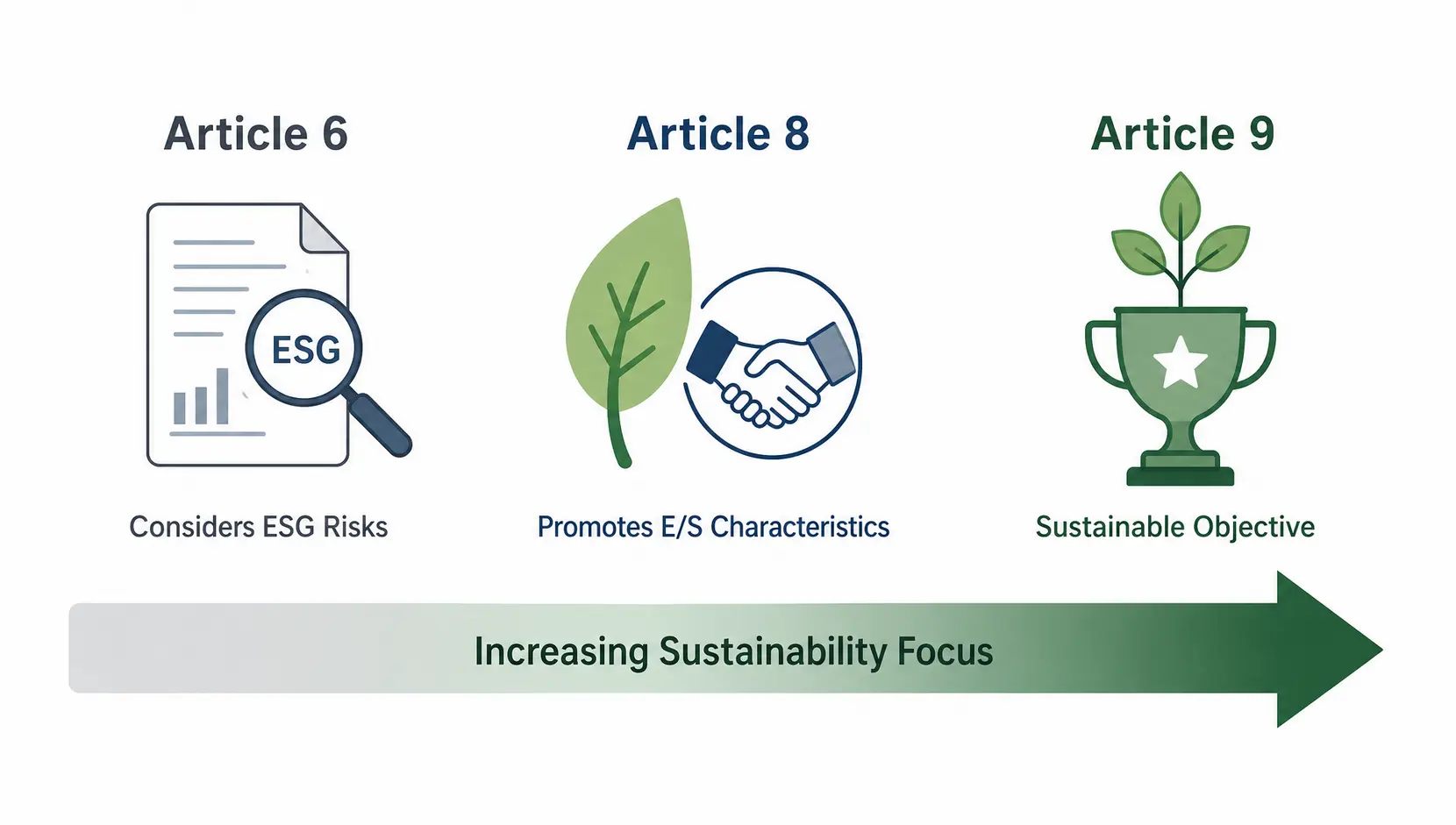
An ESG fund in Europe is increasingly defined not by its own marketing claims, but by its classification under the Sustainable Finance Disclosure Regulation (SFDR).
This regulation creates a spectrum of sustainability, from funds that simply consider ESG risks (‘Article 6’) to those that promote environmental or social characteristics (‘Article 8’) and those with a specific sustainable investment objective (‘Article 9’).
This classification system provides a level of transparency that is still nascent in markets like the United States, forcing asset managers to substantiate their sustainability claims.
Key Regulations Shaping the Market (SFDR and UK SDR)
The Sustainable Finance Disclosure Regulation (SFDR) is the cornerstone of the EU’s sustainable finance agenda.
As of 2026, the market is anticipating the next phase of this regulation, often dubbed SFDR 2.0. A comprehensive review is underway, with final texts expected in late 2026 or early 2027.
The key debate centres on creating clearer categories for ESG products and refining the criteria for Article 8 and 9 funds to ensure they deliver on their promises.
From my perspective, this regulatory tightening, while causing short-term uncertainty, will ultimately bolster the credibility of the European ESG market. Concurrently, the United Kingdom, post-Brexit, has developed its own framework, the Sustainable Disclosure Requirements (SDR).
While sharing the same goal as SFDR—to increase transparency and fight greenwashing—the SDR introduces its own set of labels (‘Sustainability Impact’, ‘Sustainability Focus’, etc.).
For global investors, understanding the subtle but important differences between these two regulatory regimes is now a core task of due diligence.
| Feature | EU Sustainable Finance Disclosure Regulation (SFDR) | UK Sustainable Disclosure Requirements (SDR) |
|---|---|---|
| Core Concept | A disclosure-based framework classifying funds based on their level of sustainability integration (Articles 6, 8, 9). | A labelling regime designed to help consumers navigate the investment product landscape. |
| Key Categories | Article 6 (Integrating risks), Article 8 (Promoting E/S characteristics), Article 9 (Sustainable objective). | ‘Sustainability Focus’, ‘Sustainability Improvers’, ‘Sustainability Impact’, and ‘Sustainability Mixed Goals’ labels. |
| Geographic Scope | Applies to firms operating within the European Union. | Applies to UK-domiciled firms and products. |
| Current Status (as of Sept 2026) | Undergoing a major review (SFDR 2.0) to refine categories and criteria. Final text expected Q4 2026/Q1 2027. | Implementation ongoing, with the anti-greenwashing rule in effect and labelling regime being phased in. |
Analyzing Performance and Key Market Trends
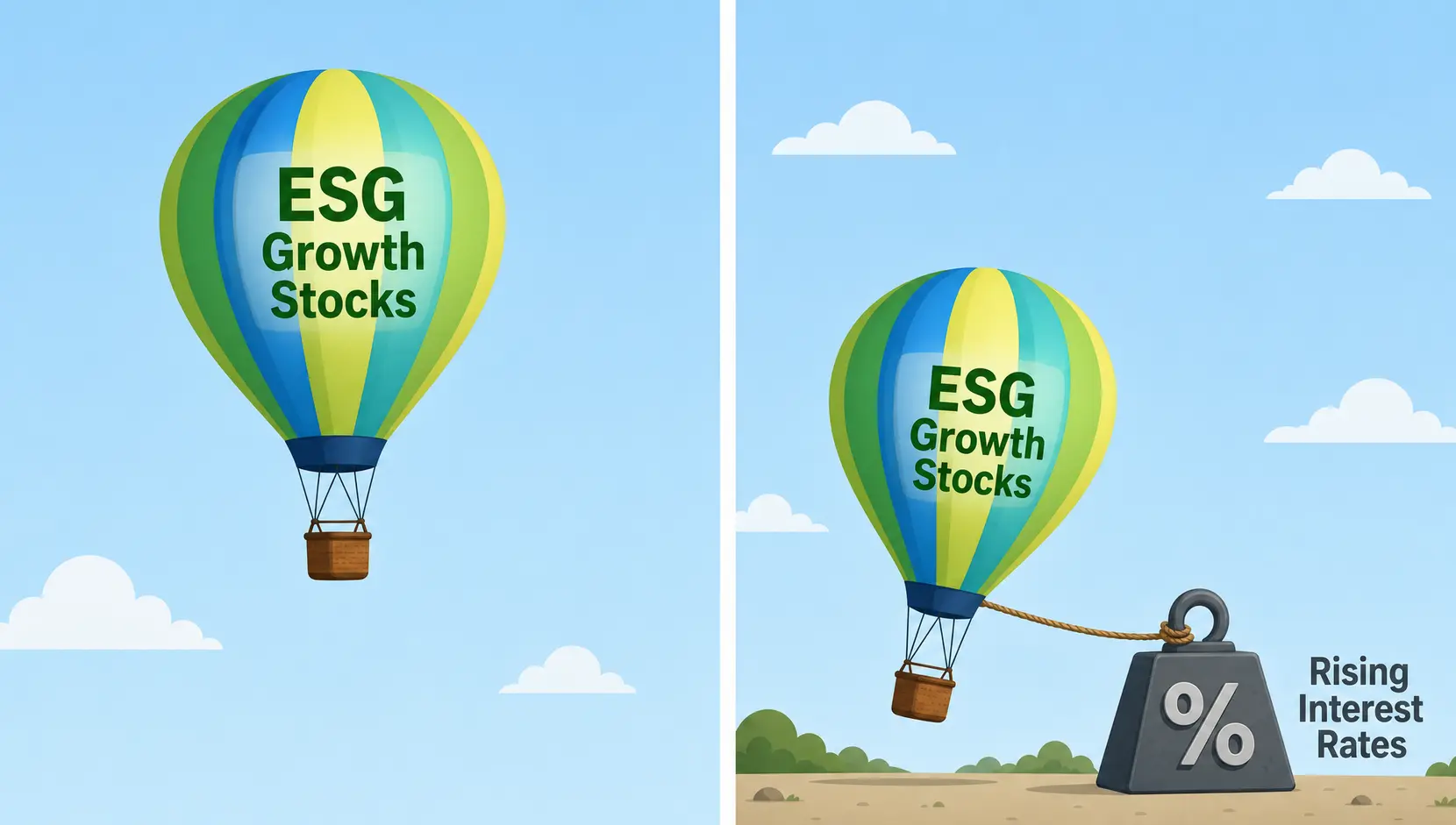
“Market movements are a combination of macroeconomic gravity and technical psychology. The recent ESG outflows are not just about sustainability; they are about a broader market rotation away from the long-duration growth assets that dominated many ESG portfolios. The gravity of higher interest rates has pulled valuations back to earth.” – Andrew Wong
The Truth About Recent Fund Outflows and Headwinds
The narrative of ‘ESG underperformance’ that dominated headlines in 2024 and 2025 requires careful deconstruction.
While it is true that many ESG funds, particularly those with a heavy weighting towards technology and growth stocks, lagged as interest rates rose, the picture is not uniform.
Data from mid-2024 already showed a turning point, with European ESG fund flows turning positive as US redemptions slowed. As of 2026, the trend indicates a more discerning investor base.
The indiscriminate buying of anything labelled ‘ESG’ has ceased, replaced by a focus on genuine alpha and demonstrable impact. The outflows were a necessary market correction, flushing out weak products and forcing managers to prove their value beyond a simple ESG screen.
Risk Warning: Past performance is not indicative of future results. The macroeconomic environment of high inflation and normalised interest rates is fundamentally different from the decade that preceded it. Strategies that worked in a zero-rate world may not be resilient moving forward. Investors must scrutinise the sector and factor exposures of their ESG funds.
Performance Deep Dive: European ESG Funds vs. Non-ESG Benchmarks
A granular look at performance reveals a complex picture. Comparing broad indices like the MSCI Europe ESG Leaders with the standard MSCI Europe Index shows periods of both outperformance and underperformance.
During the post-COVID recovery, the ESG index often led, buoyed by its tech and healthcare exposure. However, during the energy price shocks of recent years, its underweighting of traditional energy companies acted as a drag.
The key takeaway for investors is that ESG is a ‘factor’ like any other (e.g., value, growth, momentum). Its performance is cyclical and dependent on the prevailing economic regime.
A truly robust portfolio construction should not rely on ESG as its sole driver of returns but should integrate it as a critical risk management and opportunity-seeking tool.
Strategic Outlook and Future Opportunities
How Did ESG Funds Fare During Market Turmoil (e.g., COVID-19)?
The COVID-19 crisis was widely seen as a validation of ESG principles. Companies with strong employee relations, robust supply chains, and good governance were, on average, more resilient.
ESG funds demonstrated shallower drawdowns and quicker recoveries compared to their conventional counterparts during the initial market crash. This resilience highlights the risk-mitigation benefits of ESG analysis.
By identifying non-financial risks, ESG frameworks can provide a more holistic view of a company’s long-term viability.
The question for 2026 and beyond is whether this resilience holds in an environment defined by persistent inflation and geopolitical friction rather than a public health crisis.
Identifying Resilient Sectors and Strategies for 2026
The future of ESG investing in Europe lies in moving beyond simple exclusionary screening towards more sophisticated approaches.
Two key strategies are gaining prominence:
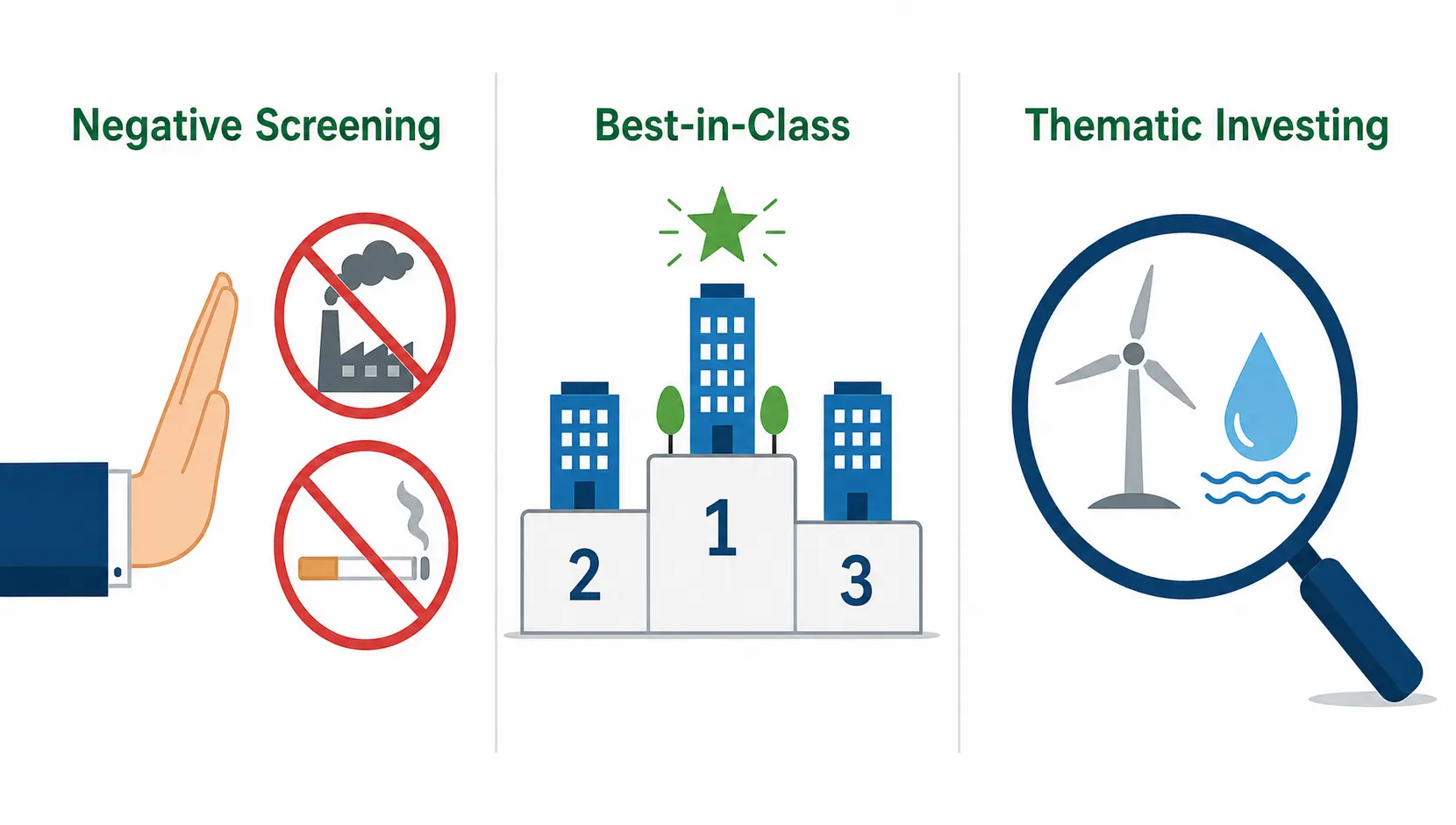
- Thematic Investing: This involves investing in funds that target specific sustainable themes, such as renewable energy infrastructure, water security, circular economy solutions, or healthcare innovation. This approach offers a more direct and measurable impact but requires specialised knowledge and carries concentration risk.
- Best-in-Class & Improvers: This strategy involves selecting companies that are ESG leaders within their respective sectors, even in ‘hard-to-abate’ industries like materials or industrials. It also focuses on ‘improvers’ – companies on a clear and credible path to improving their ESG profile. This pragmatic approach acknowledges that a sustainable transition requires the decarbonisation of the entire economy, not just investment in already-green sectors.
| Strategy | Description | Pros | Cons |
|---|---|---|---|
| Negative Screening | Excluding specific sectors or companies (e.g., tobacco, controversial weapons). The oldest form of ethical investing. | Simple to implement, aligns with strong values. | Can lead to unintended portfolio biases, misses opportunities to engage and improve companies. |
| Best-in-Class | Selecting companies with the strongest ESG performance relative to their industry peers. | Rewards leaders, maintains sector diversification, encourages competition on ESG metrics. | May still include companies in controversial sectors; definition of ‘best’ can be subjective. |
| Thematic Investing | Focusing on specific themes like clean energy, sustainable agriculture, or gender equality. | High potential for direct impact, captures long-term structural growth trends. | Higher concentration risk, can be more volatile, requires deep domain expertise. |
Frequently Asked Questions
1. Why are European ESG funds experiencing significant outflows?
The outflows observed over the past 18-24 months were driven by a confluence of factors. Macroeconomically, rising interest rates made the long-duration growth stocks that feature heavily in many ESG funds less attractive.
Performance-wise, the energy crisis benefited traditional energy stocks, which are often underweighted in ESG portfolios, causing a relative performance drag.
Finally, regulatory uncertainty around SFDR led some asset managers to downgrade their funds from Article 9 to Article 8, causing a technical outflow as investors re-evaluated.
However, this trend has been moderating in 2026, suggesting a market that is maturing rather than contracting.
2. How does the performance of ESG funds in Europe compare to the US?
Historically, European ESG funds have performed differently from their US counterparts due to different market structures and regulatory environments. Europe’s proactive regulatory stance (SFDR) has forced a higher degree of transparency.
Performance comparisons often show European ESG funds exhibiting more resilience in downturns, potentially due to a greater focus on risk management.
In contrast, US ESG funds can be more growth-oriented. Recent data suggests that fund flows in Europe have been more stable, whereas the US market has seen more volatility, partly due to political polarisation around the term ‘ESG’.
3. What are the main risks associated with investing in European ESG funds right now?
The primary risks for 2026 are:
1) Regulatory Ambiguity: While the SFDR review aims for clarity, the transition period can create uncertainty and compliance burdens for fund managers.
2) Greenwashing Evolution: As regulations tighten, ‘greenwashing’ is becoming more sophisticated, requiring investors to look deeper than a fund’s label.
3) Performance Mismatch: Investors must understand that an ESG fund’s primary objective is not always to outperform a benchmark in all market conditions.
There can be periods of underperformance, especially if a fund’s ESG convictions lead it to avoid sectors that are rallying.
Andrew Wong’s Final Thoughts
The European ESG landscape is in a phase of maturation, moving from a period of hype to one of accountability. The macroeconomic tide has turned, and the easy gains of the last decade are behind us. This is not the end of ESG; it is the end of the beginning.
For investors, this new era demands a more rigorous, analytical approach. Success will not come from simply buying a green-labelled fund but from understanding the interplay of regulation, macroeconomic forces, and fundamental company analysis.
The challenge for investors is to see through the short-term noise and identify the long-term value that a robust, integrated ESG strategy can deliver. The opportunities are there for those willing to do the work.
Sources & Methodology
Andrew Wong strictly relies on primary regulatory data and authoritative official information to ensure accuracy. Data cited in this guide is sourced from:
*Disclaimer: The content of this article represents the personal views of the author (Andrew Wong) and is for educational and reference purposes only. It does not constitute professional investment or financial advice. Trading and investing involve significant risk; proceed with caution.*
