
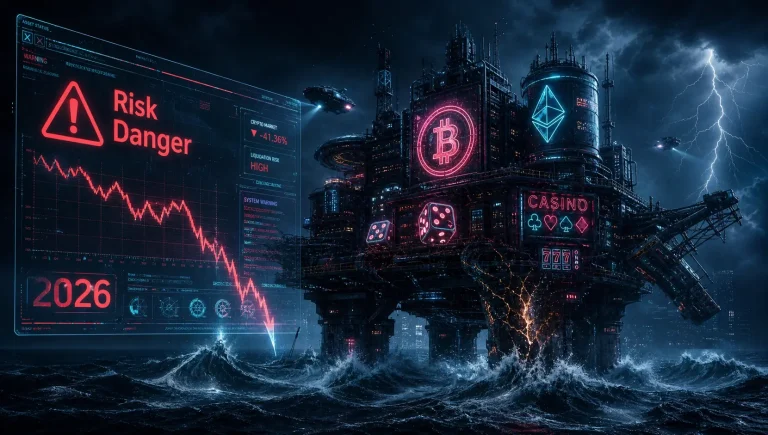
The allure of high-yield opportunities is a constant in financial markets. However, a discerning analyst must question the foundation of such returns, particularly when they originate from an unregulated offshore entity.
This guide provides a structured analysis of the critical risks inherent in these platforms, examining the dangers of both unregulated offshore gambling and the volatile world of offshore crypto and DeFi exchanges.
From my perspective as a fund research analyst, the primary issue is the complete absence of a verifiable trust framework, which renders traditional risk assessment models obsolete.
What ‘Unregulated Offshore’ Truly Means for Your Capital
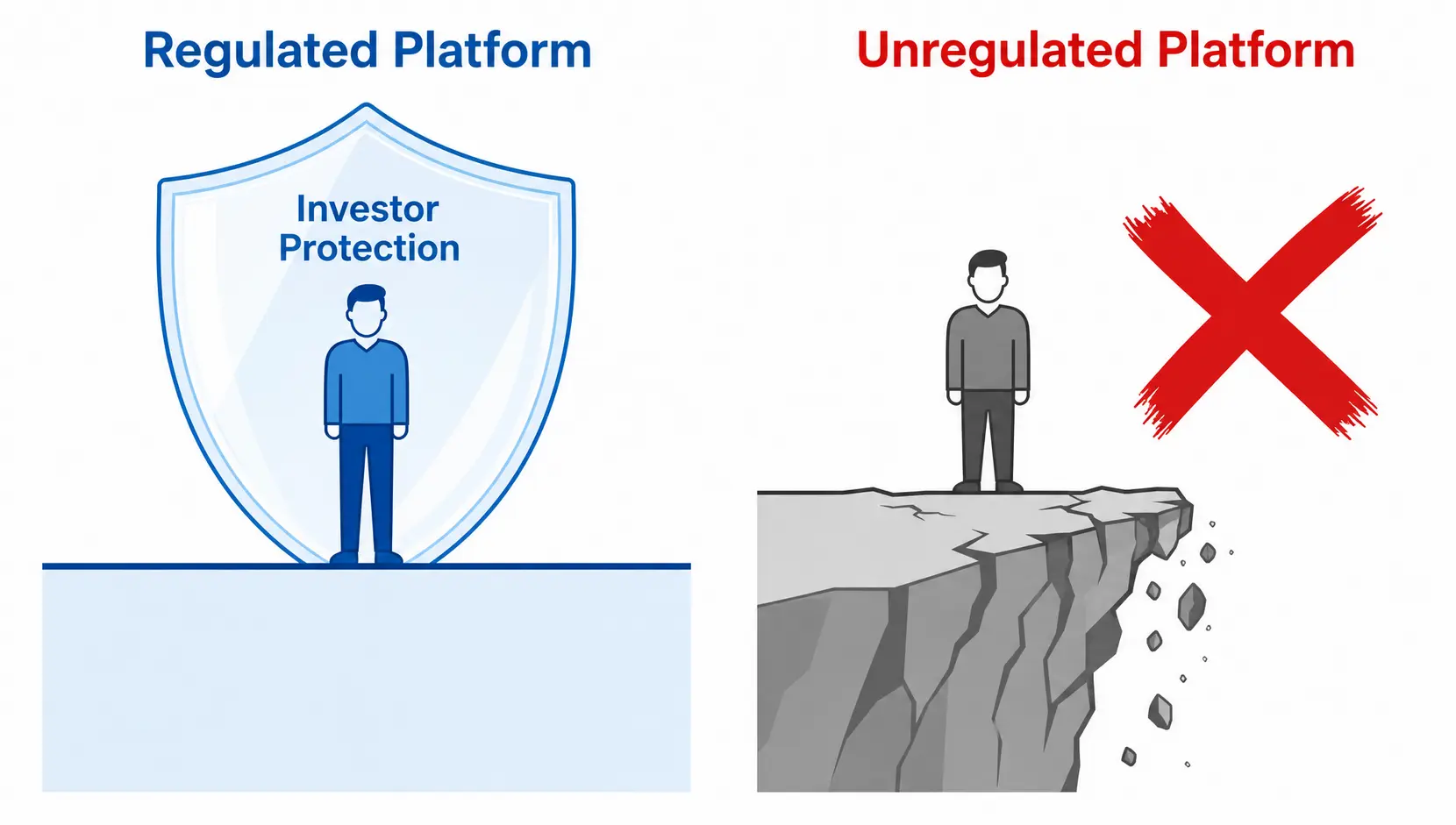
Pro Tip: An ‘unregulated offshore’ platform operates beyond the jurisdiction of robust financial regulators like the UK’s Financial Conduct Authority (FCA) or the Malaysian Securities Commission (SC). This means there is no investor protection, no mandatory audits, and no legal recourse if your funds disappear. Your capital is not ‘deposited’; it is transferred to an entity with no legal obligation to return it.
The term ‘unregulated offshore’ is not merely jargon; it is a critical warning sign. It describes businesses, often in finance or gambling, that are incorporated in jurisdictions with minimal regulatory oversight, lax legal frameworks, and a deliberate lack of transparency.
They intentionally position themselves to arbitrage regulations, attracting clients with promises that regulated entities are legally forbidden to make.
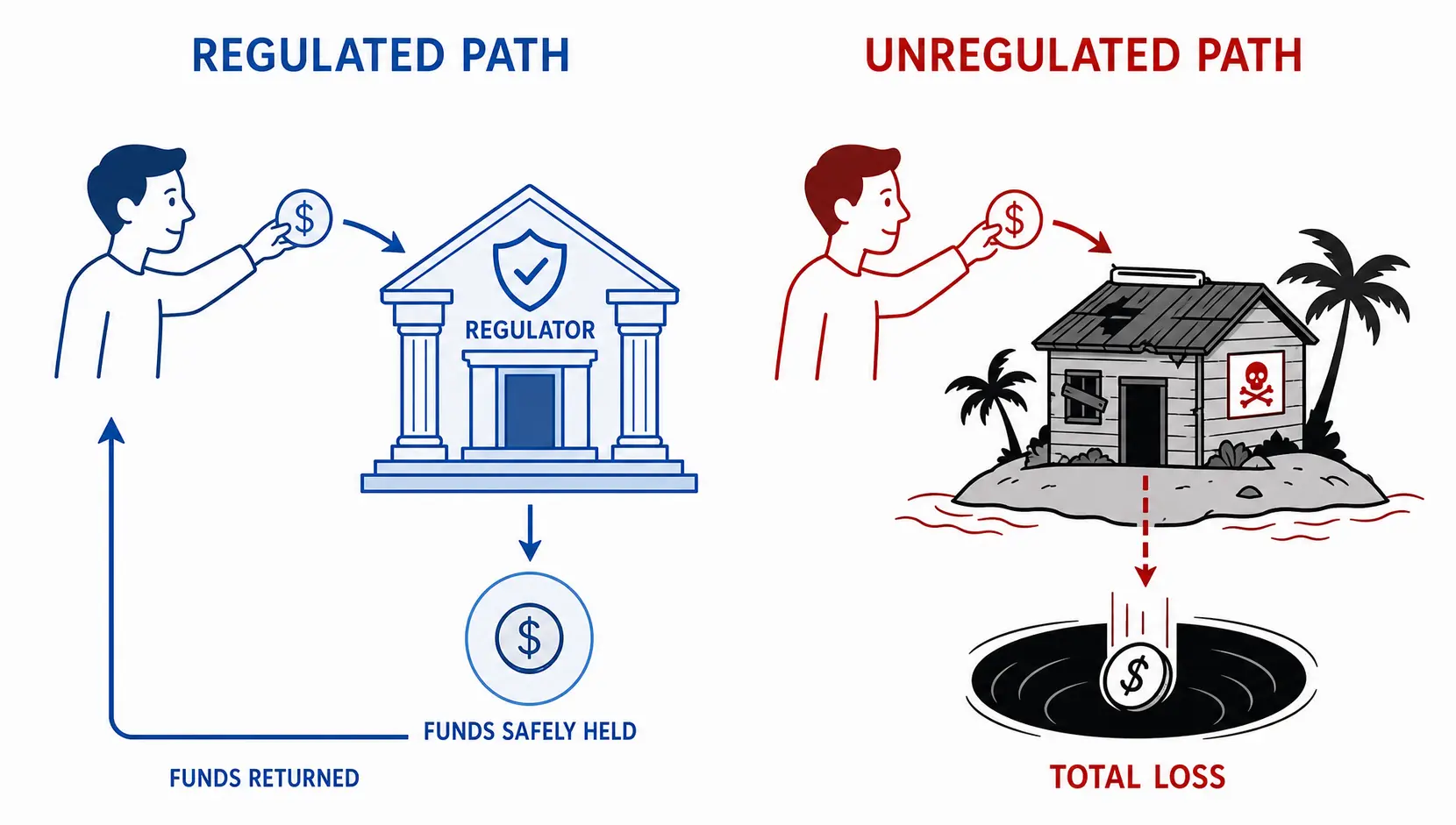
Defining the ‘Black Market’: Unregulated vs. Illegal
It’s crucial to differentiate between ‘unregulated’ and ‘illegal.’ An unregulated platform may operate in a legal grey area, often by not having a physical presence in the client’s home country.
An illegal platform, however, is one that operates in direct violation of established laws. For example, an online casino accepting bets from a country where online gambling is explicitly outlawed is an illegal operator.
From an investor’s standpoint, the distinction is academic, as both lack the fundamental safety nets required for prudent capital allocation.
Common Sectors: From Online Gambling to Decentralized Finance (DeFi)
This model is prevalent in several high-risk sectors:
- Online Gambling & Sports Betting: These platforms attract users with better odds or bonuses, made possible by avoiding taxes and compliance costs.
- Contracts for Difference (CFDs) & Forex: Offering dangerously high leverage that is banned in regulated markets like the UK and EU.
- Cryptocurrency & DeFi Exchanges: Many of the largest exchanges operate from offshore havens, allowing them to list high-risk assets and offer services without adhering to Know Your Customer (KYC) or Anti-Money Laundering (AML) laws.
The High Stakes of Unregulated Offshore Gambling and Betting Risks
Pro Tip: In the world of unregulated offshore gambling, the house doesn’t just have an edge; it owns the entire table, the chairs, and the exit door. There is no guarantee of fair play, and more importantly, no guarantee you will ever be able to withdraw your winnings or even your initial stake. This is pure counterparty risk against an anonymous counterparty.
Engaging with unregulated betting sites is a high-risk proposition that extends far beyond the simple loss of a wager. These platforms operate in a financial black hole, free from the constraints and protections that define legitimate financial services.
Financial Dangers: No Guarantees of Fair Play or Payouts
The core of the issue is the absence of third-party verification. There are no auditors to confirm that the games are fair, that the random number generators are truly random, or that the platform holds sufficient funds to pay out winners.
It is not uncommon for such sites to suddenly shut down, change terms and conditions to confiscate winnings, or simply refuse withdrawals, citing vague reasons. This concern is echoed by law enforcement agencies globally.
The U.S. Federal Bureau of Investigation (FBI), for example, regularly issues warnings about the dangers posed by these platforms.
Cybersecurity Threats: Your Personal Data is the Price of Entry
To use these platforms, you must often provide extensive personal and financial information, including identification documents and payment details. Handing this data to an unregulated entity is a significant cybersecurity risk.
These platforms are prime targets for hackers, and the operators themselves may misuse or sell your data. The lack of regulatory oversight means there are no data protection standards (like GDPR) to adhere to.
Navigating the Dangers of Offshore Crypto and DeFi Exchanges
Pro Tip: The ‘decentralised’ nature of DeFi is often a marketing veneer. Many platforms have centralised points of failure—the development team, the web interface, and the legal entity (if any)—which are often based in opaque offshore jurisdictions. True decentralisation is rare; operational and legal risk is common.
The crypto space is a fertile ground for unregulated offshore activity. The global, borderless nature of digital assets makes it easy for exchanges to set up in one country while serving customers worldwide, effectively sidestepping stricter regulatory regimes.
Why ‘Decentralized’ Doesn’t Always Mean Safe
Many investors are drawn to DeFi by the promise of removing intermediaries. However, this often means removing safeguards.
When you interact with an unregulated DeFi protocol, there is no customer service, no compliance department, and no legal entity to hold accountable.
A bug in the smart contract, a ‘rug pull’ by anonymous developers, or a malicious governance vote can lead to a 100% loss of capital with absolutely no recourse.
Regulators like the UK’s FCA have been unequivocal about the risks, stating that consumers should be prepared to lose all their money if they invest in these assets.
| Feature | Regulated Platform (e.g., FCA/SC-approved) | Unregulated Offshore Platform |
|---|---|---|
| Investor Protection | Access to compensation schemes (e.g., FSCS up to £85,000 in the UK) | None |
| Legal Recourse | Access to ombudsman services and the legal system | Effectively zero; operates in a foreign jurisdiction that may not cooperate |
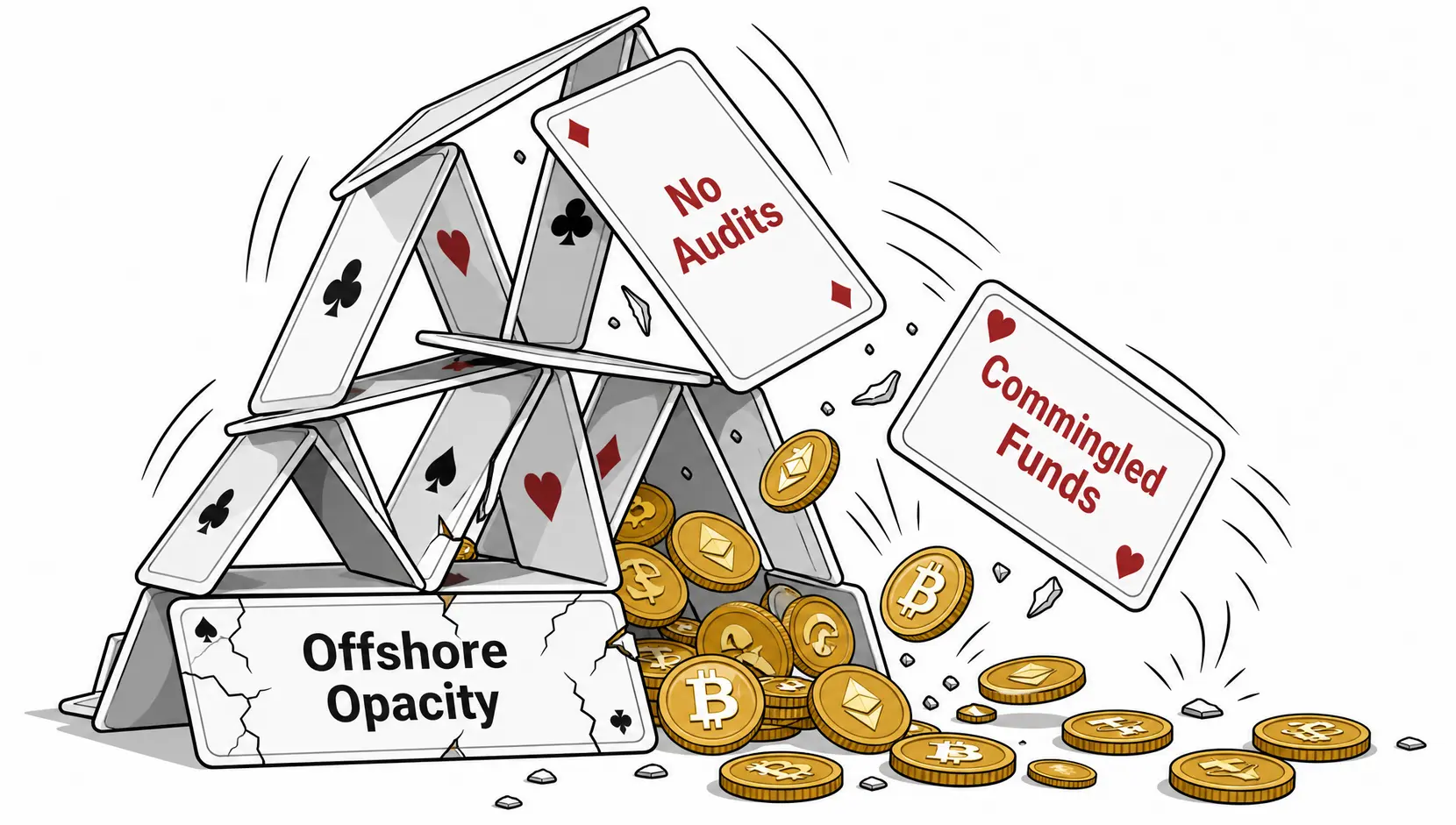
| Custody of Funds | Often held in segregated client accounts at reputable banks | Commingled with company funds; may be used for operational purposes or lent out |
| Transparency | Mandatory financial audits, public disclosures, and clear terms | Opaque corporate structure, hidden fees, and ambiguous terms |
Learning from the Past: Case Studies of Major Offshore Platform Collapses
History provides costly lessons. From the early collapse of Mt. Gox to the more recent, spectacular failure of FTX, the common thread is a combination of offshore structures, commingling of funds, and a complete lack of independent oversight.
These weren’t ‘black swan’ events; they were the predictable outcomes of a flawed, unregulated model.
FTX was headquartered in The Bahamas, operating outside the robust regulatory frameworks of the US or UK, which ultimately enabled the alleged large-scale fraud and resulted in billions of dollars in customer losses.
Analysing these failures, it’s clear that the choice of jurisdiction was a feature, not a bug, designed to avoid scrutiny.
| Risk Category | Unregulated Offshore Gambling | Unregulated Offshore Crypto/DeFi |
|---|---|---|
| Primary Risk | Counterparty Risk (platform default/theft) | Counterparty, Technical (smart contract), & Market Risk |
| Common Scams | Refusal to pay out, rigged games, account closure | ‘Rug pulls’, phishing, exchange hacks, fraudulent projects |
| Regulatory Scrutiny | High (often deemed illegal) | Increasing, but complex and fragmented globally |
Frequently Asked Questions
1. What are the main risks of using an unregulated offshore platform?
From an analytical perspective, the risks can be categorised into three main areas. First, Counterparty Risk: the risk that the platform itself will fail, freeze your funds, or simply steal them.
Second, Operational Risk: the risk of losses due to poor cybersecurity, technical glitches, or internal fraud.
Third, Lack of Legal Recourse: if you suffer a loss, there is virtually no viable legal path to recover your capital as the entity is outside your home jurisdiction. These platforms offer no investor protection schemes.
2. How can you tell if a gambling or crypto site is regulated?
A regulated firm is typically proud of its status and will display it prominently. Look for a license number and the name of the regulator (e.g., UK Financial Conduct Authority, Cyprus Securities and Exchange Commission) in the website’s footer.
Verify this information directly on the regulator’s official online register. Be wary of entities claiming to be regulated by authorities in small, remote island nations known for lax oversight. If the information is not clear, assume the platform is unregulated.
3. Are there legal consequences for using unregulated offshore services?
Yes, potentially. While authorities often focus on prosecuting the operators, users can also face consequences. In many jurisdictions, it is illegal for citizens to participate in unregulated gambling.
Furthermore, transferring funds to these entities can flag your bank account for suspicious activity related to anti-money laundering (AML) regulations.
Finally, any profits (if you are able to withdraw them) are still likely subject to taxation, and explaining the source of funds from an unregulated entity can create significant legal and tax complications.
William Lee’s Final Thoughts
In fund analysis, our mantra is ‘due diligence.’ We scrutinise balance sheets, management history, and regulatory filings. Applying this same lens to unregulated offshore platforms reveals a complete void of verifiable information. There are no balance sheets to analyse, the management is often anonymous, and there are no regulatory filings to inspect. The entire model is predicated on opacity.
Therefore, the conclusion is clear and unequivocal: the risk-adjusted return on any capital placed with these entities is profoundly negative. Any perceived gains are an illusion, subject to being wiped out at the whim of an unknown, unaccountable operator. True investment is about the prudent management of risk, not a blind gamble on trust.
Sources & Methodology
William Lee strictly relies on primary regulatory data and authoritative official information to ensure accuracy. Data cited in this guide is sourced from:
*Disclaimer: The content of this article represents the personal views of the author (William Lee) and is for educational and reference purposes only. It does not constitute professional investment or financial advice. Trading and investing involve significant risk; proceed with caution.*
