

As a fund research analyst, my focus is on quantifiable data, not just narratives. The global appetite for sustainable investing is undeniable, with ESG-aligned assets projected to exceed $40 trillion in 2026.
This article provides a structured analysis of sustainable saving strategies to invest in global markets, moving beyond surface-level concepts.
We will dissect how to apply savings for sustainable global investments and critically evaluate the frameworks for finding ethical funds for global investors, ensuring your capital allocation is both principled and analytically sound.
My objective is to equip you with the tools to analyse and select investment vehicles that align with sustainability mandates without sacrificing portfolio discipline.
What Are Sustainable Saving Strategies?
To implement these strategies effectively, it is crucial to understand the distinct, yet often overlapping, terminologies that govern this investment universe.
Misinterpretation can lead to a misalignment between your ethical objectives and your portfolio’s actual impact. A disciplined investor must differentiate these approaches to construct a truly sustainable portfolio.
Defining ESG, Impact, and Conservation Investing
From an analytical standpoint, these terms represent different layers of sustainable finance. They are not interchangeable, and their application has direct consequences on risk, return, and impact profiles.
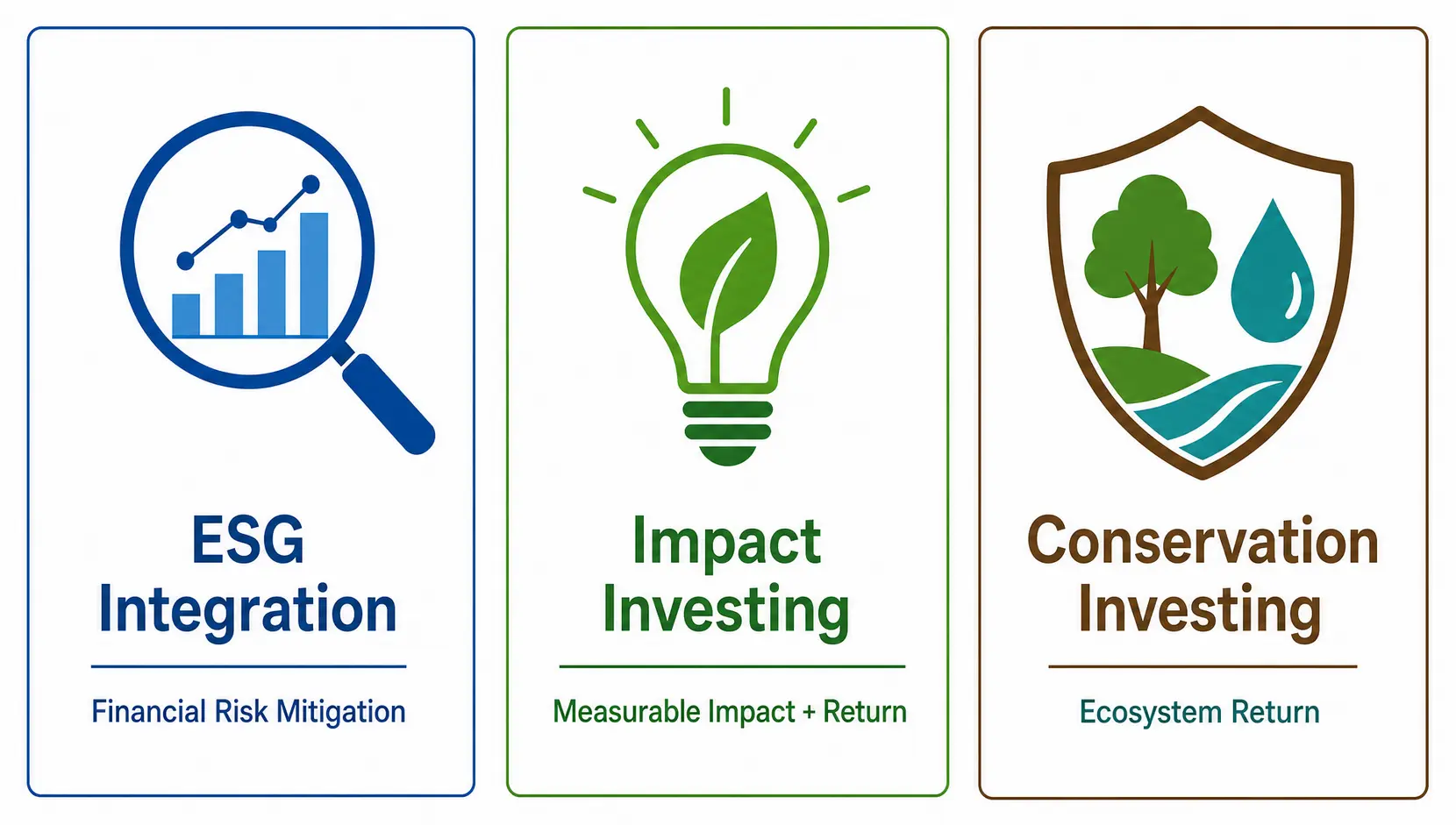
| Investment Approach | Primary Objective | Key Analyst Metric | Example |
|---|---|---|---|
| ESG Integration | Financial Performance via Risk Mitigation | ESG Score, Carbon Intensity, Board Diversity % | A fund avoiding companies with poor labour practices to reduce reputational and operational risk. |
| Impact Investing | Generate Measurable Social/Environmental Impact Alongside Financial Return | Metric Tons of CO2 Reduced, Number of People Provided Clean Water | An ETF investing in companies whose core business is utility-scale solar energy production. |
| Conservation Investing | Financial Return Through Investment in Ecosystem Preservation/Restoration | Hectares of Forest Protected, Water Quality Indices | A private fund purchasing land for sustainable forestry and certified carbon offsetting projects. |
How Your Savings Can Fuel the Global Green Transition
The global green transition represents one of the most significant capital reallocations in history. This is not philanthropy; it’s a multi-trillion-dollar economic shift.
By directing your savings into funds aligned with this transition, you are essentially providing the liquidity required for companies to innovate and scale solutions for a low-carbon economy.
This process is increasingly formalised through frameworks like the UN Principles for Responsible Investment (PRI), which institutional investors use to guide their capital.
For a retail investor, accessing this trend means selecting funds that are PRI signatories or that explicitly target sectors like renewable energy, energy efficiency, and clean transportation.
Evaluating Key Sustainable Investment Opportunities in Global Markets
Identifying viable investment themes requires looking beyond headlines and towards substantive, funded government policies. These policies create a demand-side pull for specific technologies and services, which well-positioned companies can capitalise on.
As investors, our task is to identify those companies through targeted funds.
Investing in Renewable Energy and REPowerEU Initiatives
The European Union’s REPowerEU plan is a prime example of a government-led investment catalyst.
Its primary objective is to accelerate the EU’s independence from fossil fuels, creating a massive demand for renewable energy infrastructure, energy efficiency solutions, and green hydrogen technology.
According to the European Commission’s official plan, this requires hundreds of billions in additional investment, a significant portion of which must come from the private sector.
For a global investor, this translates into a clear opportunity. How can one participate? The most efficient method is through ETFs and funds that focus on companies poised to benefit from this spending.
These include:
- Renewable Energy Utilities: Companies that develop and operate wind, solar, and hydro power projects across Europe.
- Electrical Grid Modernisation: Firms specializing in smart grid technology, energy storage solutions (e.g., battery storage), and high-voltage transmission components.
- Building Efficiency: Companies providing insulation, smart thermostats, and energy-efficient heating and cooling (HVAC) systems, which are central to the plan’s energy-saving goals.
Financing Conservation and Biodiversity Projects
A newer, but rapidly growing, area of sustainable finance is conservation. The landmark Kunming-Montreal Global Biodiversity Framework has set ambitious targets to halt and reverse nature loss by 2030.
To achieve this, the newly established Global Biodiversity Framework Fund (GBFF) is designed to mobilise and disburse capital from public and private sources.
While direct investment in conservation projects has historically been the domain of private equity and institutional investors, new vehicles are emerging for public market participants.
These include:
- Sustainable Forestry & Agriculture Funds: Investing in companies that adhere to strict certification standards for sustainable land use, reducing deforestation and promoting biodiversity.
- Water Technology & Solutions ETFs: Targeting firms involved in water purification, efficient irrigation, and pollution control, which are critical for protecting aquatic ecosystems.
- ‘Blue Economy’ Funds: A nascent category focusing on the sustainable use of ocean resources, including sustainable aquaculture and marine renewable energy.
How to Start Investing with Sustainable Strategies from Malaysia and the UK
Accessing global markets from countries like the UK and Malaysia has never been easier, but navigating the surge of ‘sustainable’ products requires a robust analytical framework.
The labels and marketing can be confusing, making it essential to look ‘under the bonnet’ of any fund.
Finding and Evaluating Global Sustainable Funds and ETFs
A fund’s name is marketing; its portfolio holdings and expense ratio are facts. My evaluation process begins with a quantitative screen, followed by a qualitative overlay.
In the UK, the Financial Conduct Authority (FCA) has implemented the Sustainability Disclosure Requirements (SDR), which includes four official investment labels to help consumers.
As detailed in the FCA’s policy statement, these labels—Sustainability Focus, Sustainability Improvers, Sustainability Impact, and Sustainability Mixed Goals—provide a clear starting point for due diligence.
In Malaysia, the Securities Commission (SC) has its own comprehensive Sustainable and Responsible Investment (SRI) Roadmap and fund framework, which guides the local asset management industry.
Investors should look for funds that are compliant with the SC’s SRI guidelines.
Here is a simplified comparison of hypothetical global sustainable ETFs an investor might analyse:
| Fund Metric | Global Clean Energy ETF (GCE) | Global ESG Leaders ETF (GEL) | Analyst Note |
|---|---|---|---|
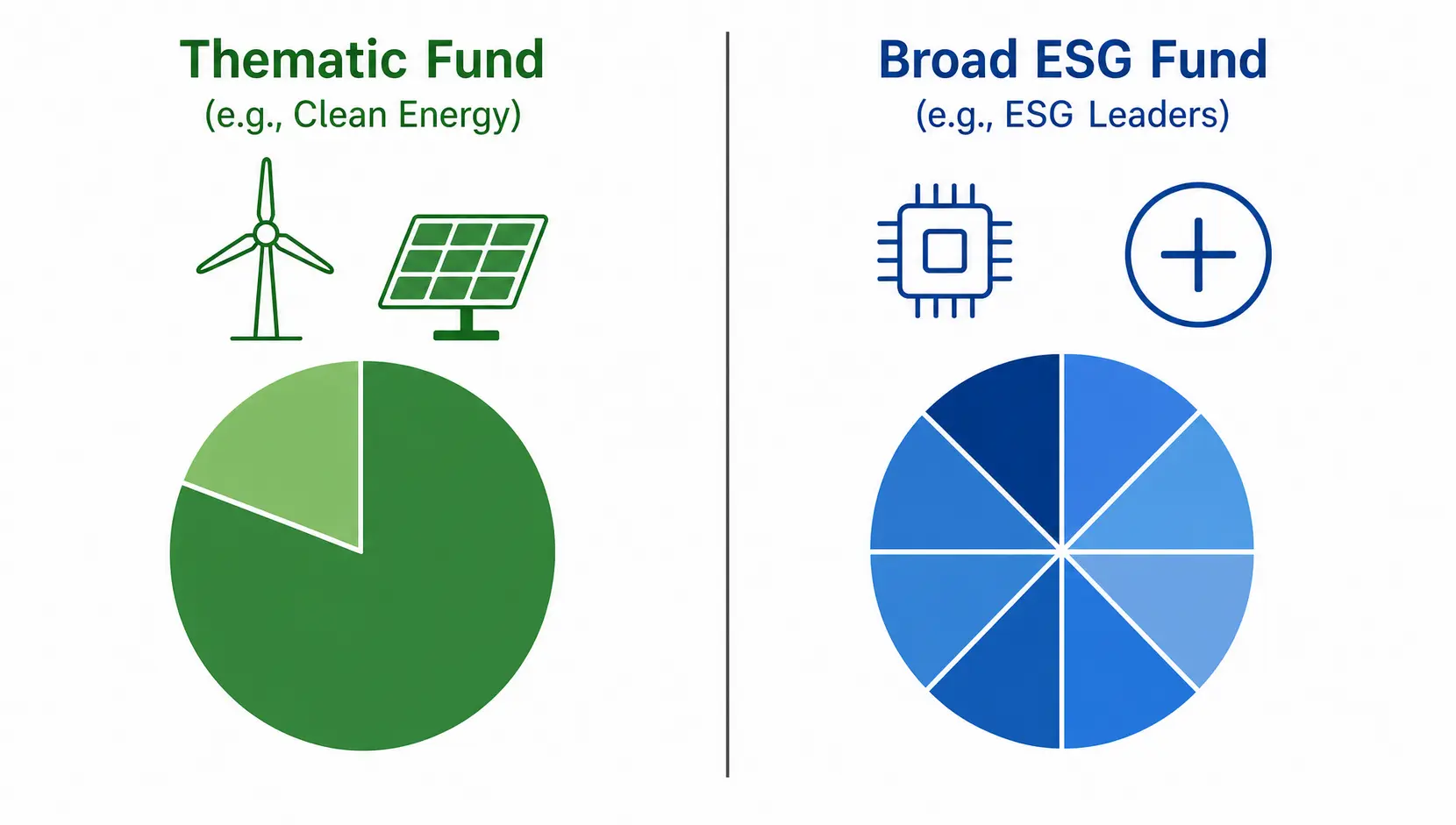
| Investment Focus | Thematic: Concentrated in ~50 global renewable energy companies. | Broad ESG: Diversified across ~400 companies with high ESG ratings. | GCE is a high-conviction thematic play. GEL is a core holding replacement. |
| Total Expense Ratio (TER) | 0.65% | 0.20% | Thematic funds typically carry higher fees. A 0.45% difference is significant over the long term. |
| Top 3 Holdings | Vestas Wind Systems, Orsted, First Solar | Microsoft, NVIDIA, Apple | GEL’s holdings are tech-heavy, reflecting high ESG scores in that sector, not necessarily direct environmental impact. |
| Risk Profile | High. Sector concentration risk. | Medium-High. Broad market risk with a quality/growth tilt. | Your choice depends on your risk tolerance and whether you seek a core or satellite holding. |
Platforms and Tools for Accessing Global Markets
Both UK and Malaysian investors have access to a range of brokerage platforms that offer global funds and ETFs. When selecting a platform, consider factors beyond just the commission fee.
Look at the range of available sustainable products, the quality of research tools provided (e.g., ESG screeners), and any foreign exchange conversion fees, which can erode returns.
Popular platforms in the UK include Hargreaves Lansdown, Interactive Investor, and Freetrade.
In Malaysia, platforms like Rakuten Trade, M+ Global, and the brokerage arms of major banks (Maybank, CIMB) provide access to international stocks and a growing number of ETFs.
Frequently Asked Questions
1. Is sustainable investing in global markets profitable?
From a data-driven perspective, the evidence is compelling, though nuanced.
Numerous meta-studies from institutions like the Morgan Stanley Institute for Sustainable Investing have shown that funds incorporating ESG factors often exhibit similar or better performance than their non-sustainable peers, frequently with lower downside risk.
Profitability is not guaranteed and depends on the specific strategy, sector, and economic cycle. The core thesis is that managing sustainability risks is simply good business practice that leads to more resilient long-term returns.
2. How can I measure the real-world impact of my sustainable investments?
Measuring impact is a critical challenge. For a fund analyst, this goes beyond marketing materials. Start by examining the fund’s annual or semi-annual impact report. These documents should provide quantifiable metrics, not just stories.
For example, a clean energy fund might report ‘megawatts of new capacity financed’ or ‘tonnes of CO2 emissions avoided’.
An ESG fund might report the ‘weighted average carbon intensity’ of its portfolio versus its benchmark. Scrutinise these reports for transparency and adherence to global standards like the Global Impact Investing Network’s (GIIN) IRIS+ metrics.
3. What are the risks associated with investing in global sustainable markets?
The risks are multifaceted. Firstly, Greenwashing Risk: the risk that a fund’s sustainability claims are exaggerated. This is what regulations like the UK’s SDR aim to mitigate.
Secondly, Concentration Risk: many sustainable funds have a heavy weighting towards the technology and healthcare sectors and may be underweight in energy or materials, leading to performance deviation from the broader market.
Thirdly, Regulatory Risk: government policies on sustainability can change, impacting the profitability of certain sectors.
Finally, standard market risks, including currency fluctuations and geopolitical events, apply just as they would to any global investment.
William Lee’s Final Thoughts
Sources & Methodology
William Lee strictly relies on primary regulatory data and authoritative official information to ensure accuracy. Data cited in this guide is sourced from:
- UN Principles for Responsible Investment (PRI) Framework
- European Commission: REPowerEU Official Plan
- The Global Environment Facility (GEF): Global Biodiversity Framework Fund
- UK Financial Conduct Authority (FCA): PS23/16 – SDR and Investment Labels
- Securities Commission Malaysia (SC): Sustainable and Responsible Investment (SRI) Framework
*Disclaimer: The content of this article represents the personal views of the author (William Lee) and is for educational and reference purposes only. It does not constitute professional investment or financial advice. Trading and investing involve significant risk; proceed with caution.*
