

As a financial planner, I’ve seen many families in Malaysia build wealth by looking beyond our local shores. The allure of global markets is undeniable, offering growth opportunities you might not find domestically.
However, I’ve also sat across the table from clients who have faced significant losses due to common, yet avoidable, financial planning mistakes when investing in foreign markets.
The excitement of international investing can quickly turn to anxiety when faced with the harsh realities of the impact of currency fluctuations on foreign portfolios and the complexities of navigating market volatility in international investments.
This guide is born from those experiences, designed to walk you through the critical errors I see time and again, and to provide a structured framework for your family’s global financial journey.
Mistake 1: Ignoring Currency Risk and Market Volatility
Pro Tip: The single most underestimated threat to your returns from foreign investments is not just market downturns, but the erosion of gains through unfavourable currency movements. A comprehensive financial plan must treat currency risk with the same seriousness as investment risk. Your returns are always calculated in your home currency (MYR), so a ‘gain’ in USD or GBP could still be a loss back home.
Failing to Account for Exchange Rate Fluctuations in Your Plan
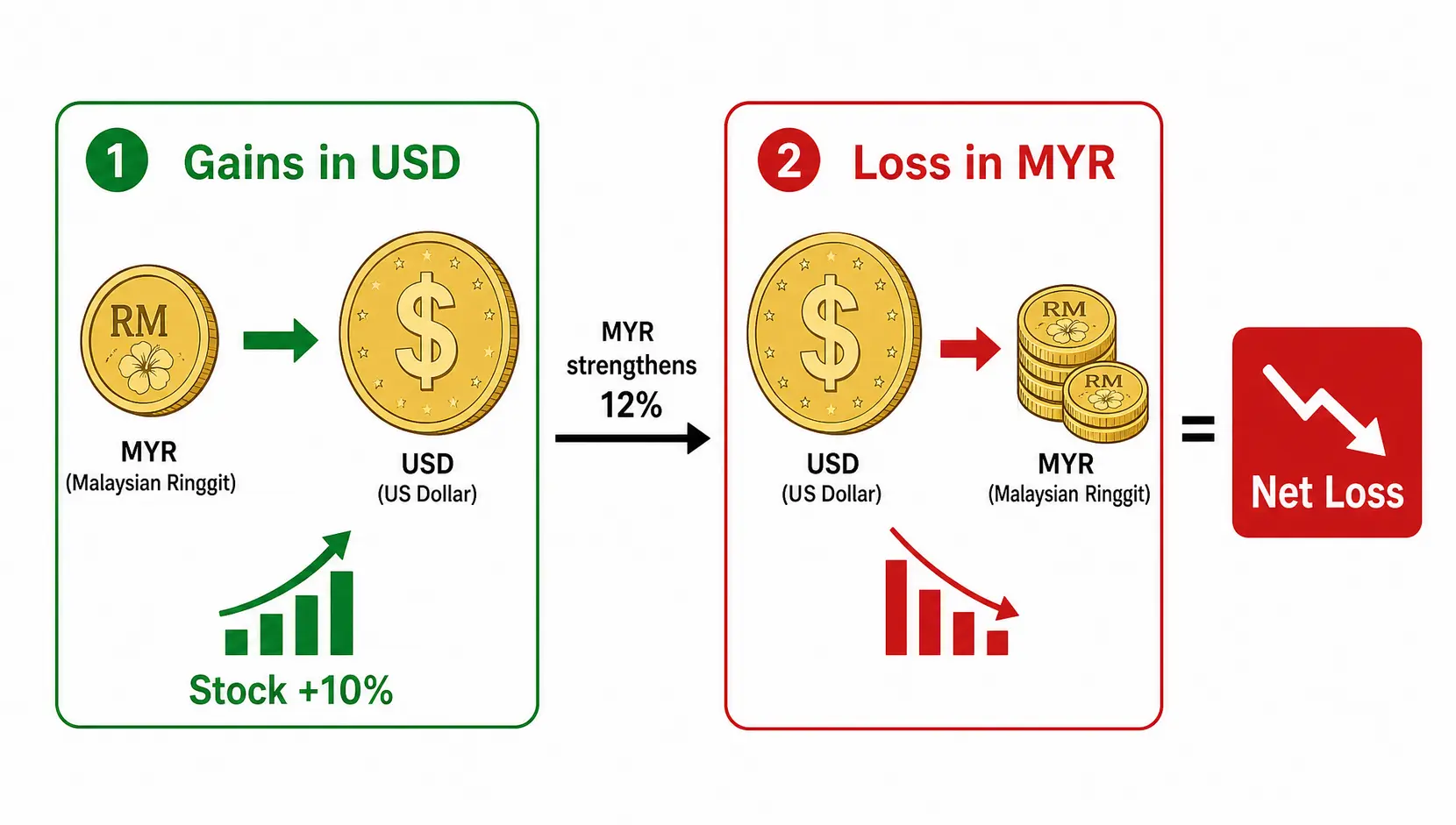
Many first-time global investors focus solely on the asset’s price. They buy a US stock and celebrate when it goes up 10% in dollar terms. But what if, during that same period, the Malaysian Ringgit strengthens against the US Dollar by 12%?
When you convert those ‘gains’ back to MYR, you’ve actually made a loss. This isn’t a hypothetical scenario; it’s a constant variable in international finance.
For example, if you invested £10,000 when the exchange rate was MYR 5.50 to the pound, your investment cost is MYR 55,000. If your investment grows to £11,000 but the exchange rate falls to MYR 5.00, your £1,000 gain disappears. Your £11,000 is now worth MYR 55,000, meaning you’ve made no profit in Ringgit terms.
A sound financial plan anticipates these swings and may incorporate strategies to mitigate them.
Underestimating the Impact of Local Market Volatility
Beyond currency, foreign markets have their own unique rhythms and levels of volatility. A common mistake is assuming that a stable market in one part of the world translates to stability everywhere.
For instance, the Cboe Volatility Index (VIX), often called the ‘fear gauge’ for the US market, measures expected volatility in the S&P 500. While it’s a useful indicator, it tells you nothing about the potential volatility of the Brazilian Bovespa or the Indian Nifty 50.
Emerging markets, in particular, can offer higher growth but are susceptible to greater price swings due to political instability, concentrated economies, or less mature regulatory environments.
Your financial plan needs to acknowledge this by adjusting your risk tolerance and asset allocation accordingly for each specific market you enter.
Mistake 2: Overlooking Foreign Regulations and Tax Laws
Pro Tip: The costliest errors in foreign investing often stem from what you don’t know about local rules. Tax and regulatory compliance are not optional extras; they are foundational to protecting your capital and returns. Always assume a foreign jurisdiction has reporting requirements and tax obligations until you can prove otherwise through official sources.
The Cost of Neglecting International Tax Treaties and Reporting
This is a big one. When you earn dividends or capital gains from a foreign country, you may be liable for tax there (known as withholding tax) and potentially back home in Malaysia.
The good news is that Malaysia has Double Taxation Agreements (DTAs) with many countries, including the UK and the US. These treaties are designed to prevent you from being taxed twice on the same income. However, they don’t operate automatically.
You often need to file the correct forms (like the W-8 BEN form for US investments) to claim the benefits of the treaty. Ignoring this can lead to paying a higher, non-treaty rate of withholding tax, which directly eats into your net returns.
Furthermore, with global standards like the Common Reporting Standard (CRS), tax authorities are sharing information more freely than ever. Failing to declare foreign income is a risk not worth taking.
Misunderstanding Local Investment Rules and Restrictions
Every country has its own rulebook for foreign investors. Some sectors might be restricted, there could be limits on how much of a company a foreigner can own, or there might be rules governing the repatriation of profits—your ability to bring your money back home.
For instance, the Securities Commission Malaysia has clear guidelines for funds being offered in the country, and other nations have their own equivalents. Attempting to navigate this without proper research is a recipe for disaster.
Your funds could be frozen, or you could face penalties for non-compliance. It’s crucial to consult official government sources or a qualified advisor familiar with the specific jurisdiction.
Mistake 3: Lack of True Geographic Diversification
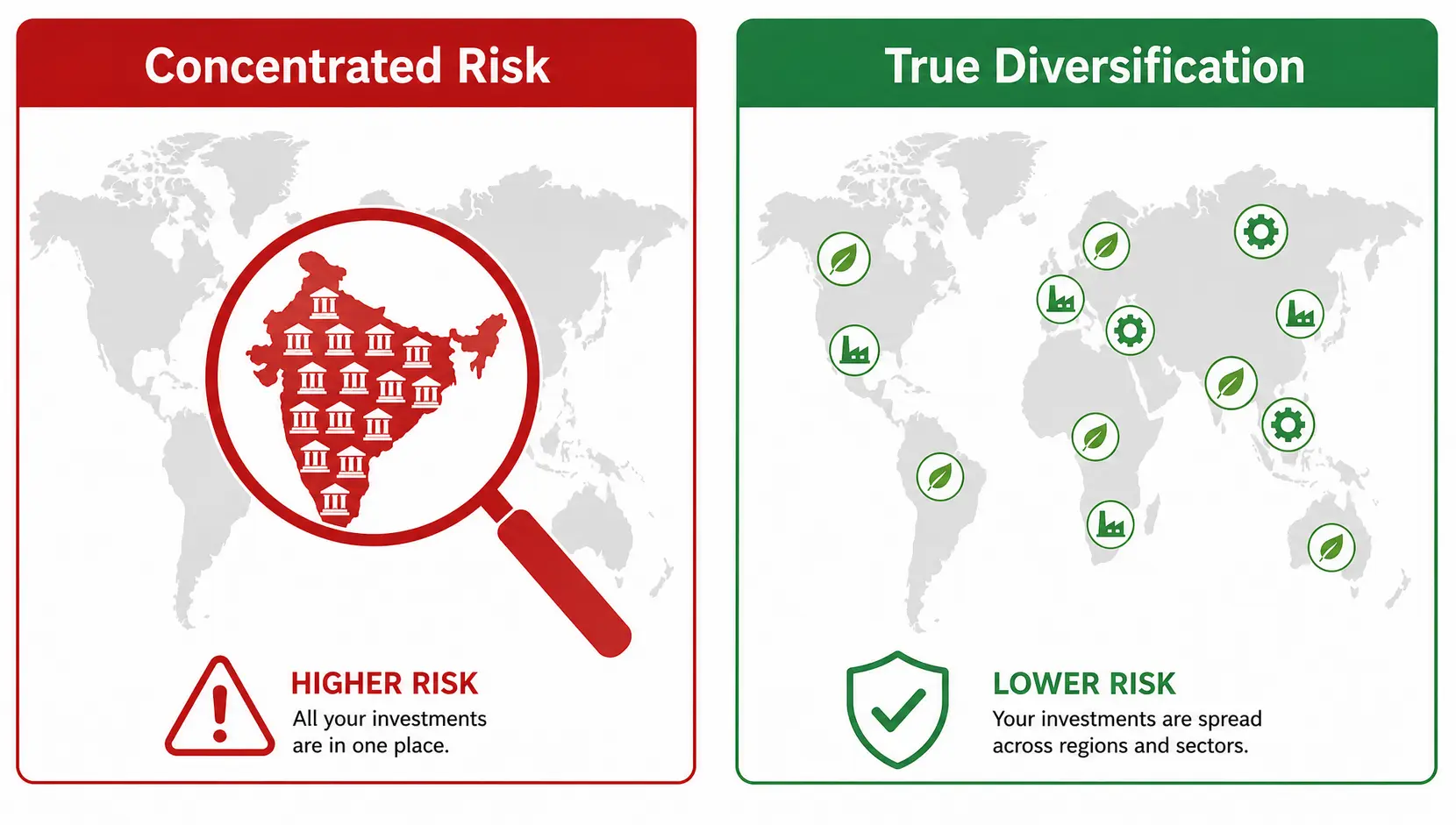
Pro Tip: True diversification isn’t just about owning a few international stocks. It’s about strategically spreading your investments across different economic regions, asset classes, and development stages to reduce concentration risk. Owning shares in ten different tech companies all based in California is not global diversification.
The Danger of Concentrating in a Single ‘Hot’ Foreign Market
It’s easy to get caught up in headlines about a booming market. We saw this with China in the 2000s and other emerging economies at various times.
The temptation is to pour a significant portion of your ‘international’ allocation into that single market, chasing momentum. This is a classic financial planning mistake.
You are not diversifying; you are simply swapping one set of domestic risks for another concentrated set of foreign risks. If that ‘hot’ market suddenly faces a political crisis, a trade dispute, or an economic downturn, your entire international portfolio suffers.
A well-structured plan ensures no single country or region can have an outsized negative impact on your overall wealth.
Failing to Diversify Across Developed and Emerging Markets
A sophisticated approach to foreign investing involves balancing your portfolio between developed and emerging markets. These two categories have very different risk-and-return profiles.
- Developed Markets (e.g., USA, UK, Germany, Japan): Characterised by mature economies, stable political systems, strong regulatory oversight, and generally lower volatility. They provide stability and predictable, albeit potentially slower, growth.
- Emerging Markets (e.g., Brazil, India, Thailand, Mexico): Characterised by rapid economic growth, a rising middle class, and higher potential returns. However, this comes with greater political risk, currency volatility, and less predictable legal systems.
Your financial plan should define what percentage of your portfolio is allocated to each, based on your age, risk tolerance, and long-term goals.
An aggressive growth-focused plan for a young family might have a higher allocation to emerging markets, while a pre-retirement plan would lean more heavily on the stability of developed markets.
| Feature | Developed Markets (e.g., MSCI World Index) | Emerging Markets (e.g., MSCI Emerging Markets Index) |
|---|---|---|
| Growth Potential | Moderate and Stable | High |
| Risk & Volatility | Lower | Higher |
| Political & Economic Stability | High | Variable to Low |
| Currency Stability | Generally More Stable (e.g., USD, EUR, GBP) | More Volatile |
| Role in Portfolio | Core foundation, stability | Satellite holding, growth driver |
Data based on general characteristics of indices like those found on MSCI.
Mistake 4: Making Decisions Based on Emotion, Not a Plan
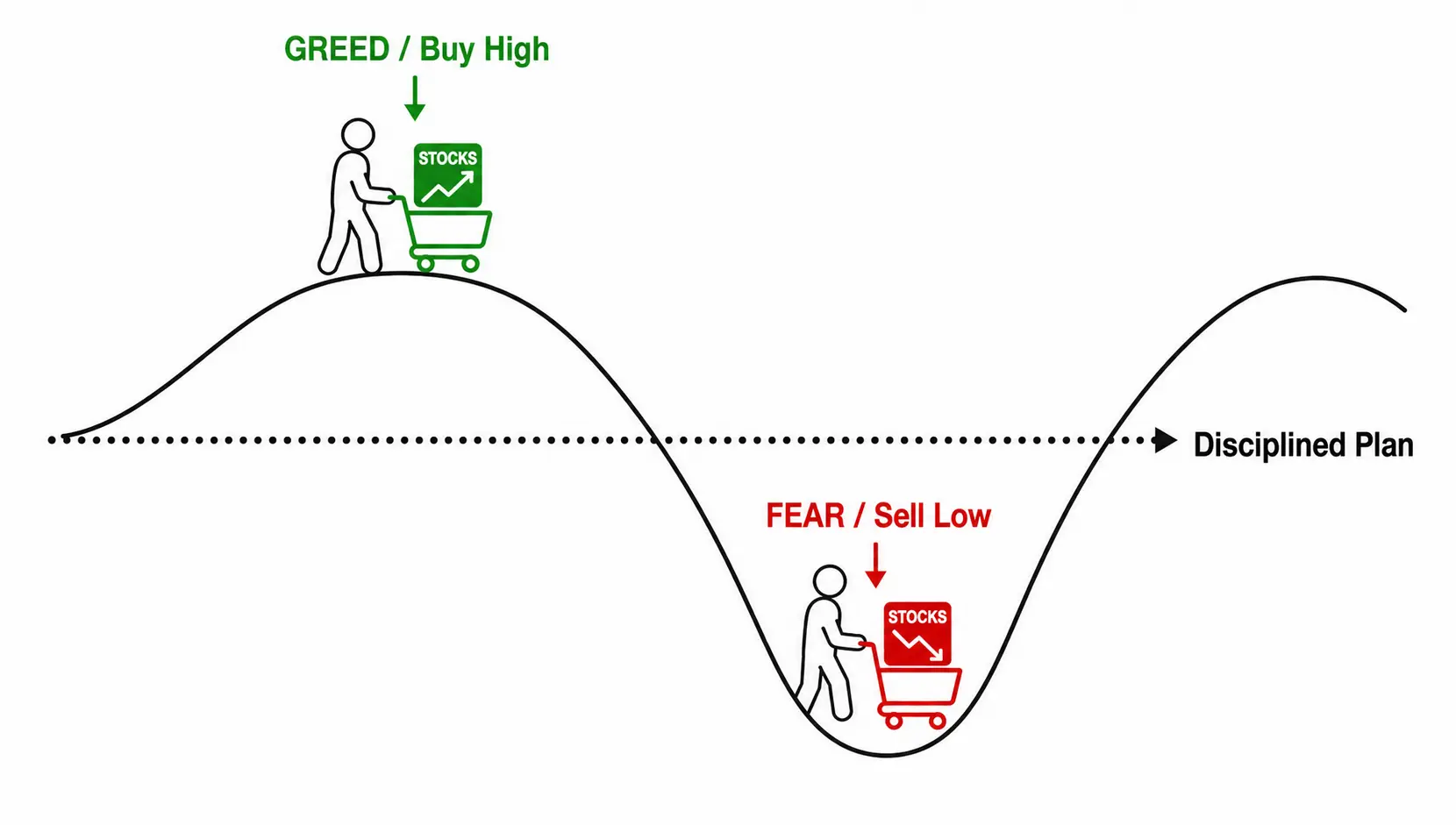
Pro Tip: The greatest enemy to a successful investment outcome is often our own emotional reaction to market noise. A written financial plan is your most powerful tool—it is the logical anchor you commit to during a calm state of mind, designed specifically to override the panic or greed you might feel when markets are volatile.
Reacting to Political News Instead of Sticking to Your Strategy
Foreign markets are constantly bombarded with news: elections, leadership changes, trade tensions, and social unrest. It’s tempting to sell your holdings in a country the moment a negative headline appears.
This is almost always a mistake. Institutional investors and robust financial plans account for a certain level of political and economic ‘noise’.
They are built on long-term fundamentals—such as a country’s demographics, infrastructure development, and corporate earnings potential—not on knee-jerk reactions to the 24-hour news cycle.
If you have a well-diversified portfolio, a single political event in one country should not be cause for panic. Stick to your rebalancing schedule and long-term strategy.
The Fallacy of Chasing Past Performance of Foreign Stocks
Just as it’s a mistake to pile into a ‘hot’ market, it’s equally unwise to chase the performance of a single foreign stock or fund that has had a spectacular year.
The financial world is littered with examples of last year’s hero becoming this year’s laggard. This phenomenon is known as ‘reversion to the mean’. A sound financial plan is built on asset allocation and principles, not on trying to guess which stock will be the next market darling.
Using low-cost, diversified index funds or ETFs is often a more prudent way for families to gain exposure to foreign markets without taking on the concentrated risk of individual stock picking.
| Mistake | Emotional Reaction | Planned Response |
|---|---|---|
| Currency drops 5% against MYR | Panic sell to ‘stop the bleeding’. | Review the plan. This may be a good opportunity to buy more foreign assets at a ‘discount’ if the allocation allows. |
| Foreign market soars 20% in a year | Pour more money in, fearing to miss out. | Rebalance the portfolio by trimming some profits to bring the asset allocation back to the strategic target. |
| Negative political headline | Sell all holdings in that country immediately. | Assess if the news fundamentally alters the country’s long-term economic outlook. If not, stick to the plan. |
Frequently Asked Questions
1. What is the single biggest financial planning mistake when investing abroad?
From my experience, the most damaging mistake is the complete absence of a formal plan.
Investors often jump in based on a ‘hot tip’ or headline, without considering how the investment fits their goals, their risk tolerance, or the complex web of risks involved—especially currency and regulatory risks. A written plan forces you to address these issues logically and proactively.
2. How can I protect my foreign investments from currency fluctuations?
While you can’t eliminate currency risk, you can manage it. Strategies include:
- Diversifying across multiple currencies: Don’t hold all your foreign assets in a single currency like USD. Include assets denominated in EUR, GBP, AUD, etc.
- Using currency-hedged funds: These funds use financial instruments to minimise the impact of exchange rate movements on your returns. They come at a slightly higher cost but provide peace of mind.
- Staggering your investments: Instead of investing a large lump sum at once, dollar-cost averaging over several months or quarters can smooth out your entry point and reduce the risk of investing at a single, unfavourable exchange rate.
Consulting Malaysia’s official foreign exchange policy, such as the framework provided by Bank Negara Malaysia, is also essential for understanding the rules of engagement.
3. Do I need a different financial plan for each country I invest in?
You don’t need a completely separate plan, but your main financial plan should have a specific ‘sub-section’ or appendix for your international strategy.
This section should detail your target allocation for different regions (e.g., North America, Europe, Asia ex-Malaysia), the specific investments (e.g., ETFs or funds), and a compliance checklist (tax forms, regulations) for each key jurisdiction.
Think of it as one master plan with specific instructions for each part of your global portfolio.
4. What are the tax implications of investing in the UK from Malaysia?
The UK and Malaysia have a Double Taxation Agreement. Typically, for a Malaysian resident, there is no UK tax on capital gains from selling UK shares. However, dividends from UK companies are subject to withholding tax.
The DTA helps ensure you can often claim relief so you are not taxed twice. It is crucial to understand the reporting requirements for both HMRC in the UK and LHDN in Malaysia. Professional advice is highly recommended here.
David Lim’s Final Thoughts
Sources & Methodology
David Lim strictly relies on primary regulatory data and authoritative official information to ensure accuracy. Data cited in this guide is sourced from:
*Disclaimer: The content of this article represents the personal views of the author (David Lim) and is for educational and reference purposes only. It does not constitute professional investment or financial advice. Trading and investing involve significant risk; proceed with caution.*
