

As a fund research analyst, my primary role is to dissect investment vehicles and present the unvarnished data. The global healthcare sector presents a compelling long-term narrative, driven by demographic shifts and relentless innovation.
However, for the discerning investor, the critical question is not *if* to invest, but *how*. This brings us to the intricate world of Exchange-Traded Funds (ETFs).
This 2026 analysis provides a definitive global healthcare ETFs expense ratio and yield comparison, designed to move beyond marketing materials and focus on the two metrics that most directly impact your net returns: cost and income.
We will conduct a thorough healthcare sector investment analysis and scrutinise top-rated healthcare funds to determine which vehicles offer the most efficient access to this vital market.
Understanding the Fundamentals of Global Healthcare ETFs
Summary Paragraph: Global healthcare ETFs are pooled investment instruments that track a basket of publicly traded companies within the healthcare industry. Their primary appeal lies in providing diversified, low-cost exposure to a sector known for its defensive characteristics and long-term growth potential, driven by non-cyclical demand and continuous innovation.
Why Invest in the Healthcare Sector in 2026?
The investment case for healthcare is not speculative; it is grounded in structural, long-term trends.
Firstly, demographic tailwinds are significant. Developed and many developing nations have ageing populations, a trend that structurally increases demand for healthcare services, from pharmaceuticals to medical devices.
This creates a non-cyclical demand floor, making the sector more resilient during economic downturns compared to discretionary sectors.
Secondly, the pace of innovation is relentless. Advances in biotechnology, genomic sequencing, robotic surgery, and artificial intelligence for diagnostics are not just improving patient outcomes; they are creating entirely new markets and revenue streams.
An ETF structure allows investors to capture the upside from these breakthroughs without needing to pick individual corporate winners and losers—a notoriously difficult task.
Key Metrics Explained: Expense Ratio vs. Dividend Yield
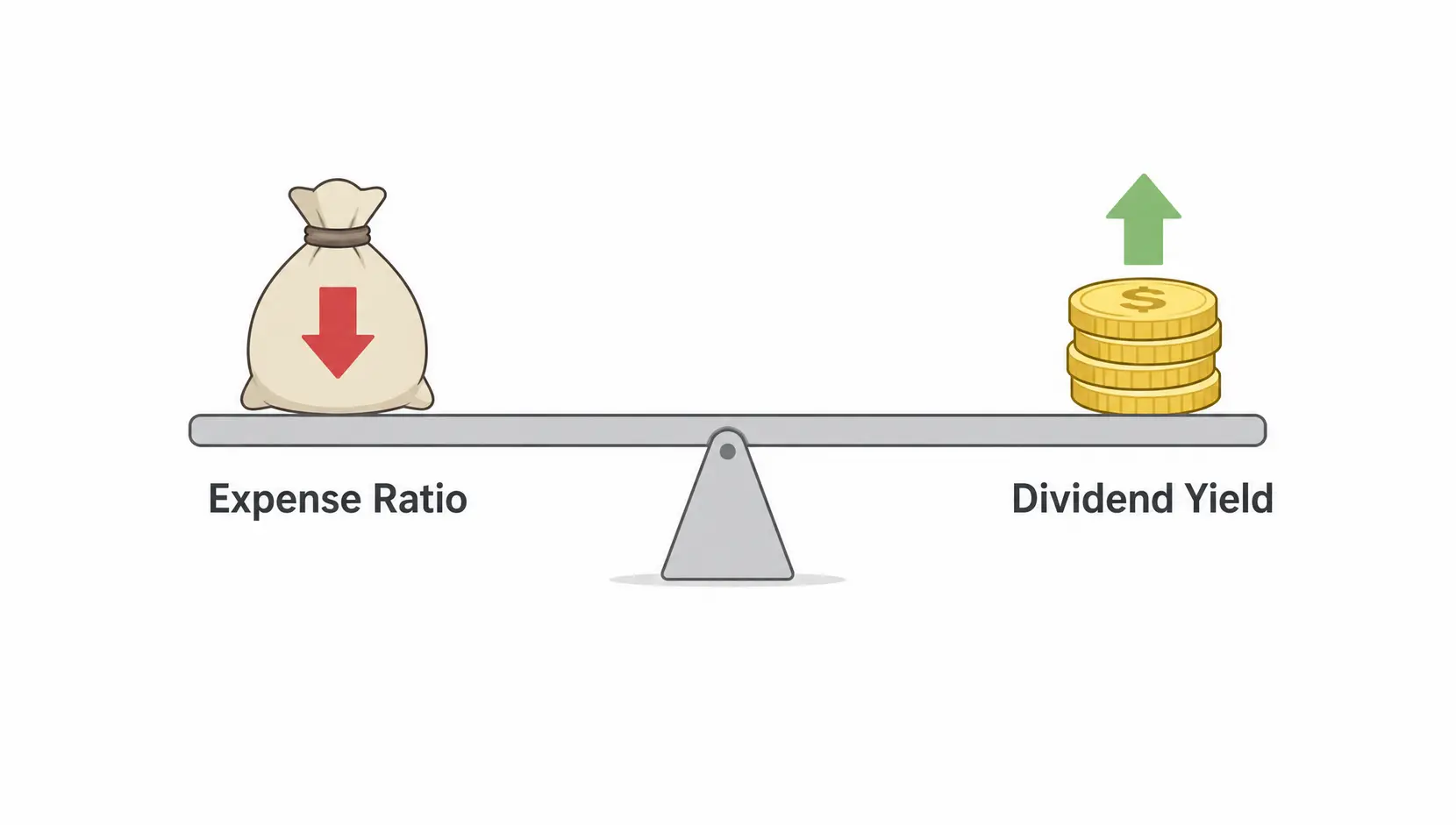
To properly compare funds, one must speak the language of fund analysis. The two most immediate metrics are the expense ratio and the dividend yield. They represent the primary cost and a key income component of your investment.
1. Total Expense Ratio (TER):
This is the annual fee that a fund charges to cover its operational costs—management fees, administrative costs, marketing, etc. It is expressed as a percentage of the fund’s total assets.
A lower TER is always preferable, as fees directly erode your investment returns. The compounding effect of a seemingly small fee difference can be substantial over a multi-year holding period.
For a deeper understanding, authoritative sources like Investopedia provide a comprehensive definition.
2. Dividend Yield:
This figure represents the annual dividend payments made by the companies held within the ETF, expressed as a percentage of the ETF’s current share price.
It is a measure of the income return on your investment. While a higher yield can be attractive, it requires careful scrutiny.
Head-to-Head Comparison: Top Global Healthcare ETFs
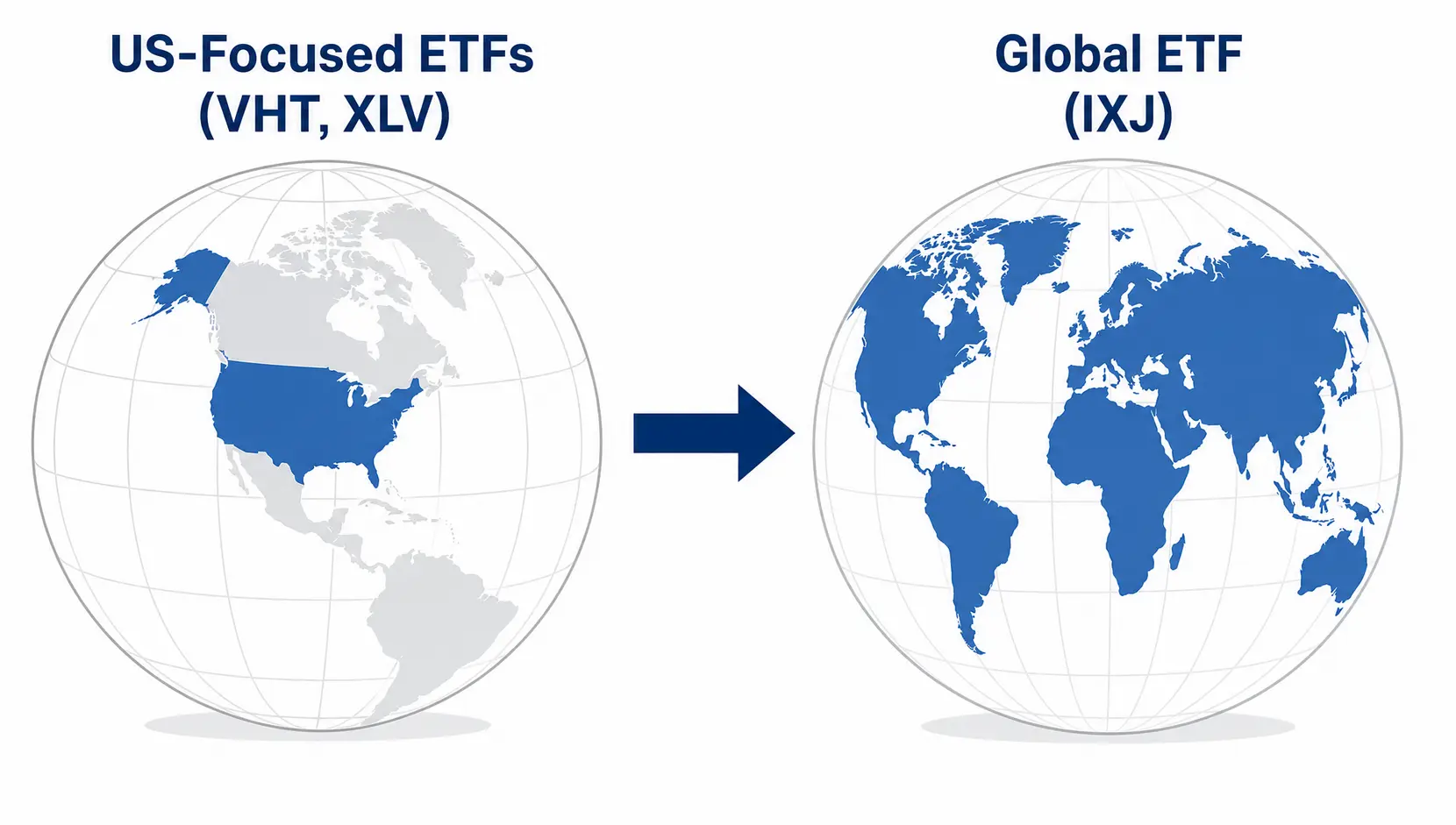
Pro Tip: When comparing ETFs, focus on the underlying index methodology. A fund tracking a broad, market-cap-weighted global index (like IXJ) offers different exposure than one focused solely on the US market (like VHT or XLV). The choice depends entirely on your desired geographical allocation.
Let us now place three of the most prominent healthcare ETFs under the microscope: the iShares Global Healthcare ETF (IXJ), the Vanguard Health Care ETF (VHT), and the Health Care Select Sector SPDR Fund (XLV).
While VHT and XLV are US-focused, their scale and liquidity make them essential benchmarks in any healthcare ETF discussion.
Expense Ratio Showdown: Finding the Most Cost-Effective Funds
As an analyst, my conviction is that costs are one of the few variables an investor can control. Over a 10 or 20-year investment horizon, even a 0.20% difference in annual fees can compound into a significant performance gap.
The table below provides a clear, data-driven comparison of the costs associated with these funds.
| ETF (Ticker) | Issuer | Expense Ratio (TER) | Analyst’s Note |
|---|---|---|---|
| Vanguard Health Care ETF (VHT) | Vanguard | 0.10% | Represents the industry benchmark for low-cost structure. |
| Health Care Select Sector SPDR Fund (XLV) | State Street Global Advisors | 0.09% | Extremely competitive pricing for S&P 500 healthcare exposure. |
| iShares Global Healthcare ETF (IXJ) | BlackRock | 0.41% | Significantly higher cost, justified by its global (ex-US) diversification. |
The data is unequivocal. For pure, low-cost exposure to the US healthcare market, both XLV and VHT are exceptional.
The decision between them is marginal on cost alone. However, IXJ’s higher expense ratio is a direct trade-off for its global mandate, providing exposure to key European and Japanese healthcare giants.
The investor must decide if that diversification warrants the ~31-32 basis point premium.
Dividend Yield Deep Dive: Which ETFs Offer Better Returns?
Income-focused investors often prioritise dividend yield. This metric reflects the cash flow returned to shareholders.
Healthcare is a sector that houses both high-growth biotech firms that reinvest all profits and mature pharmaceutical corporations that are prolific dividend payers. An ETF’s yield is a blend of its underlying holdings.
| ETF (Ticker) | Dividend Yield (12-Month Trailing) | Top Holdings Influence | Analyst’s Note |
|---|---|---|---|
| Vanguard Health Care ETF (VHT) | ~1.35% | Broad mix including high-growth and established dividend payers. | A balanced yield reflecting the entire US market spectrum. |
| Health Care Select Sector SPDR Fund (XLV) | ~1.55% | Concentrated in large-cap pharma and insurance companies. | Tends to offer a slightly higher yield due to its S&P 500 large-cap focus. |
| iShares Global Healthcare ETF (IXJ) | ~1.80% | Includes European pharmaceutical giants known for strong dividends. | Often the highest yielder due to its international component. |
Here, the narrative shifts. IXJ, despite its higher cost, often leads in terms of yield, a direct result of its holdings in mature European pharmaceutical companies that have historically maintained robust dividend policies.
XLV’s focus on the largest, most established US companies also gives it a yield edge over the more broadly diversified VHT. The choice here is between maximising income (IXJ/XLV) versus a more blended growth-and-income approach (VHT).
2026’s Top Global Healthcare ETF Picks
Best for Low Costs: Health Care Select Sector SPDR Fund (XLV)
For the cost-conscious investor seeking exposure to the bellwethers of the US healthcare industry, the analysis points to XLV. With an expense ratio of just 0.09%, it is one of the most cost-effective vehicles on the market.
It provides liquid access to the healthcare constituents of the S&P 500, making it an excellent core holding for a US-centric portfolio. You can review its official documentation for more details: XLV: State Street® Health Care Select Sector SPDR® ETF.
Best for Global Diversification: iShares Global Healthcare ETF (IXJ)
Despite its higher expense ratio, IXJ is the superior choice for investors who prioritise global diversification. A US-only allocation ignores major centres of pharmaceutical and medical device innovation in Europe and Asia.
IXJ’s portfolio, which includes giants like Roche and Novartis, provides true global sector exposure. This diversification can reduce country-specific regulatory risk and capture growth from different economic regions.
The higher yield is an additional benefit for those with an income mandate.
Best for Overall Performance: Vanguard Health Care ETF (VHT)
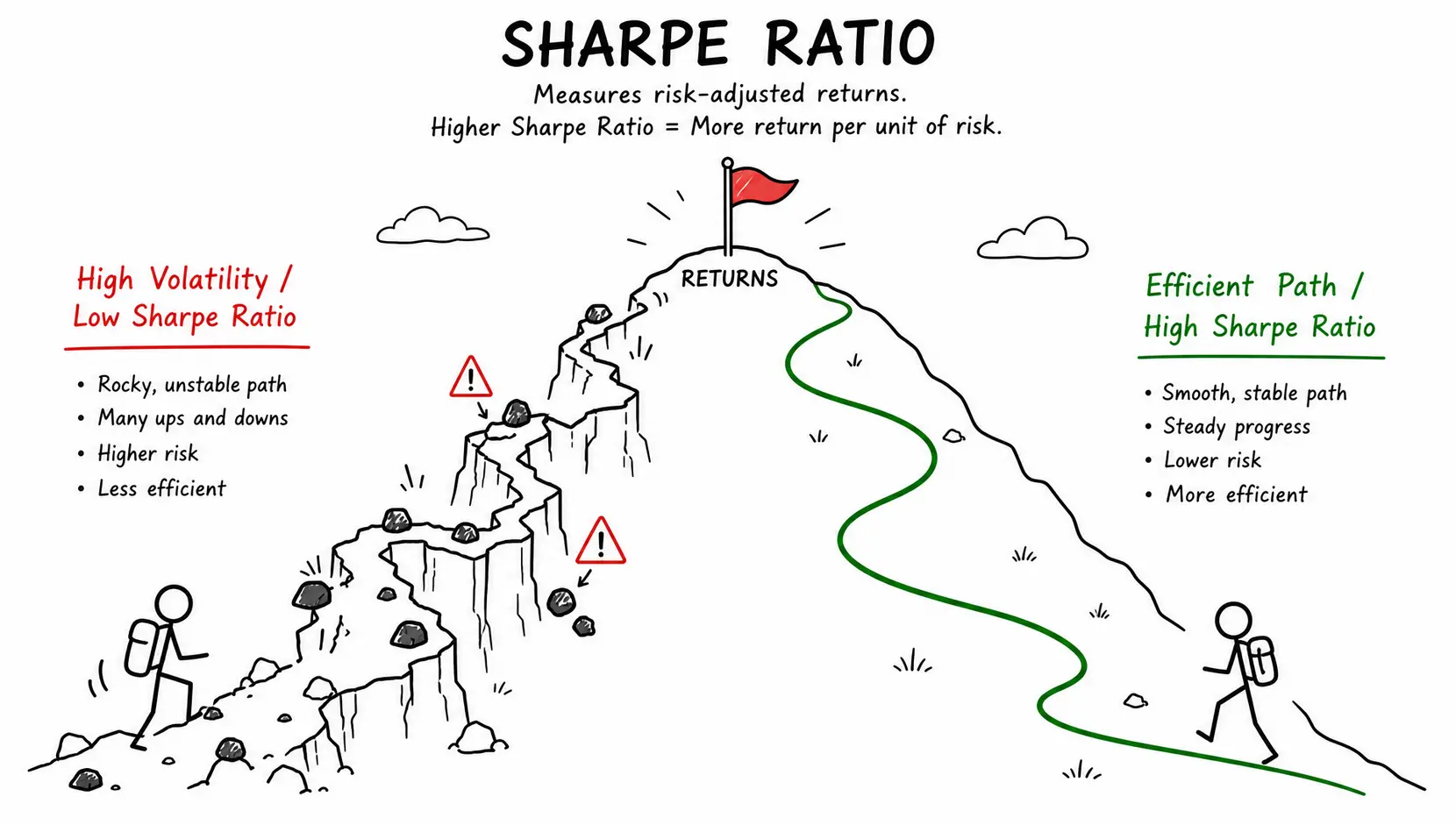
Defining ‘best performance’ requires looking beyond raw returns to risk-adjusted returns. For this, analysts rely on metrics like the Sharpe Ratio, which measures the return earned above a risk-free rate per unit of volatility.
A higher Sharpe Ratio indicates a more efficient return for the level of risk taken. Sharpe Ratio: Definition, Formula, and Examples.
VHT, with its ultra-low expense ratio of 0.10% and its broad diversification across over 400 US healthcare stocks of all sizes, is constructed to deliver strong risk-adjusted performance.
It is not as concentrated in mega-caps as XLV, offering a better balance between the stability of large-caps and the growth potential of mid- and small-caps.
This blend, combined with its rock-bottom cost, makes it a compelling choice for the long-term investor focused on maximising overall portfolio efficiency. Find more at the official site: VHT-Vanguard Health Care ETF.
Frequently Asked Questions
1. Which health care ETF is best?
From an analytical standpoint, there is no single ‘best’ ETF; the optimal choice is contingent on your investment objectives. For lowest cost, XLV (0.09% TER) is superior.
For global diversification, IXJ is the clear choice, despite its higher fee. For a balance of low cost and broad US market exposure, VHT is an exceptionally strong candidate.
2. Are healthcare ETFs a good investment for the long term?
Yes, the structural tailwinds for the healthcare sector are robust. An ageing global population, coupled with persistent technological innovation in medicine and biotech, provides a strong foundation for long-term growth.
The sector also exhibits defensive characteristics, as demand for healthcare is less correlated with the business cycle than many other industries. However, past performance is not indicative of future results.
3. What is a good expense ratio for a healthcare ETF?
In the highly competitive ETF market of 2026, a ‘good’ expense ratio for a broad, US-focused healthcare ETF should be below 0.15%. Vanguard and State Street have driven costs down to the 0.09%-0.10% range.
For a globally diversified ETF, a higher fee is expected, but anything above 0.50% should be scrutinised carefully to ensure the diversification benefits justify the additional cost.
4. What are the main risks of investing in healthcare ETFs?
The primary risks include:
1) Regulatory Risk: Government policies on drug pricing, insurance mandates, or patent laws can significantly impact profitability.
2) Clinical Trial Failures: For ETFs with heavy exposure to biotechnology, the failure of a key drug in clinical trials can cause sharp price declines.
3) Competition: The healthcare landscape is intensely competitive, and innovation can quickly render existing products or services obsolete.
4) Concentration Risk: Some ETFs are heavily weighted towards a few mega-cap stocks, making the fund’s performance highly dependent on those few names.
William Lee’s Final Thoughts
The data presented in this analysis clarifies the trade-offs inherent in selecting a global healthcare ETF. An investor must make a conscious choice between minimising costs, maximising dividend income, and achieving global diversification.
My analysis consistently finds that for most long-term investors, minimising expenses is the most reliable path to maximising net returns. The Vanguard Health Care ETF (VHT) and Health Care Select Sector SPDR Fund (XLV) exemplify this principle.
However, for those with a specific mandate for global exposure, the higher costs of an ETF like the iShares Global Healthcare ETF (IXJ) can be a justifiable expense for the strategic diversification it provides.
Sources & Methodology
William Lee strictly relies on primary regulatory data and authoritative official information to ensure accuracy. Data cited in this guide is sourced from:
*Disclaimer: The content of this article represents the personal views of the author (William Lee) and is for educational and reference purposes only. It does not constitute professional investment or financial advice. Trading and investing involve significant risk; proceed with caution.*
