
As a financial planner, I’ve helped countless families build sustainable wealth, and a recurring theme in 2026 is the desire to diversify portfolios beyond our local market.
Many are looking towards the burgeoning European technology sector, but they are rightly concerned about protecting their hard-earned capital. If you’re looking for low-risk ways to gain exposure to European tech companies, you’ve come to the right place.
This guide is designed to give you a clear, practical roadmap, focusing on the safest route to investing in European tech without unnecessary jargon.
We will explore prudent strategies, such as using diversified European tech funds, to help you tap into this growth market responsibly.
Core Focus: Building Your European Tech Allocation
- Why European Tech?: A growing ecosystem of innovation beyond the highly-concentrated US tech market.
- The Low-Risk Approach: Prioritising diversification and regulatory protection over individual stock-picking.
- Key Strategy: Utilising Exchange-Traded Funds (ETFs) and UCITS-compliant funds as the foundational building blocks.
The Safest Route: Investing Through Diversified European Tech Funds
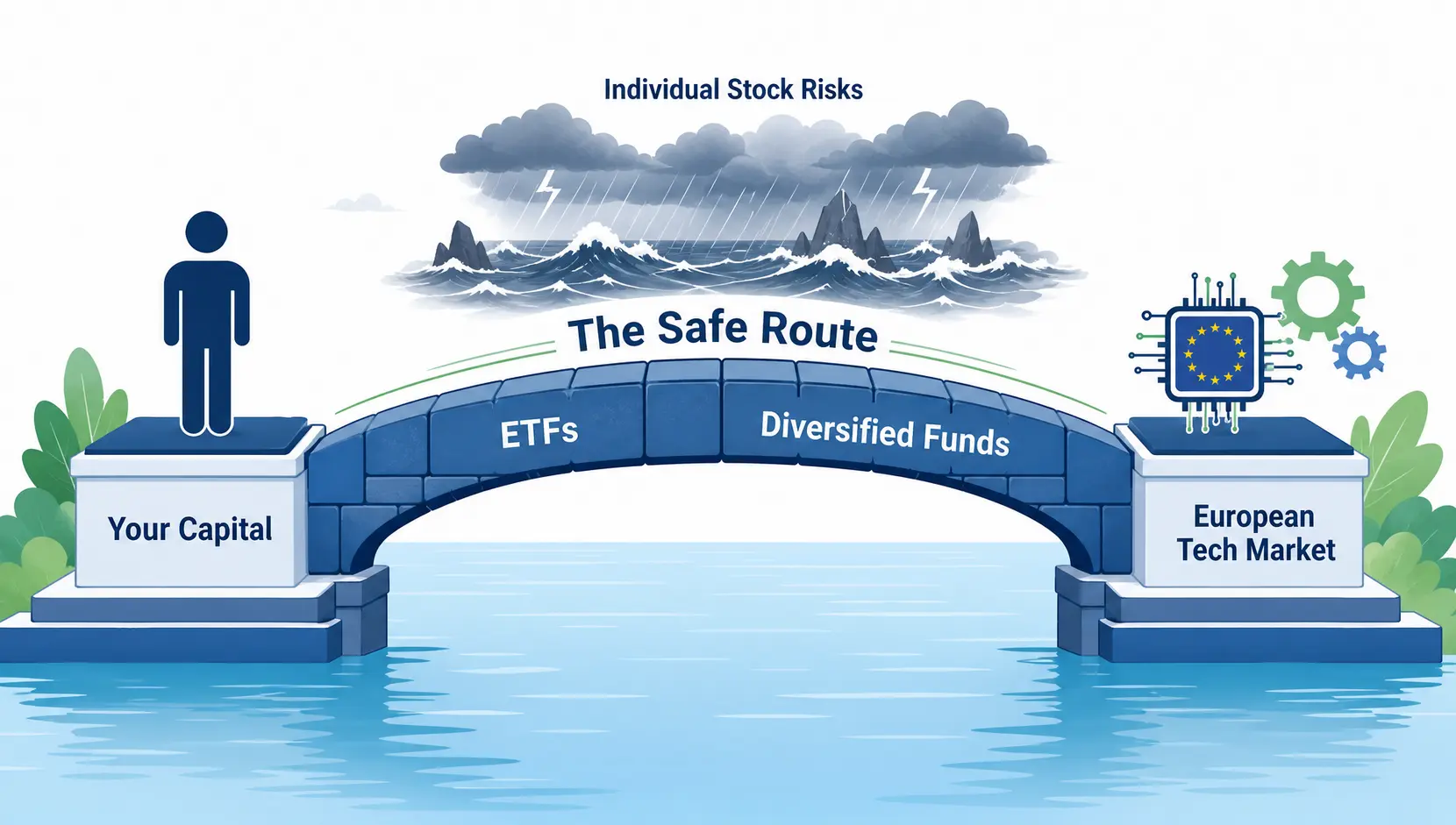
For most personal investors, the most prudent and efficient way to gain exposure is not by trying to pick the next big European tech giant, but by buying a basket of them. This is where diversified funds, specifically ETFs, come into their own.
They provide instant diversification across dozens or even hundreds of companies, significantly reducing the risk associated with a single company failing.
What Are European Tech ETFs and How Do They Mitigate Risk?
An Exchange-Traded Fund (ETF) is a type of investment fund that is traded on a stock exchange, much like a regular stock. A European Tech ETF specifically holds shares in a wide array of technology companies across the continent.
The primary way they mitigate risk is through diversification. Instead of your investment’s success depending on one or two companies, it’s spread across the sector. If one company performs poorly, its impact on your overall investment is cushioned by the others.
Understanding UCITS Funds: Europe’s Gold Standard for Investor Protection
Pro Tip: When you look for a European-domiciled ETF, always check for the ‘UCITS’ label. Think of it as a seal of approval for investor safety.
UCITS stands for ‘Undertakings for Collective Investment in Transferable Securities’, a regulatory framework from the European Commission that provides a high level of protection for investors.
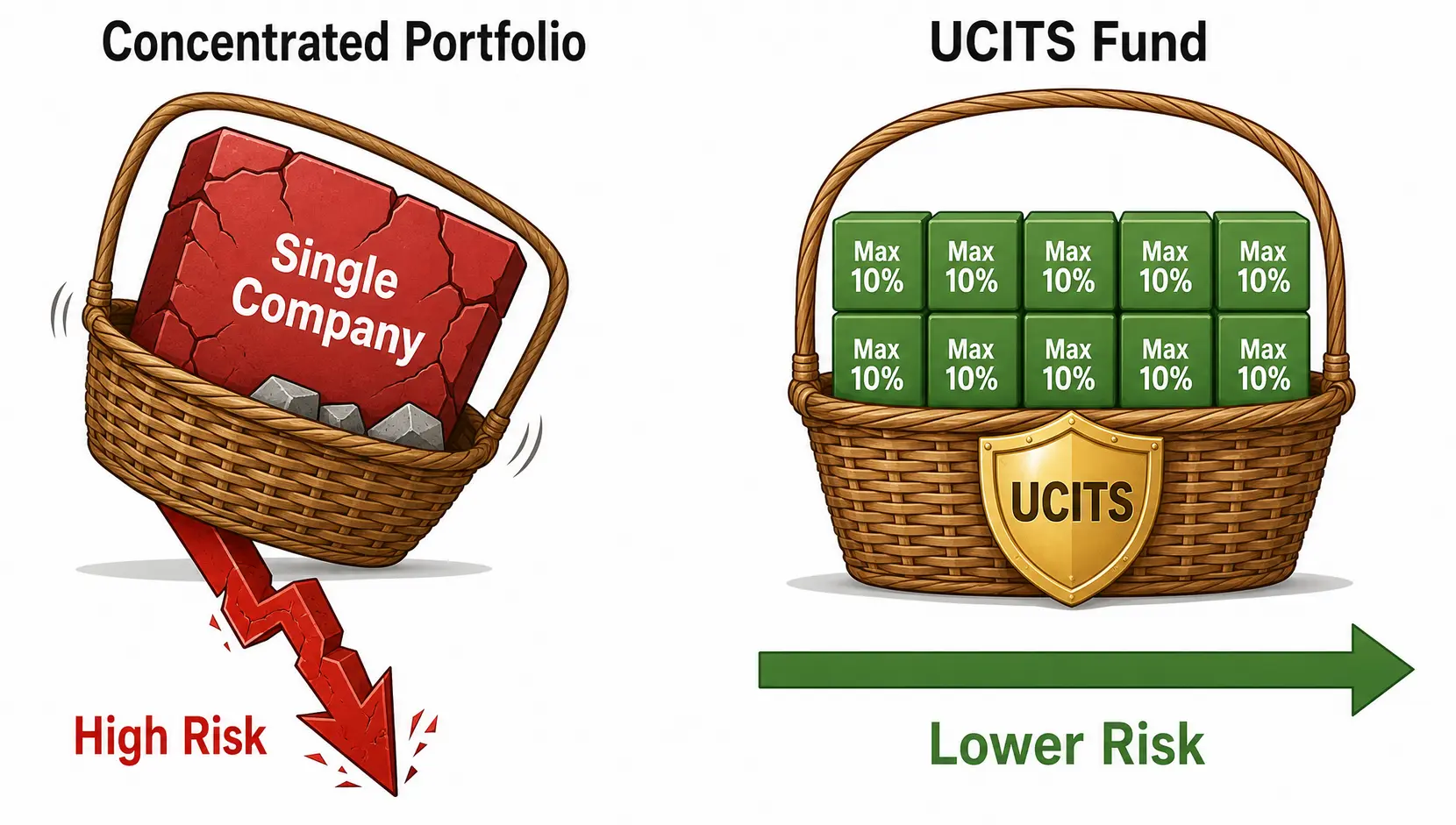
To be UCITS-compliant, a fund must adhere to strict rules on diversification, liquidity, and risk management. For instance, a UCITS fund generally cannot put more than 10% of its assets into a single company, ensuring no single stock can have an outsized negative impact.
This framework is a cornerstone of what makes certain European funds a low-risk way to gain exposure to European tech companies. You can read more about the robust investor protection standards directly from the European Commission.
Examples of Top-Rated European Tech ETFs for a Diversified Portfolio
To make this practical, let’s look at some examples of real-world UCITS ETFs that offer exposure to the European tech sector. These are for illustrative purposes; you must conduct your own due diligence before making any investment.
| ETF Name | Index Tracked | Key Characteristics | Considerations for a Low-Risk Investor |
|---|---|---|---|
| iShares MSCI Europe Information Technology Sector UCITS ETF | MSCI Europe Information Technology Index | Targets large and mid-cap companies across 15 developed European countries. | Offers broad, diversified exposure but is concentrated in the largest, most established players. |
| Invesco STOXX Europe 600 Optimised Technology UCITS ETF | STOXX® Europe 600 Optimised Technology | Tracks a subset of the broader STOXX 600 index, focusing on technology firms. | A well-established option that provides a good representation of the European tech landscape. |
| iShares STOXX Europe 600 Technology UCITS ETF (DE) | STOXX® Europe 600 Technology | One of the largest and most liquid ETFs for this sector, offering robust exposure. | Its size and liquidity can be an advantage, potentially leading to lower trading costs (spreads). |
Analysing the Key Risks in the European Tech Market
Even when taking a diversified, fund-based approach, it is crucial to understand the specific risks associated with the European tech market. A sound financial plan always accounts for potential headwinds.
Understanding these risks doesn’t mean avoiding the investment; it means being prepared for them.
Navigating Market Volatility and High Valuations
Pro Tip: Do not be swayed by short-term market noise. While the European tech market is generally considered less volatile than its US counterpart, it is still a growth-oriented sector prone to price swings.
High valuations can also be a concern; when share prices rise much faster than earnings, they can be vulnerable to sharp corrections. The key is to invest for the long term and avoid panic-selling during inevitable market downturns.
As data from 2025 has shown, even in a volatile year, a diversified approach helps cushion the ride compared to holding individual, high-growth stocks.
A comparison published by Mapfre AM highlights how different sectors perform amidst volatility.
The Impact of EU Regulations and Geopolitical Factors on Tech Stocks
Europe has a robust regulatory environment, which is a double-edged sword for investors.
On one hand, rules like the Digital Markets Act (DMA) and Digital Services Act (DSA) aim to create a fairer, more competitive market, which can be good for smaller, innovative companies.
On the other hand, these regulations can place compliance burdens and limit the growth of the largest tech firms, which often make up a significant portion of tech ETFs.
As an investor, it’s important to be aware that regulatory shifts can and will impact company performance. Staying informed on the goals of such regulations via official sources like the European Commission’s page on the DMA is a prudent step.
Alternative Strategies: Balancing Risk and Reward
While ETFs are my primary recommendation for most families, it’s worth understanding the alternatives to see why a fund-based approach is often superior for those prioritising low risk.
Investing in Blue-Chip European Tech Stocks vs. Funds
It can be tempting to want to invest directly in household names like ASML or SAP. These are ‘blue-chip’ stocks – large, well-established, and financially sound companies.
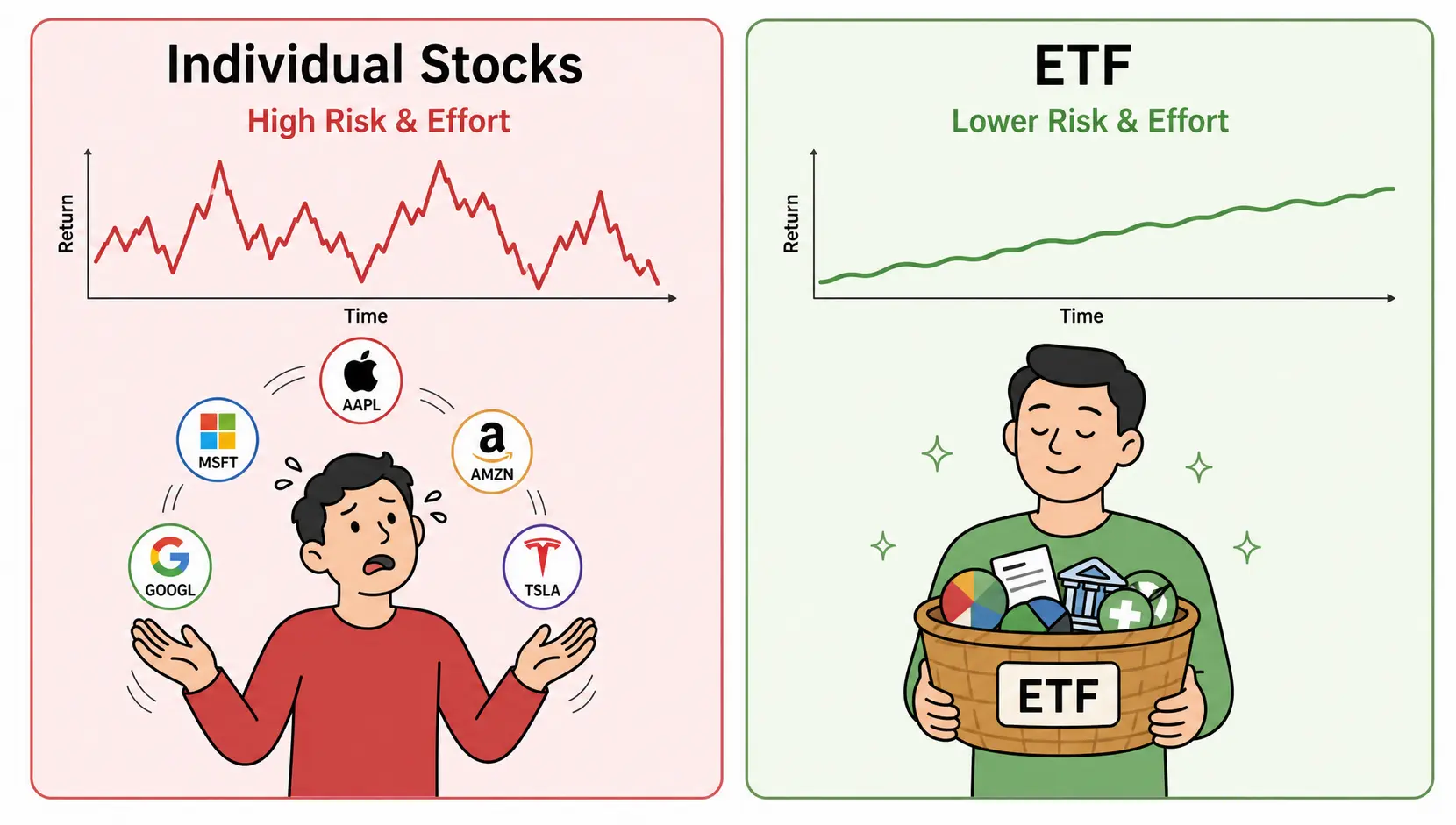
The perceived advantage is that you can focus your capital on companies you believe in. However, this approach carries significantly higher concentration risk compared to an ETF. Let’s compare.
| Feature | Individual Blue-Chip Stocks | European Tech ETF |
|---|---|---|
| Risk Profile | Higher. Your fortune is tied to the performance of a few specific companies. | Lower. Risk is spread across dozens or hundreds of companies. |
| Required Effort | High. Requires ongoing research into company financials, management, and competitive landscape. | Low. The fund manager handles the selection and rebalancing for you. |
| Cost | Can be higher due to brokerage fees for multiple transactions to achieve even minor diversification. | Low annual management fee (Total Expense Ratio – TER). |
| Best For | Experienced investors with deep market knowledge and a high-risk tolerance. | Investors seeking simple, diversified, and low-cost exposure. Ideal for most personal portfolios. |
A Note on Higher-Risk Avenues: Venture Capital and Private Equity
You may hear about venture capital (VC) or private equity (PE) as ways to invest in tech. These involve investing in private companies that are not yet listed on public stock exchanges.
While these can offer spectacular returns, they are the absolute highest-risk end of the spectrum. They are typically illiquid (you can’t sell easily), require very large minimum investments, and are only suitable for sophisticated, high-net-worth investors who can afford a total loss of capital.
For anyone building a family financial plan, these are avenues to be avoided.
Frequently Asked Questions
1. What is the single safest way to invest in the European tech sector?
From my perspective as a financial planner, the safest approach for most people is to invest in a well-diversified, low-cost UCITS-compliant technology ETF.
This strategy avoids the pitfalls of trying to pick individual stocks and benefits from the stringent investor protection rules built into the UCITS framework, ensuring diversification and transparency.
2. Are European tech stocks a better investment than US tech stocks in 2026?
That’s a complex question. ‘Better’ depends on your goals. The US tech market is more mature and concentrated in a few mega-cap companies, which have driven global returns for years.
The European market, while smaller, is arguably more diversified across different tech sub-sectors and may offer better valuation opportunities.
Rather than viewing it as an ‘either/or’ choice, a well-structured plan might include exposure to both, with European tech serving as a valuable diversifier away from a US-heavy portfolio.
3. What is a ‘UCITS ETF’ and why is it considered a low-risk option?
A UCITS ETF is an Exchange-Traded Fund that complies with the European Union’s ‘Undertakings for Collective Investment in Transferable Securities’ directive. It’s considered a lower-risk option because the UCITS rules are specifically designed to protect retail investors.
This includes mandatory diversification (e.g., limits on how much can be invested in a single asset), liquidity requirements (ensuring you can sell your shares), and transparency rules (providing clear documentation on what the fund holds).
4. How much of my portfolio should I allocate to European tech?
There’s no one-size-fits-all answer; it depends entirely on your personal financial situation, age, risk tolerance, and existing investments.
For a client with a balanced portfolio, a dedicated allocation to European tech might be a small, single-digit percentage. It’s a ‘satellite’ holding used to supplement a ‘core’ of broader global and domestic investments.
I would strongly advise discussing this with a qualified financial planner to determine an allocation that is appropriate for your specific circumstances.
David Lim’s Final Thoughts
Sources & Methodology
David Lim strictly relies on primary regulatory data and authoritative official information to ensure accuracy. Data cited in this guide is sourced from:
*Disclaimer: The content of this article represents the personal views of the author (David Lim) and is for educational and reference purposes only. It does not constitute professional investment or financial advice. Trading and investing involve significant risk; proceed with caution.*
