

For investors seeking portfolio diversification and a consistent income stream, the tangible nature of property is compelling. However, direct ownership is capital-intensive and illiquid.
This is where the strategic implementation of Real Estate Investment Trusts (REITs), particularly through an exchange-traded fund (ETF) structure, presents a quantitatively superior alternative.
This guide provides a data-driven analysis of how to choose a REIT ETF, examining the metrics that matter, and evaluates some of the best REIT ETFs to buy in the current 2026 market climate.
The objective is not just to understand these instruments, but to equip you with an analytical framework for their selection.
What Are REIT ETFs? A Beginner’s Introduction
Pro Tip: A REIT ETF is a single, exchange-traded security that holds a diversified portfolio of individual Real Estate Investment Trusts (REITs) or real estate-linked equities. It offers investors immediate, broad exposure to the property market with the liquidity and low cost typical of an ETF, effectively solving the high barrier to entry of direct real estate investment.
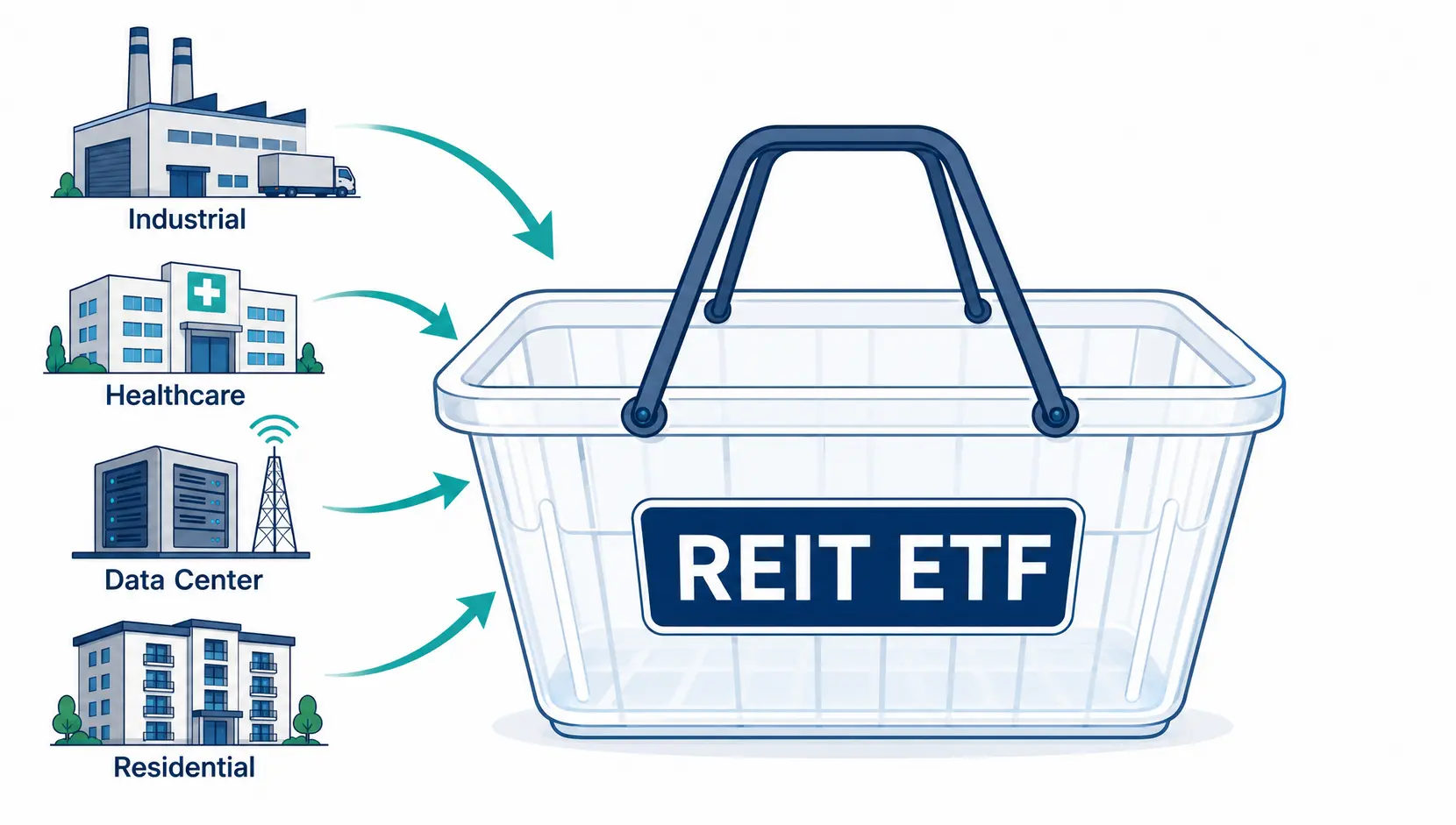
To make an informed decision, one must first deconstruct the vehicle into its two core components: the underlying asset (REITs) and the delivery mechanism (the ETF).
The Core Concept: Understanding Real Estate Investment Trusts (REITs)
A Real Estate Investment Trust is a corporate entity that owns, operates, or finances income-generating real estate.
By law, these entities are required to distribute a significant portion of their taxable income—at least 90%—to shareholders in the form of dividends. This regulatory mandate makes REITs a popular instrument for income-focused investors.
Their structure was established in the U.S. to allow individual investors to invest in large-scale, diversified portfolios of income-producing real estate in the same way they typically invest in other industries – through the purchase of stock.
REITs can be categorised by their holdings:
- Equity REITs: The most common type. They own and operate properties, deriving their income primarily from rents.
- Mortgage REITs (mREITs): They provide financing for real estate by purchasing or originating mortgages and mortgage-backed securities (MBS). Their income is generated from the interest earned on these investments.
- Hybrid REITs: These combine the strategies of both equity and mortgage REITs.
For a detailed definition, the U.S. Securities and Exchange Commission (SEC) provides clear guidelines on what constitutes a REIT. You can reference their official documents for compliance details. Investor Bulletin: Real Estate Investment Trusts (REITs).
The ETF Structure: Benefits of Diversification and Liquidity
Wrapping these individual REITs into an ETF provides several immediate analytical advantages. An ETF trades on a major stock exchange, just like a regular stock, and can be bought and sold throughout the trading day at market-determined prices.
| Feature | Individual REIT | REIT ETF |
|---|---|---|
| Diversification | Concentrated in a specific sector (e.g., only industrial or retail) or a single company’s management. | Instant diversification across dozens or hundreds of REITs, covering multiple sectors and geographies. |
| Cost | Trading commissions per transaction. Requires significant capital to build a diversified portfolio. | Low annual expense ratio. A single transaction provides broad market exposure. |
| Liquidity | Varies significantly. Smaller REITs may have low trading volumes. | Generally high, especially for large, established ETFs, allowing for easy entry and exit. |
| Risk Management | Idiosyncratic risk is high; poor performance of a single property or management team can heavily impact returns. | Systemic risk is the primary concern. Idiosyncratic risk is mitigated through diversification. |
How to Select the Best REIT ETF for Your Portfolio
Pro Tip: The optimal REIT ETF is not necessarily the one with the highest dividend yield. A rigorous selection process prioritises a low expense ratio, minimal tracking error against its benchmark index, sufficient assets under management (AUM) to ensure liquidity, and a sector allocation that aligns with your macroeconomic outlook.
A quantitative approach is required to filter the universe of available REIT ETFs.
Focus on these key metrics:
Key Metrics to Compare: Expense Ratios, Dividend Yields, and Sector Exposure
- Total Expense Ratio (TER): This is the annual fee charged by the fund, expressed as a percentage of your investment. Over a long-term holding period, even a small difference in TER can lead to significant divergence in net returns. My analysis consistently shows a preference for funds with TERs below 0.15%.
- Dividend Yield: While attractive, this figure must be contextualised. A very high yield may indicate higher risk or a falling NAV (Net Asset Value). It is more effective to analyse the stability and growth rate of the dividend over a 3- to 5-year period rather than the trailing 12-month yield in isolation.
- Assets Under Management (AUM): A higher AUM (typically >$1 billion) is a strong indicator of institutional confidence and typically correlates with higher trading liquidity and tighter bid-ask spreads.
- Tracking Error: This metric quantifies how closely the ETF’s performance follows its benchmark index. A low tracking error is the hallmark of a well-managed, efficient index fund.
- Sector and Geographic Exposure: Does the fund focus on specialised areas like data centres and cell towers, or traditional sectors like retail and office space? In 2026, the structural growth in technology-adjacent real estate continues to present opportunities, while the office sector faces headwinds from evolving work patterns. Ensure the ETF’s portfolio aligns with your market view.
Top REIT ETFs Analysed: A Comparative Data Review
Let’s apply this framework to three of the largest and most liquid REIT ETFs in the US market: the Vanguard Real Estate ETF (VNQ), the Schwab U.S. REIT ETF (SCHH), and the iShares U.S. Real Estate ETF (IYR).
The data presented here is based on information available as of September 2026.
| Metric | Vanguard Real Estate ETF (VNQ) | Schwab U.S. REIT ETF (SCHH) | iShares U.S. Real Estate ETF (IYR) |
|---|---|---|---|
| Expense Ratio | 0.12% | 0.07% | 0.40% |
| SEC 30-Day Yield | ~3.8% | ~3.5% | ~3.3% |
| Assets Under Management (AUM) | $70B+ | $11B+ | $4B+ |
| Benchmark Index | MSCI US Investable Market Real Estate 25/50 Index | Dow Jones U.S. Select REIT Index | Dow Jones U.S. Real Estate Capped Index |
| Number of Holdings | ~170 | ~140 | ~80 |
Frequently Asked Questions
1. Are REIT ETFs a good investment now in 2026?
From a quantitative perspective, the attractiveness of REIT ETFs in 2026 hinges on the outlook for interest rates and economic growth.
With inflation moderating from its post-pandemic peaks, central bank policy is becoming more accommodative, which is historically a positive catalyst for real estate valuations.
However, sector divergence is key. Specialised REITs in logistics and data centres are supported by strong secular trends, while traditional office and retail REITs face ongoing structural challenges.
An allocation to a diversified REIT ETF can be a sound strategy, but it requires careful monitoring of macroeconomic indicators.
2. What are the main risks of investing in REITs?
The primary risks are threefold:
1) Market Risk: Like stocks, REIT values can decline due to broad market downturns.
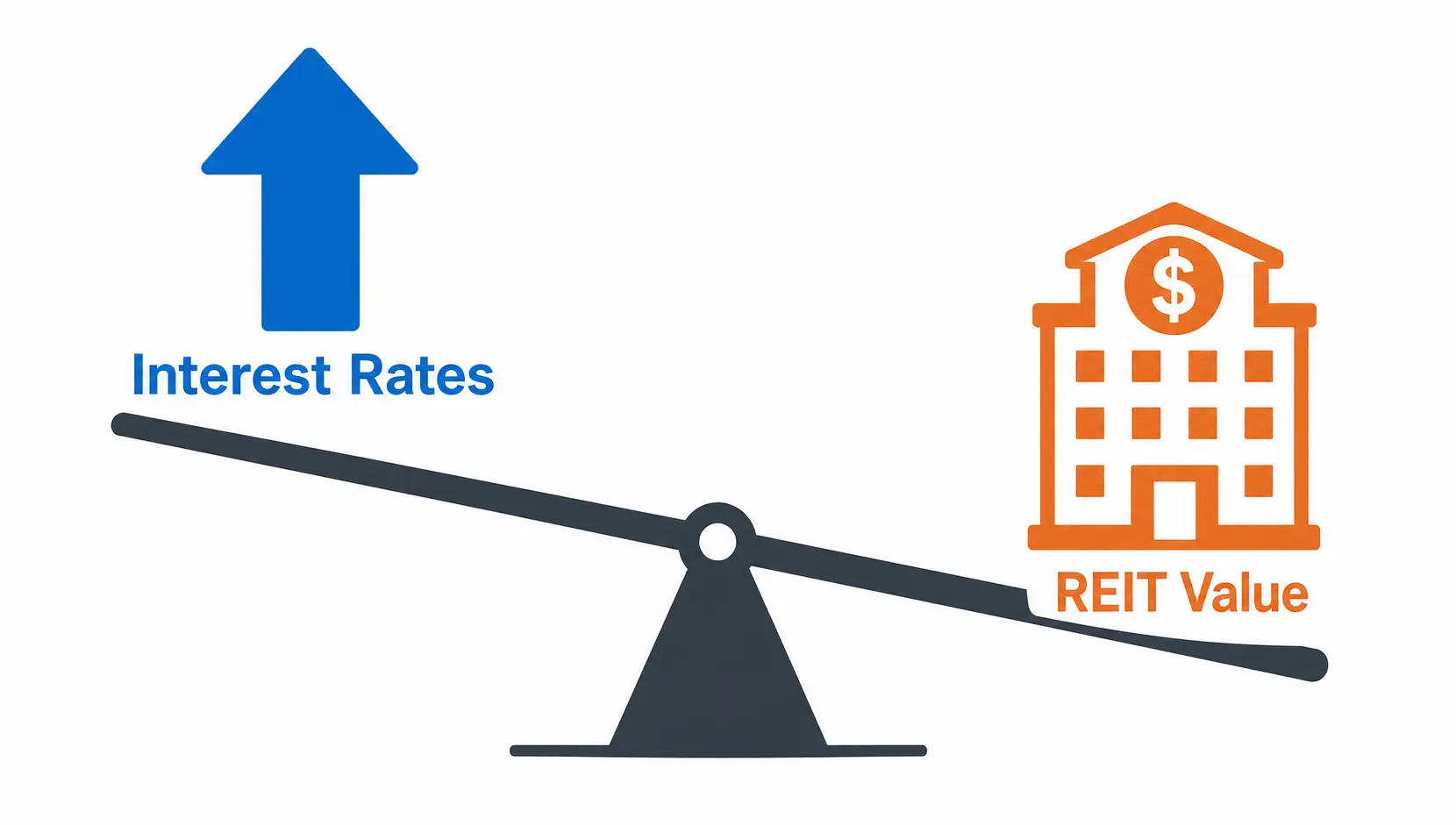
2) Interest Rate Risk: REITs are highly sensitive to interest rate changes. Rising rates increase borrowing costs for REITs and can make lower-risk bonds appear more attractive to income investors, potentially leading to sell-offs.
3) Property-Specific Risk: Even within an ETF, if the fund is heavily weighted towards a struggling sector (e.g., office spaces in a work-from-home economy), performance can suffer. This is why analysing the ETF’s sector exposure is critical.
3. How are dividends from REIT ETFs taxed?
The taxation of REIT dividends is a crucial factor that investors must not overlook. Generally, dividends from REITs are not considered ‘qualified dividends’.
This means they are typically taxed at the investor’s ordinary income tax rate, which can be significantly higher than the preferential tax rates for qualified dividends. A portion of the dividend may sometimes be classified as return of capital or capital gains, which have different tax treatments.
Consulting a tax professional is highly advisable to understand the specific implications for your financial situation.
William Lee’s Final Thoughts
Sources & Methodology
William Lee strictly relies on primary regulatory data and authoritative official information to ensure accuracy. Data cited in this guide is sourced from:
- U.S. Securities and Exchange Commission (SEC) Investor Bulletins
- Investopedia Financial Terms Database
- ETF.com and ETF Database for comparative fund data
- Publicly available factsheets and prospectus documents from fund issuers like Vanguard, BlackRock, and Schwab.
*Disclaimer: The content of this article represents the personal views of the author (William Lee) and is for educational and reference purposes only. It does not constitute professional investment or financial advice. Trading and investing involve significant risk; proceed with caution.*
