
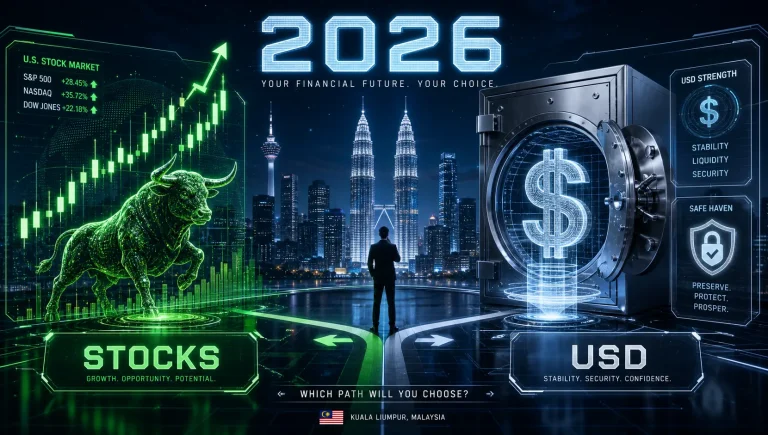
As a financial planner in Malaysia, one of the most frequent questions I receive from families is how to safeguard their long-term savings against the depreciating Ringgit.
This inevitably leads to a crucial debate: should Malaysians keep cash in USD or invest in US stocks?
For many, this decision is central to planning for significant life goals, such as funding a child’s overseas education or building a retirement nest egg.
This guide provides a detailed analysis of investing in US stocks versus holding USD, helping you understand the trade-offs between the long-term wealth growth of equities and the perceived safety of foreign currency, especially considering the current methods for handling currency exchange from MYR to USD.
Core Analysis: Investing in US Stocks vs. Holding USD Cash
The Case for Investing in US Stocks: Growth, Diversification, and Market Access
For Malaysians seeking substantial capital appreciation, the US stock market presents a compelling proposition. Its primary advantage lies in its potential for robust, long-term growth, driven by some of the world’s most innovative companies.
By investing in a broad market index like the S&P 500, you gain exposure to global giants in technology, healthcare, and consumer goods—sectors that are often underrepresented on the Bursa Malaysia.
Historically, the returns have been significant. While past performance is not indicative of future results, major indices have demonstrated strong growth over extended periods.
This potential for compound growth is a powerful tool for outpacing inflation and achieving ambitious financial targets.
Furthermore, it provides crucial geographical diversification, reducing your portfolio’s dependence on the Malaysian economic cycle. Access has also become seamless, with many regulated platforms available to Malaysian investors.
The Case for Holding USD Cash: Stability, Liquidity, and Hedging Against Currency Volatility
On the other side of the spectrum is the strategy of holding physical US dollars or maintaining a USD-denominated bank account. The primary appeal here is stability and its function as a direct hedge against the depreciation of the Malaysian Ringgit.
When the MYR weakens against the USD, the value of your USD holdings, when converted back, increases. This makes it an effective tool for preserving purchasing power, especially for those with upcoming US-dollar denominated expenses like tuition fees or property purchases.
Another key benefit is liquidity. Cash is the most liquid asset, readily available for emergencies or for seizing investment opportunities that may arise during market downturns.
Unlike stocks, its value does not fluctuate with market sentiment, offering a psychological cushion during periods of high volatility. This strategy is less about growth and more about capital preservation and risk management.
Official data from Bank Negara Malaysia can be used to track the historical performance of this hedging strategy.
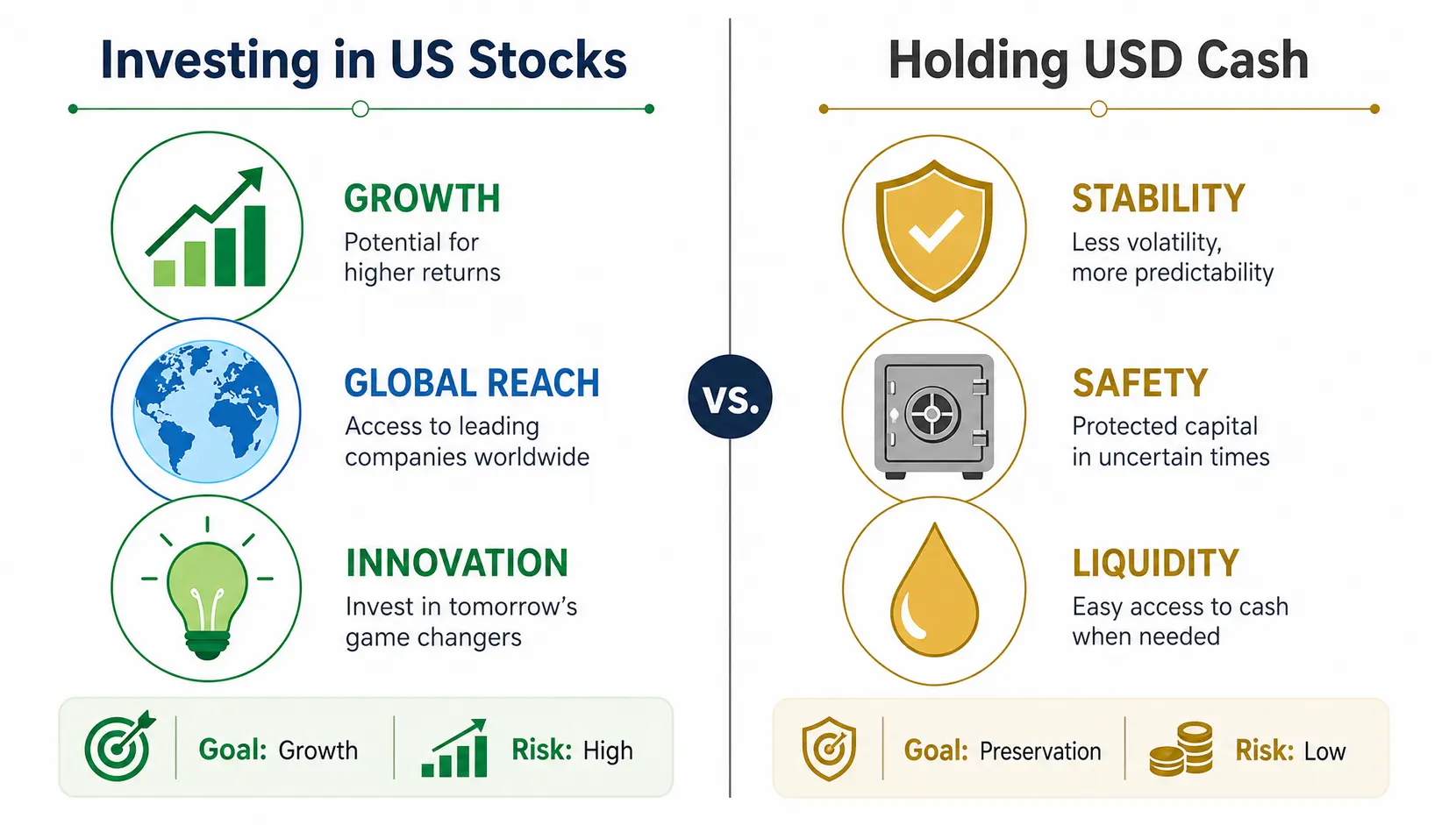
| Feature | Investing in US Stocks | Holding USD Cash |
|---|---|---|
| Primary Goal | Capital Appreciation & Growth | Capital Preservation & Currency Hedge |
| Potential Return | High (based on market performance) | Low (based on currency fluctuation and interest) |
| Risk Level | High (Market & Currency Volatility) | Low (Primarily Currency & Inflation Risk) |
| Liquidity | High (T+2 settlement) | Very High (Immediate access) |
| Best For | Long-term goals (e.g., retirement in 15+ years) | Short-term goals (e.g., US expenses in 1-2 years) |
A Practical Guide for Malaysians to Get Started
How to Fund Your Account: Navigating Currency Exchange from MYR to USD
The process of converting MYR to USD to fund an international brokerage account has become more streamlined. Malaysians have several regulated pathways to consider.
The traditional method involves using commercial banks like HSBC or Maybank to perform telegraphic transfers. This is secure but may involve higher fees and less favourable exchange rates.
Alternatively, many modern brokerage platforms regulated by the Securities Commission Malaysia offer in-platform currency conversion. These are often more convenient and can have competitive rates.
Fintech solutions like Wise also offer a fast and cost-effective method, but you must ensure the receiving brokerage account accepts funds from such services. Always compare the final landed amount in USD after all fees and spread costs are factored in.
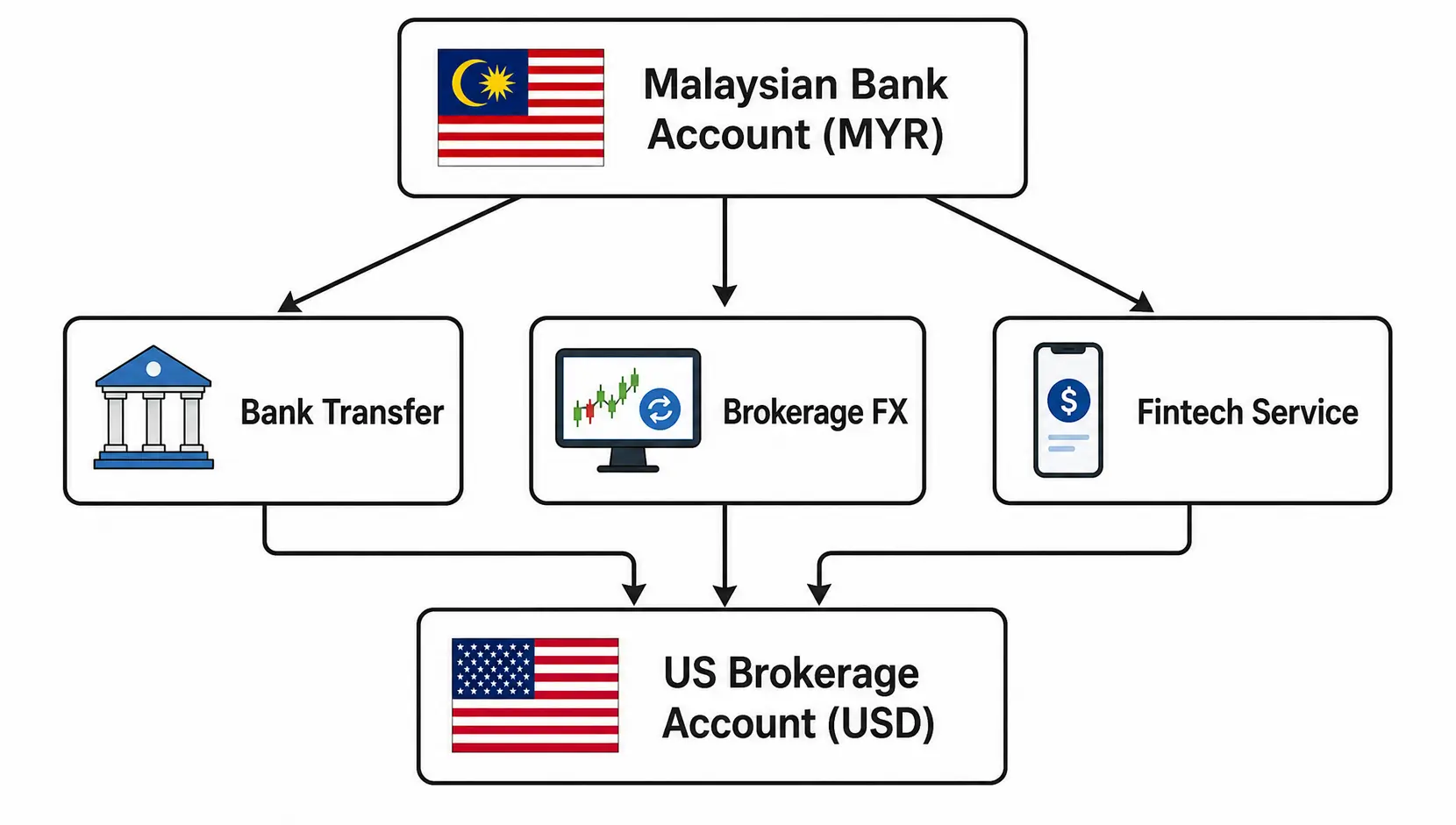
| Method | Typical Cost Structure | Speed | Best Use Case |
|---|---|---|---|
| Bank Telegraphic Transfer | Fixed fees + wider exchange rate spread | 1-3 business days | Large, one-off transfers where security is paramount. |
| Brokerage In-Platform FX | Competitive spread, often no fixed fees | Instant to 1 business day | Regular investing and funding of a specific trading account. |
| Fintech Services (e.g., Wise) | Low fixed fee + tight mid-market spread | Same day to 1 business day | Cost-sensitive transfers and funding accounts that accept third-party platforms. |
Key Risks to Manage: US Estate Tax and Currency Fluctuations
While investing overseas opens up opportunities, it also introduces unique risks that every Malaysian must understand and plan for. A sustainable financial plan is one that anticipates and mitigates potential downsides.
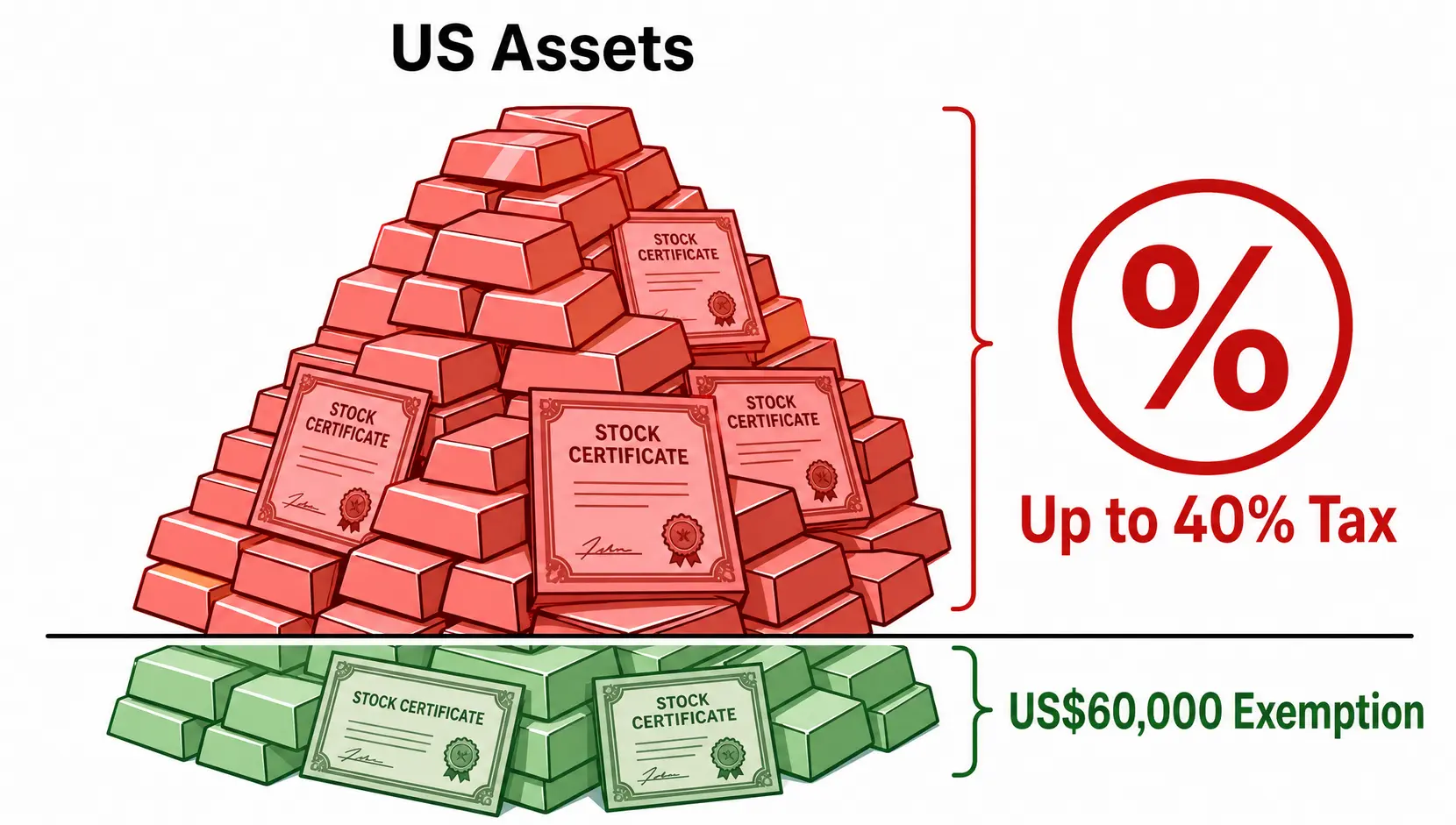
This is arguably the most significant risk for Malaysian investors. Unlike US citizens who have a multi-million dollar exemption, the federal estate tax exemption for NRAs is only US$60,000 as of 2026. Any US-situs assets (like stocks in US-based companies) exceeding this amount could be subject to estate tax rates of up to 40% upon the investor’s death. It is crucial to consult with a tax professional specializing in cross-border investments to explore mitigation strategies, such as using specific corporate structures or investing through Irish-domiciled ETFs. This information is based on guidance from the U.S. Internal Revenue Service (IRS).
Another critical risk is currency fluctuation. A strengthening of the MYR against the USD can erode or even negate your investment gains when you convert the funds back to Ringgit.
For example, if your US stock portfolio grows by 10%, but the MYR strengthens by 12% against the USD during the same period, you would realize a net loss in MYR terms.
This is a fundamental risk of all international investing and underscores the importance of having a long-term investment horizon to ride out currency cycles.
Finally, investors must correctly handle their tax documentation. Upon opening an account, you will be required to fill out the W-8BEN form.
As explained by Investopedia, this IRS form certifies your non-US status and is essential for claiming reduced withholding tax rates on dividends under the tax treaty between Malaysia and the US. Failure to submit it can result in a default 30% withholding tax on all dividends received.
Frequently Asked Questions
1. What are the tax implications for a Malaysian investing in the US stock market?
From a planning perspective, you need to consider three main tax points. Firstly, the US does not tax capital gains for non-resident aliens on the sale of US stocks.
Secondly, dividends are typically taxed at a 30% withholding rate, but by submitting the W-8BEN form, Malaysians can claim a reduced rate of 15% as per the US-Malaysia tax treaty.
Lastly, and most critically, is the US estate tax, which applies to assets over $60,000. For your Malaysian tax obligations, you should consult the latest guidelines from LHDN, though foreign-sourced income is generally exempt under certain conditions.
2. Which trading platforms are best for Malaysians to access US stocks?
The ‘best’ platform depends on your needs. My primary advice is to always choose a broker that is a ‘Recognised Market Operator’ by the Securities Commission of Malaysia. This ensures regulatory oversight and protection.
Within that list, you can compare platforms based on fees (brokerage, FX spread), market access (stocks, ETFs), user interface, and customer support. Moomoo Malaysia and Rakuten Trade are examples of popular, regulated platforms offering access to US markets.
3. How can I protect my investments from USD/MYR currency swings?
There are several strategies. The simplest is to maintain a long-term investment horizon (10+ years), which allows your portfolio to weather various currency cycles. Another method is dollar-cost averaging—investing a fixed amount regularly.
This approach averages out your purchase price in both stock value and currency exchange rates over time. For more advanced investors, using currency-hedged ETFs is an option, although they may come with higher expense ratios.
Lastly, holding a portion of your portfolio in USD cash can act as a natural buffer.
4. Is it safer to keep my money in USD cash instead of investing?
‘Safer’ is relative to your goals. Holding USD cash protects you from stock market volatility and hedges against MYR depreciation, making it very safe for capital preservation in the short term. However, it is not ‘safe’ from inflation risk.
Over a decade, the rising cost of living can erode the purchasing power of your cash, whereas a diversified stock portfolio has the potential to grow significantly ahead of inflation.
The safest overall plan usually involves a balanced allocation between growth assets (stocks) and stability assets (cash).
David Lim’s Final Thoughts
Sources & Methodology
David Lim strictly relies on primary regulatory data and authoritative official information to ensure accuracy. Data cited in this guide is sourced from:
- Bank Negara Malaysia (BNM) for official exchange rate information.
- The U.S. Internal Revenue Service (IRS) for tax regulations concerning Non-Resident Aliens.
- The Securities Commission Malaysia (SC) for guidance on regulated entities.
- Investopedia for financial terminology and procedural explanations.
*Disclaimer: The content of this article represents the personal views of the author (David Lim) and is for educational and reference purposes only. It does not constitute professional investment or financial advice. Trading and investing involve significant risk; proceed with caution.*
