

As a financial planner who has spent years helping families in Malaysia and the UK navigate their financial futures, the most common fear I encounter is the thought of a market downturn erasing hard-earned savings.
When volatility hits the US markets, the shockwaves are felt globally. This raises a critical question for prudent investors: where can we find shelter?
This guide provides a clear pathway to understanding safe haven assets in US markets during economic downturns, exploring what investments secure your portfolio during a recession, and comparing traditional safe havens like Gold and U.S. Treasury bonds to modern alternatives.
What Defines a Safe Haven Asset?
Pro Tip: A true safe haven is an asset that you expect to hold or even increase its value when the broader market is in distress. Think of it as the financial equivalent of a sturdy umbrella in a sudden downpour; its primary job is protection, not aggressive growth.
To truly appreciate their role, we need to understand the fundamental qualities that make an asset a ‘safe haven’. It isn’t just about being ‘less risky’; it’s about having specific, reliable characteristics that investors flock to during times of crisis.
These assets provide a crucial buffer, helping to preserve capital when equity markets are falling.
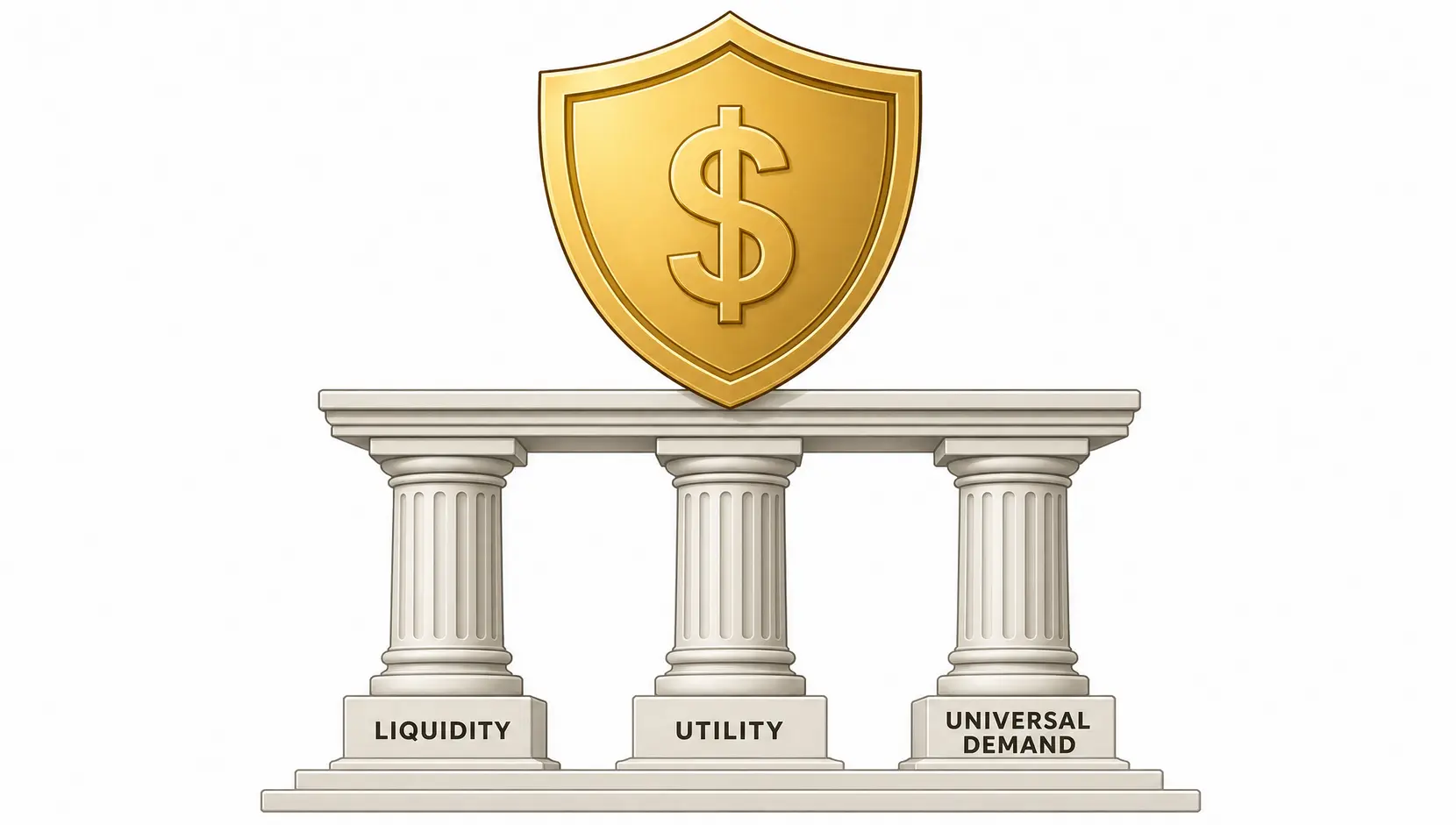
The Core Characteristics: Liquidity, Utility, and Universal Demand
For an asset to be considered a reliable safe haven, it generally needs to exhibit three core traits:
- Liquidity: This is the ability to convert an asset into cash quickly without causing a significant drop in its market price. During a downturn, you need access to your funds without penalty. Assets like major currencies or government bonds are highly liquid.
- Utility: The asset should have a functional purpose outside of its investment value. Gold, for instance, is used in jewellery and electronics. This inherent demand provides a floor for its price.
- Universal Demand: The asset must be recognised and desired globally. This ensures that even if one economy is struggling, there is still a broad market of buyers, which helps to maintain its value.
Why They Matter for Your Portfolio During Market Stress
Integrating safe haven assets is a cornerstone of prudent portfolio diversification. Their primary role is to act as a counterbalance to higher-risk growth assets like stocks.
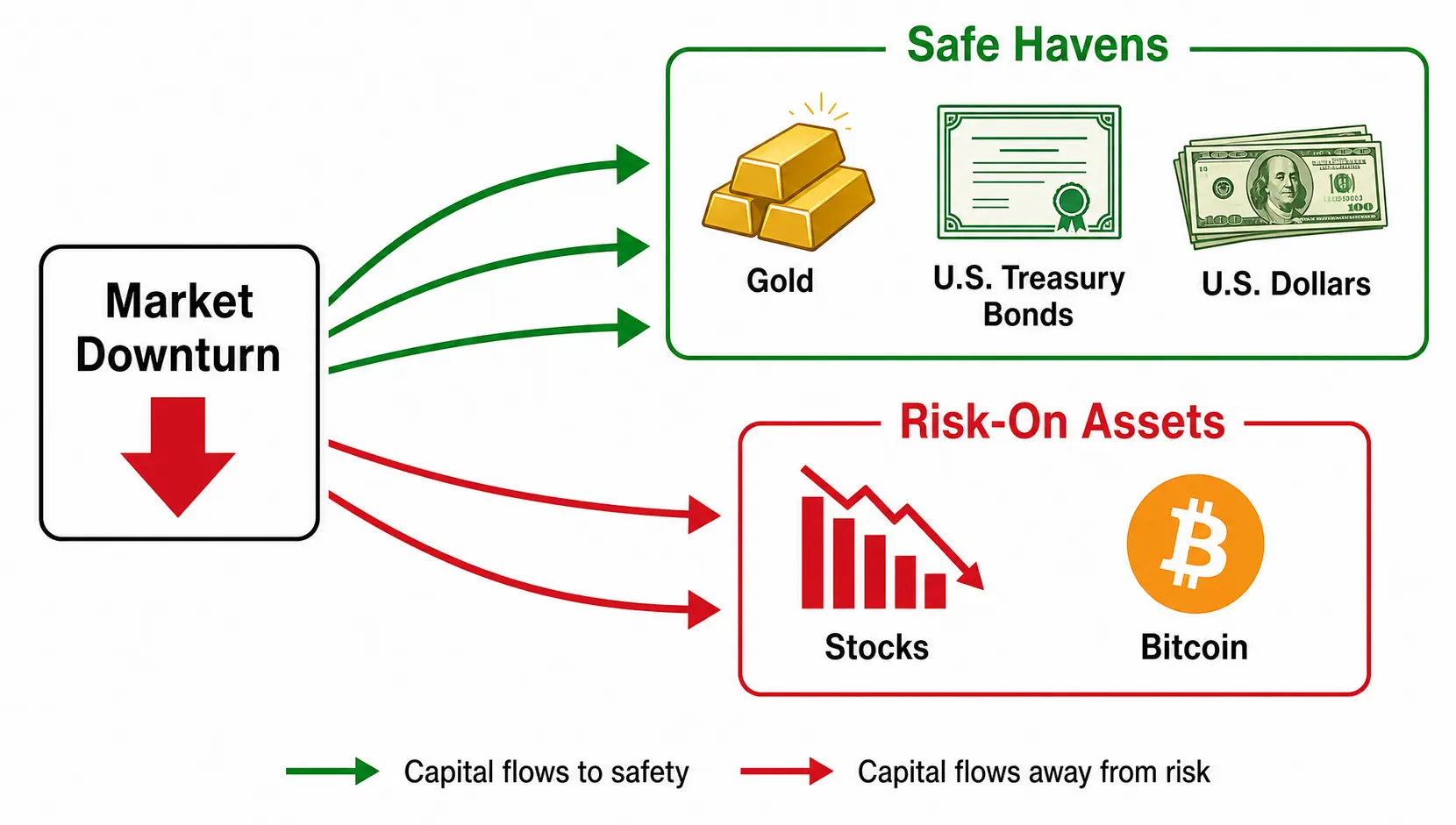
When stock markets panic and investors sell off riskier assets, they typically move their capital into safe havens. This flight to safety can cause the value of these assets to rise, offsetting some of the losses in your equity holdings.
This strategy isn’t about timing the market, but about building a resilient portfolio that can weather different economic seasons, ensuring your long-term financial goals remain on track.
Top Safe Haven Assets to Watch in the US Market
Summary Paragraph: In the US market, the most time-tested safe havens are U.S. Treasury securities, gold, and the U.S. dollar itself. These assets have historically served as the primary destinations for capital during periods of economic instability, each offering unique protective qualities.
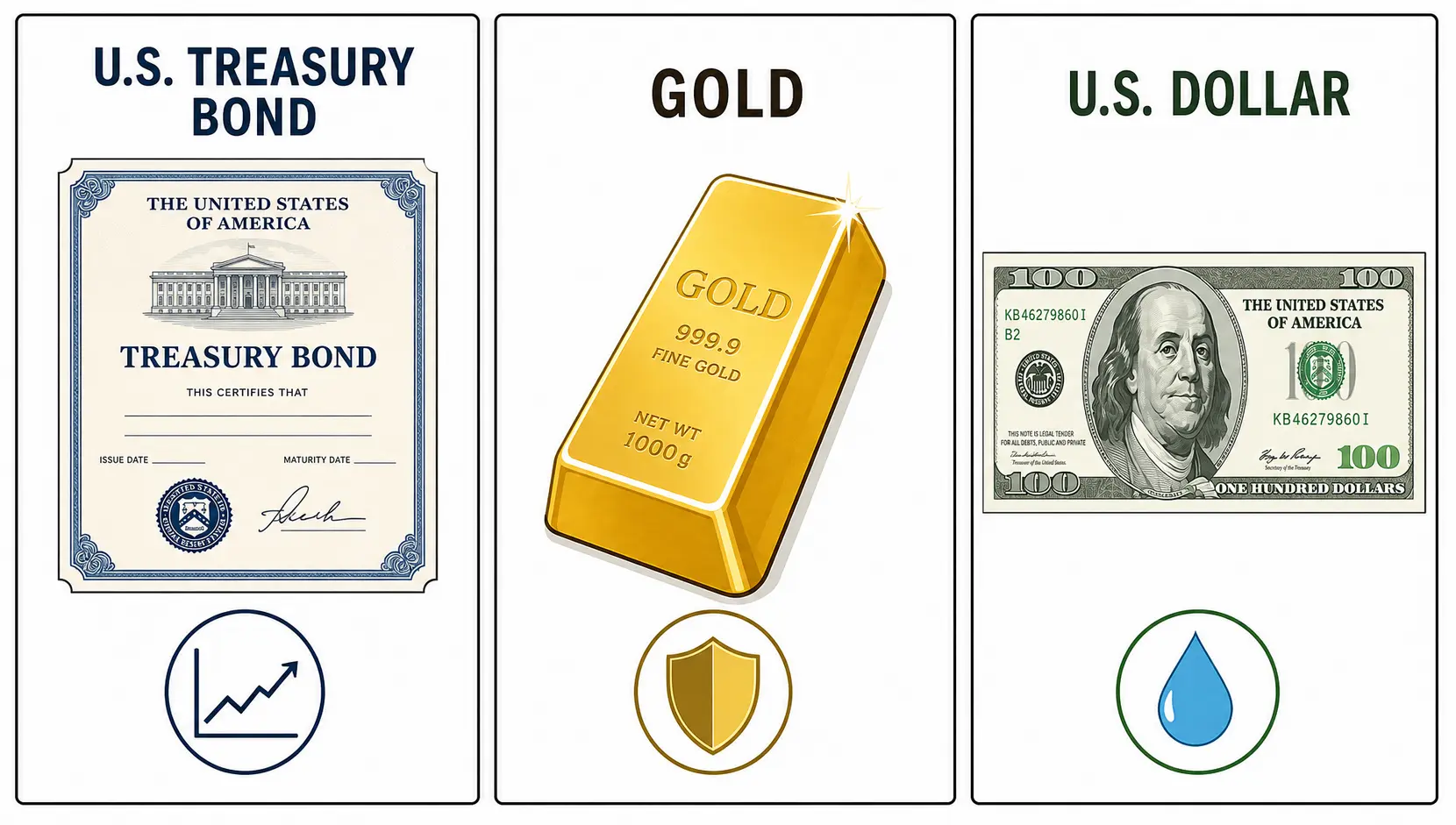
When an economic downturn looms, identifying which safe haven assets are most suitable for your portfolio is paramount. Let’s analyse the most prominent options available to investors focused on the US markets.
Traditional Strongholds: U.S. Treasury Bonds and Gold
U.S. Treasury Bonds (T-Bonds):
These are debt securities issued by the U.S. government. They are considered one of the safest investments in the world because they are backed by the ‘full faith and credit’ of the United States government.
During a recession, the demand for T-bonds often surges, driving their prices up and their yields down.
As of late September 2026, the yield on the 10-Year Treasury note hovers around 5.26%, reflecting the market’s current assessment of risk and inflation.
For a household portfolio, Treasury bonds provide a stable income stream and capital preservation. You can find real-time data directly from the U.S. Department of the Treasury.
Gold:
The appeal of gold is timeless. It’s a physical asset with a history spanning millennia as a store of value.
Unlike currencies, it cannot be printed by central banks, making it a traditional hedge against inflation and currency debasement.
During downturns, gold’s price often moves inversely to the stock market. However, it’s important to note that gold pays no dividends or interest, and its price can be volatile.
Storing physical gold also incurs costs and security considerations. Reports from entities like the World Gold Council consistently analyse its performance as a diversifying asset.
The Role of the U.S. Dollar and Other Reserve Currencies
The U.S. Dollar (USD) itself is a major safe haven asset. As the world’s primary reserve currency, it is involved in the vast majority of international transactions.
When global economic fear rises, investors and corporations seek the liquidity and perceived safety of the dollar. This demand can strengthen the USD against other currencies.
You can track the dollar’s strength through indices like the Nominal Broad U.S. Dollar Index provided by FRED.
Other currencies like the Swiss Franc (CHF) and Japanese Yen (JPY) also exhibit safe-haven characteristics, backed by stable governments and strong financial systems.
| Asset Type | Primary Benefit in a Downturn | Key Risk/Consideration | Suitable For |
|---|---|---|---|
| U.S. Treasury Bonds | Capital preservation and reliable income. | Interest rate risk (if rates rise, bond prices fall). | Investors needing stability and predictable returns. |
| Gold | Hedge against inflation and currency devaluation. | No yield, storage costs, and price volatility. | Long-term diversification against systemic financial risk. |
| U.S. Dollar (Cash) | Maximum liquidity and safety during a flight to quality. | Loses purchasing power over time due to inflation. | Short-term safety and maintaining emergency funds. |
Modern Contenders: Are Cryptocurrencies a Safe Haven?
Pro Tip: While proponents label Bitcoin ‘digital gold,’ its performance during recent market stress has been more akin to a high-risk tech stock than a stable safe haven. Its role in a conservative portfolio remains highly speculative.
The debate over whether cryptocurrencies, particularly Bitcoin, can act as safe haven assets is one of the most heated in modern finance.
The argument has valid points on both sides, but from a household financial planning perspective, extreme caution is warranted.
The Case for Bitcoin as ‘Digital Gold’
The primary argument for Bitcoin as a safe haven lies in its decentralized nature and fixed supply of 21 million coins, drawing parallels to gold’s scarcity.
Proponents argue that it is uncorrelated with the traditional financial system and immune to the inflationary policies of central banks. However, its performance history during economic downturns is short and inconsistent.
During the market turmoil of 2020 and subsequent downturns, Bitcoin has shown a high correlation with speculative growth assets, falling sharply when stock markets fell.
| Asset Performance | 2008 Global Financial Crisis (GFC) | COVID-19 Pandemic Crash (2020) |
|---|---|---|
| S&P 500 (Equities) | Significant decline (~ -50%) | Sharp but brief decline (~ -34%) |
| U.S. 10-Year Treasury | Price increased as yields plummeted (strong safe haven). | Price increased significantly (strong safe haven). |
| Gold | Initially fell, but then rose significantly through 2011. | Performed very well, reaching new highs. |
| U.S. Dollar Index (DXY) | Strengthened significantly as a flight to liquidity. | Strengthened sharply during the initial panic. |
| Bitcoin | Did not exist. | Fell sharply along with equities, acting as a risk-on asset. |
As the table based on historical analysis by sources like Bloomberg and academic studies shows, traditional assets fulfilled their safe haven role in both crises, while Bitcoin did not.
Frequently Asked Questions
1. What is the ultimate safe haven asset during a severe economic downturn?
From my perspective as a financial planner, there is no single ‘ultimate’ safe haven. The most effective strategy is diversification across several non-correlated safe haven assets.
A combination of U.S. Treasury bonds for income and stability, gold for long-term value preservation, and sufficient cash (like USD) for liquidity typically provides the most robust protection for a household portfolio.
2. How did different safe haven assets perform during the 2008 crisis versus the COVID-19 pandemic?
In both the 2008 GFC and the 2020 pandemic crash, U.S. Treasury bonds and the U.S. dollar performed exceptionally well as investors fled to safety.
Gold also performed strongly in both periods, although with some initial volatility in 2008. The key difference was in assets like Bitcoin, which was not present in 2008.
In 2020, it failed to act as a safe haven, declining sharply with the equity markets, demonstrating its high-risk, speculative nature.
3. Is real estate in the US considered a safe haven asset?
This is a common question. While property can be a stable long-term investment, it is not typically considered a safe haven asset in the traditional sense.
The main reason is its lack of liquidity. Selling property can be a slow and costly process, which is the opposite of what is needed during a financial crisis.
Furthermore, property values can and do fall during severe economic downturns, as seen during the 2008 crisis which was rooted in the housing market.
David Lim’s Final Thoughts
Sources & Methodology
David Lim strictly relies on primary regulatory data and authoritative official information to ensure accuracy. Data cited in this guide is sourced from:
*Disclaimer: The content of this article represents the personal views of the author (David Lim) and is for educational and reference purposes only. It does not constitute professional investment or financial advice. Trading and investing involve significant risk; proceed with caution.*
