
Knowing when to stay out of the market is just as critical as knowing when to enter. For anyone serious about trading, understanding the times when not to trade the US stock market open is a fundamental pillar of risk management.
Many new traders get burned by assuming the market is always a level playing field, but liquidity and volatility shift dramatically based on the clock and the calendar.
This guide provides a definitive map of the U.S. stock market’s non-trading days, extended-hours risks, and other periods when caution should be your primary strategy.
Official US Stock Market Holidays: Non-Trading Days 2026-2028
The schedules below are based on the official calendars provided by the major exchanges. While these are confirmed, always double-check with the primary source as exceptional circumstances can lead to changes.
2026 US Stock Market Holiday Schedule
| Date | Holiday | Market Status |
|---|---|---|
| January 1 | New Year’s Day | Closed |
| January 19 | Martin Luther King, Jr. Day | Closed |
| February 16 | Washington’s Birthday | Closed |
| April 3 | Good Friday | Closed |
| May 25 | Memorial Day | Closed |
| June 19 | Juneteenth National Independence Day | Closed |
| July 3 | Independence Day | Closed |
| September 7 | Labor Day | Closed |
| November 26 | Thanksgiving Day | Closed |
| November 27 | Day after Thanksgiving | Early Close (1:00 PM ET) |
| Christmas Eve | Early Close (1:00 PM ET) | |
| December 25 | Christmas Day | Closed |
A Look Ahead: Confirmed Market Holidays for 2027 & 2028
Planning is key to long-term survival in trading. Below are the confirmed dates for the next two years. Use them to build your strategic calendar.
| Holiday | 2027 Date | 2028 Date |
|---|---|---|
| New Year’s Day | January 1 | Observed Dec 31, 2027 |
| Martin Luther King, Jr. Day | January 18 | January 17 |
| Washington’s Birthday | February 15 | February 21 |
| Good Friday | March 26 | April 14 |
| Memorial Day | May 31 | May 29 |
| Juneteenth | Observed June 18 | June 19 |
| Independence Day | Observed July 5 | July 4 |
| Labor Day | September 6 | September 4 |
| Thanksgiving Day | November 25 | November 23 |
| Christmas Day | Observed Dec 24 | December 25 |
Beyond Holidays: Other Times You Should Avoid Trading
The market’s clock is more than just holidays. The most treacherous periods for retail traders often occur outside of the main session. Understanding these time-based risks is non-negotiable.
Understanding Standard Trading Hours vs. Weekend Closures
The standard trading hours for the NYSE and Nasdaq are from 9:30 a.m. to 4:00 p.m. Eastern Time (ET), Monday through Friday. Outside of these hours, and on weekends, the primary market is closed. No trading occurs.
Why is this important? Because the world doesn’t stop. Significant geopolitical, economic, or company-specific news released over the weekend can create a massive gap between Friday’s close and Monday’s open.
Trying to guess this direction is gambling, not trading. A disciplined trader waits for the market to open, digest the news, and establish a clear trend before entering.
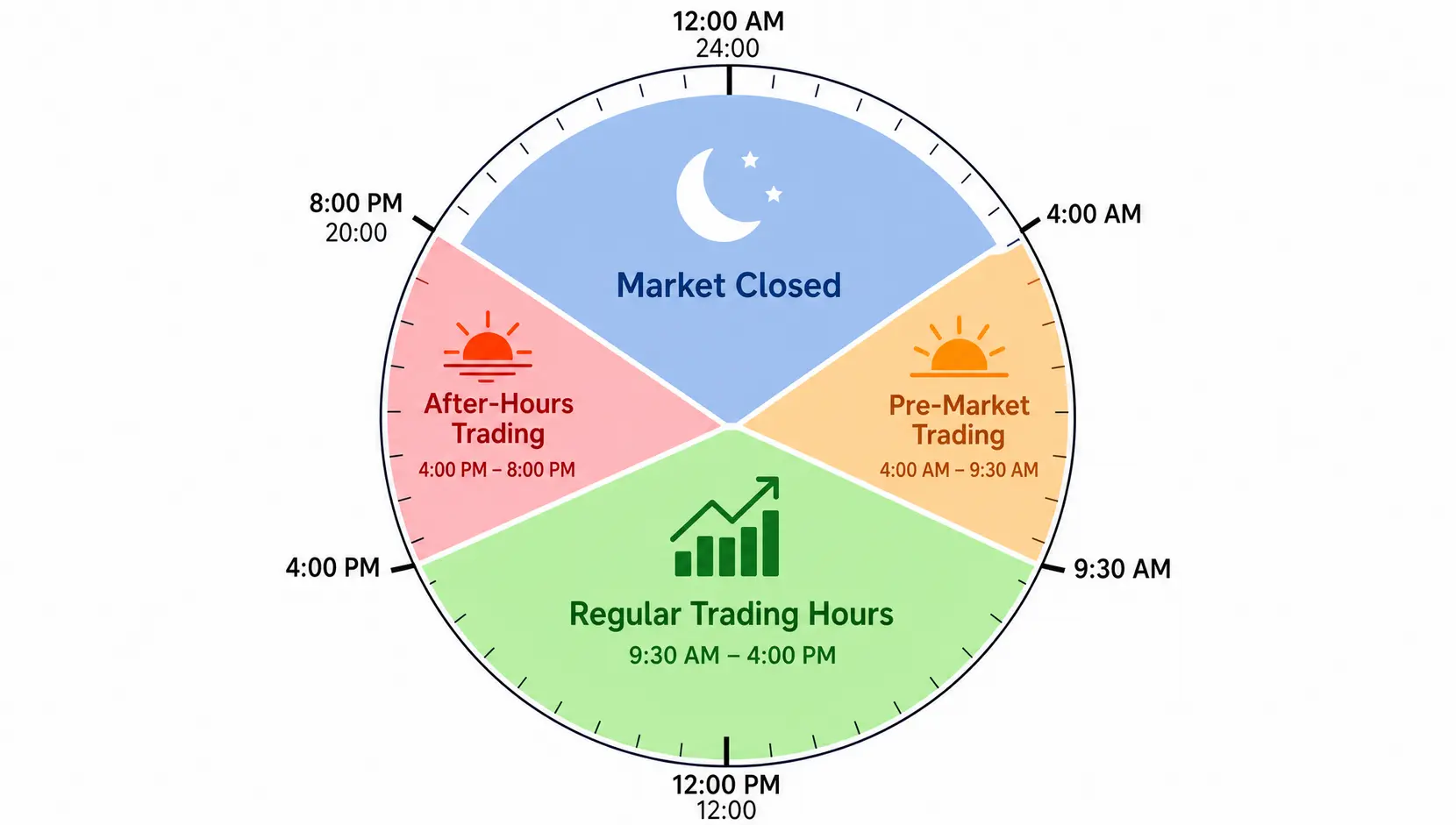
The Risks of Pre-Market and After-Hours Trading Sessions
I generally advise traders with less than five years of experience to avoid these sessions entirely. You are often trading against institutional players who are reacting to news releases, like earnings reports.
The deck is stacked against you. The U.S. Securities and Exchange Commission (SEC) itself warns about these dangers.
Key risks include:
- Lower Liquidity: Fewer buyers and sellers mean it can be difficult to execute your trade at a desired price. You might get a partial fill or a much worse price than you anticipated, a phenomenon known as ‘spread compression’ being absent.
- Wider Spreads: The ‘spread’ is the difference between the bid (buy) price and the ask (sell) price. In after-hours, this spread can become significantly wider, meaning your transaction costs are effectively higher before you even start.
- Increased Volatility: A single large order can move the price dramatically due to low volume. This is not the kind of volatility you can consistently profit from; it’s chaotic and unpredictable.
- Professional Competition: You are trading against professionals who have access to more sophisticated tools and information. It is unwise to trade in an environment where you are at a distinct disadvantage.
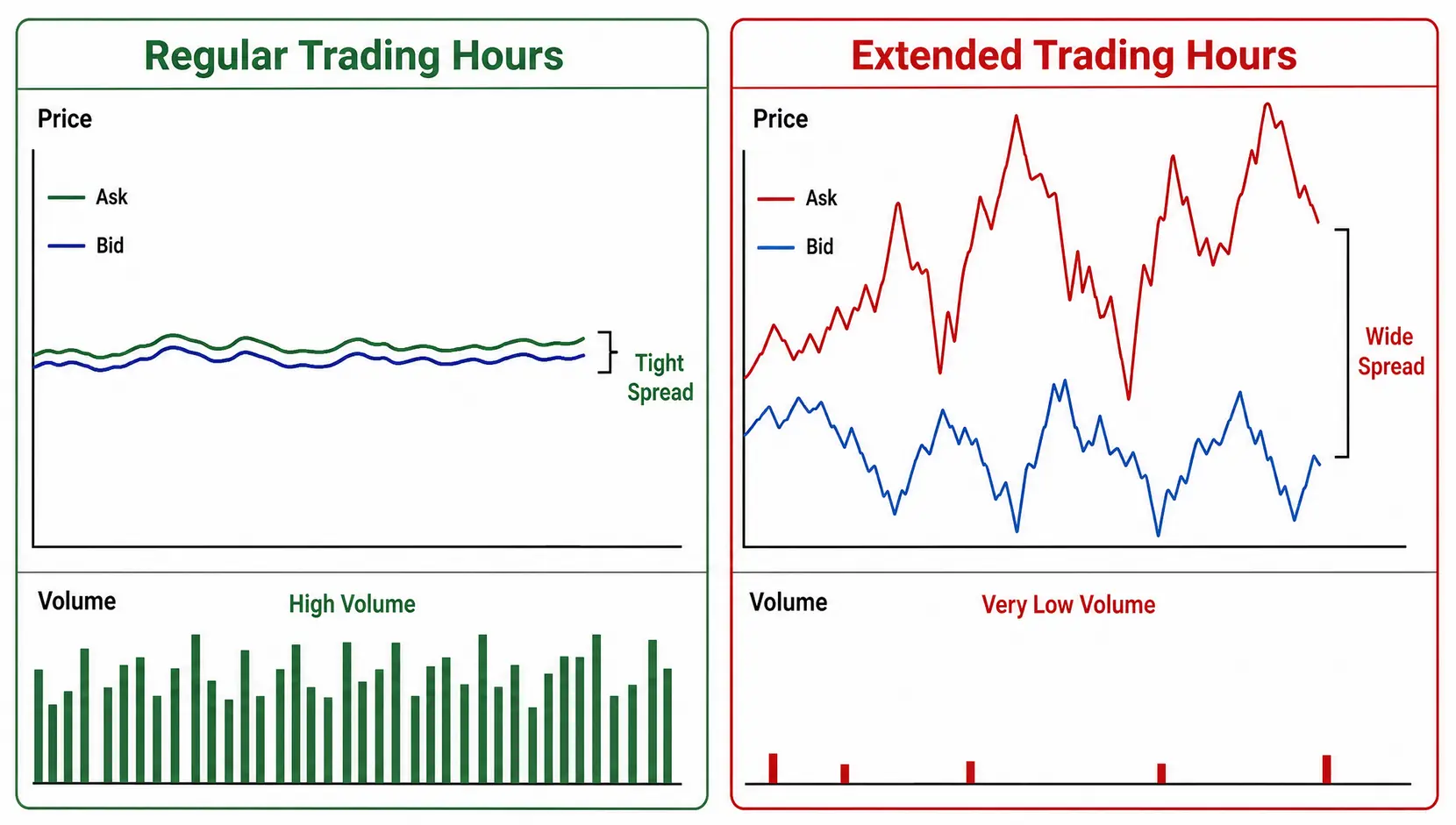
| Feature | Regular Trading Hours (9:30 AM – 4:00 PM ET) | Extended Trading Hours (Pre/After-Market) |
|---|---|---|
| Liquidity | High | Very Low |
| Volume | High | Low |
| Bid-Ask Spread | Tight | Wide |
| Volatility | Standard (can be high, but more predictable) | Extreme and Erratic |
| Primary Participants | Retail and Institutional | Mainly Institutional and ECNs |
| Risk Level | High (Standard Market Risk) | Extremely High |
Frequently Asked Questions
1. What are the US stock market’s regular trading hours in ET?
The regular trading hours for the major U.S. stock exchanges, including the New York Stock Exchange (NYSE) and the Nasdaq Stock Market, are from 9:30 a.m. to 4:00 p.m. Eastern Time, Monday through Friday, excluding market holidays.
2. Can I place a trade order when the market is closed?
Yes, you can place orders such as limit or stop orders with your broker at any time. These orders are typically queued and will be sent for execution once the market opens for the next session. However, be extremely cautious.
A ‘Good ’til Canceled’ (GTC) order placed over the weekend could be executed at a surprisingly bad price if the market gaps up or down at Monday’s open due to overnight news.
3. Is the stock market open on Good Friday or Christmas Eve?
The U.S. stock market is always closed on Good Friday. For Christmas Eve (December 24), the market’s schedule depends on the day of the week it falls. Typically, if it’s a weekday, the market will have an early closure, usually at 1:00 p.m. ET.
However, it’s always best to verify the schedule for that specific year from an official source like the NYSE calendar.
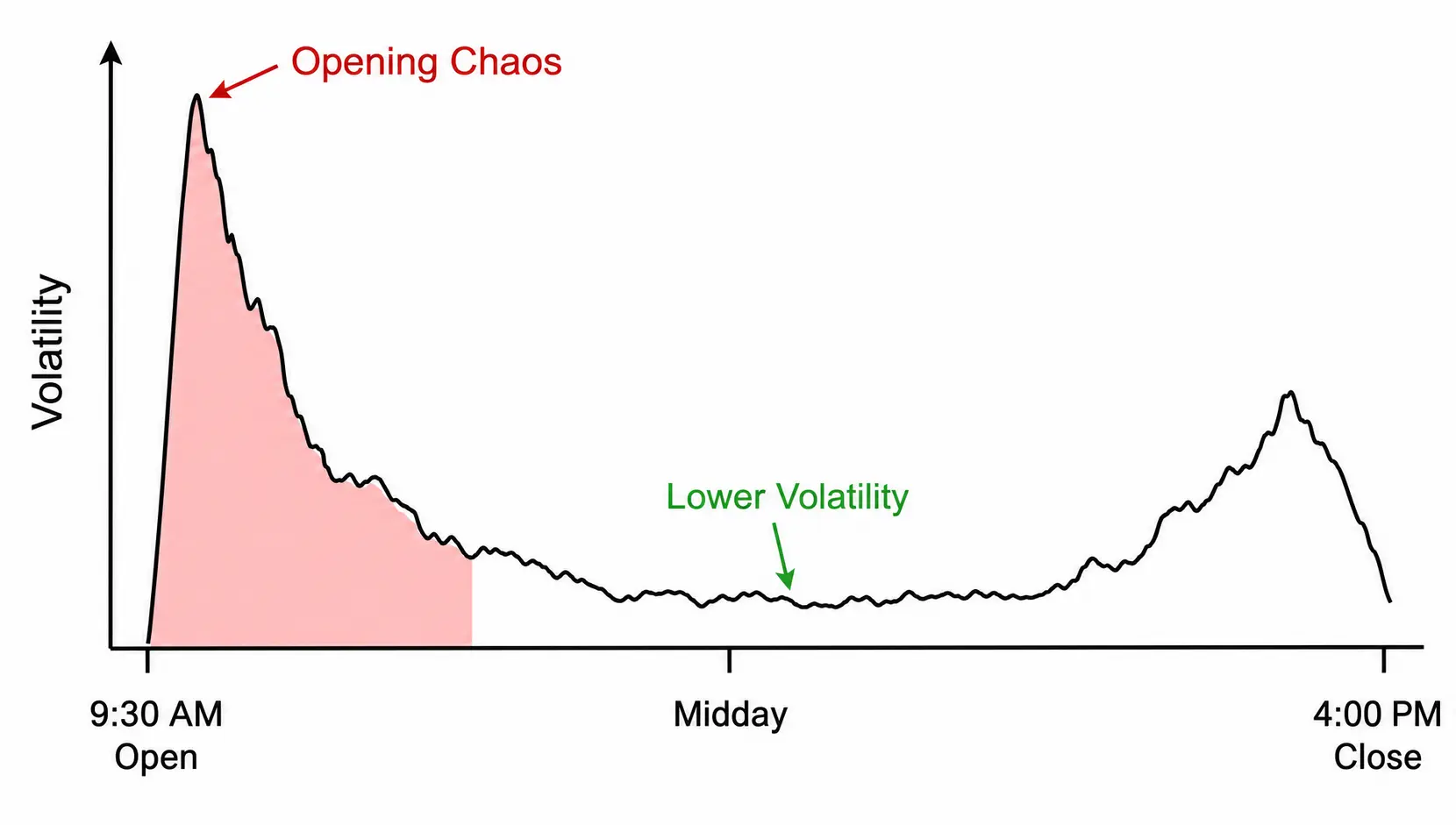
4. Why shouldn’t I trade right at the 9:30 AM open?
The first 15-30 minutes after the market opens is known for extreme volatility. It’s when the market is processing overnight news and a flood of orders are being executed.
For an inexperienced trader, this ‘opening chaos’ can lead to quick losses. A more prudent approach is to wait for the initial volatility to subside and a clearer trend to emerge before committing capital.
Danny’s Final Thoughts
Surviving in the markets for over a decade has taught me one thing above all: discipline is more important than genius. Knowing when the market is closed is simple logistics.
The real discipline comes from knowing when you *shouldn’t* trade, even when the market is open. Avoiding the low-liquidity traps of extended hours and the chaotic opening minutes is not a sign of fear; it’s a sign of a professional who respects risk.
Protect your capital first. The opportunities will always be there tomorrow, provided you’re still in the game to seize them.
Sources & Methodology
Danny strictly relies on primary regulatory data and authoritative official information to ensure accuracy. Data cited in this guide is sourced from:
*Disclaimer: The content of this article represents the personal views of the author (Danny) and is for educational and reference purposes only. It does not constitute professional investment or financial advice. Trading and investing involve significant risk; proceed with caution.*
