
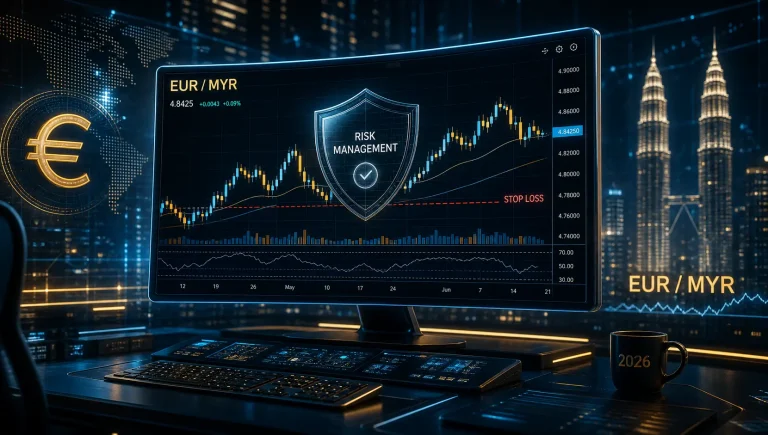
As a trader who has navigated the markets for over a decade, I’ve learned that longevity is the ultimate prize. When approaching a pair like the Euro against the Malaysian Ringgit (EUR/MYR), this lesson is paramount.
Effective risk management for trading Euro against Malaysian Ringgit is not just a safety net; it is the very foundation of a sustainable trading career.
This currency pair blends the deep liquidity of a major currency with the distinct volatility of an emerging market one, creating unique challenges.
Throughout this guide, I will dissect the practical risk control techniques and hedging strategies for EUR/MYR that have kept my capital intact, even during unexpected market shifts.
It’s not about hype or chasing quick profits; it’s about a disciplined approach to managing the inherent risks of this specific, and often unpredictable, forex pair.
Foundations of Foreign Exchange Risk in the EUR/MYR Pair
Pro Tip: The primary risk in EUR/MYR stems from its hybrid nature. You have the European Central Bank’s broad, systemic influence on one side and Bank Negara Malaysia’s more direct, intervention-prone policy on the other. This mismatch in liquidity and policy response is where most unprepared traders get caught out. Mastering this pair means respecting both its major and emerging market characteristics.
Before placing a single trade, a professional analyses the terrain. For the EUR/MYR, this involves understanding the fundamental forces that can trigger sharp movements.
It’s a less-travelled road compared to major pairs like EUR/USD, and its signposts are different. Ignoring them is a direct route to capital erosion.
Understanding Volatility, Liquidity, and Economic Factors
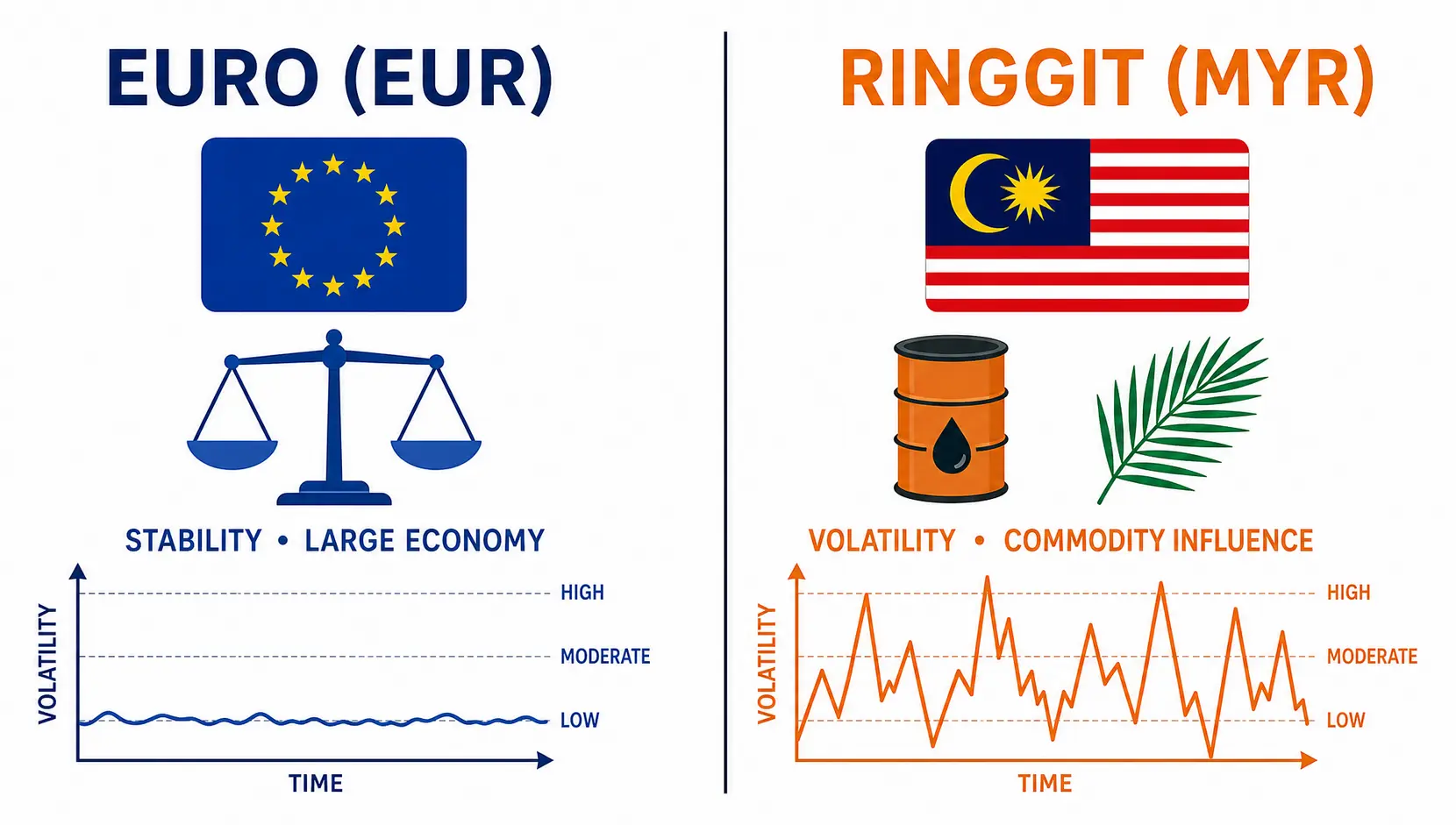
Volatility in EUR/MYR can be deceptive. It might remain calm for extended periods, lulling traders into a false sense of security, before erupting on the back of a political announcement or a shift in commodity prices.
Liquidity is a key reason for this. While the EUR side is deeply liquid, the MYR leg is thinner. During ‘risk-off’ global sentiment or after Malaysian market hours, liquidity can dry up, leading to ‘spread compression’ (widening spreads) and slippage on your orders.
A stop-loss set at a specific price might execute significantly lower during such events.
Key economic factors to monitor include:
- For the EUR: Eurozone inflation (CPI), German Industrial Production, ECB press conferences, and PMI data across the bloc. These are slow-moving but powerful drivers.
- For the MYR: Malaysia’s trade balance, palm oil and crude oil prices (as it’s a net commodity exporter), and domestic political stability. These factors can cause much more sudden, localised shocks to the Ringgit.
How Interest Rate Differentials and Central Bank Policies Affect Risk
The ‘carry trade’ is a popular concept, but it’s fraught with risk in a pair like this. The interest rate differential between the European Central Bank (ECB) and Bank Negara Malaysia (BNM) is a core driver of long-term direction.
However, these policies are not set in stone and their future path creates uncertainty.
As of late 2026, the ECB is navigating a complex post-inflationary environment, with their monetary policy focused on maintaining price stability without stifling fragile growth.
In contrast, BNM’s mandate includes managing inflation while also supporting the domestic economy and ensuring the stability of the Ringgit. Their actions can be more direct and frequent.
For instance, a surprise Overnight Policy Rate (OPR) hike by BNM can cause a sudden, sharp appreciation in the MYR, catching traders positioned for a weaker Ringgit completely off guard.
| Feature | Euro (EUR) Risk Profile | Malaysian Ringgit (MYR) Risk Profile |
|---|---|---|
| Primary Driver | Systemic Eurozone economic data, ECB policy | Commodity prices (oil, palm oil), domestic policy (BNM), regional capital flows |
| Liquidity | Extremely high | Moderate to low, subject to drying up |
| Volatility Pattern | Generally lower, trends can be sustained | Prone to sudden spikes and gaps |
| Central Bank | ECB: Policy is data-dependent and well-telegraphed | BNM: Can be more interventionist to manage currency stability |
Core Risk Management Strategies and Techniques
Pro Tip: The two pillars of everyday survival in trading are your exit plan (stop-loss) and your exposure (position sizing). These are not ‘set and forget’ parameters. They must be actively managed and adjusted based on the EUR/MYR’s current volatility. A 50-pip stop-loss that worked last week might be totally inappropriate this week.
Once you understand the risks, the next step is to deploy tools to manage them. These techniques are not about eliminating risk—that’s impossible—but about defining it to a level where no single trade can catastrophically damage your account.
This is the difference between a professional and an amateur.
Hedging with Forwards and Options to Mitigate Currency Risk
Hedging is a sophisticated strategy often used by corporations and institutional investors to lock in an exchange rate and protect against adverse movements.
For retail traders, while direct access to forward contracts can be limited, understanding the concept is crucial. Forwards and options are derivatives that allow you to secure a future price.
- Forward Contracts: An agreement to buy or sell a currency at a predetermined rate on a specific future date. This completely removes uncertainty but also eliminates any potential upside if the rate moves in your favour.
- Options: An options contract gives you the right, but not the obligation, to buy (a call option) or sell (a put option) a currency at a set price before a certain date. You pay a premium for this right. This is a powerful hedging tool as it caps your maximum loss (the premium paid) while leaving your profit potential unlimited.
While most retail traders won’t be executing complex options strategies on EUR/MYR, some brokers offer simplified versions.
The key takeaway is the concept: you can pay a small, known cost (the premium) to protect against a large, unknown loss. This is a form of insurance for your trades.
Using Stop-Loss and Position Sizing for Active Risk Control
This is the most critical, non-negotiable aspect of risk management for trading Euro against Malaysian Ringgit. It’s your day-to-day defence mechanism.
1. The Intelligent Stop-Loss: A stop-loss is not just an arbitrary number. It must be placed logically. Placing it based on structure (e.g., just below a recent swing low for a long position) is far superior to a random 2% rule. Why? Because the market is more likely to respect a structural level than an arbitrary point on your chart. For a volatile pair like EUR/MYR, consider using an Average True Range (ATR) indicator to set your stop. For example, setting your stop at 2x the current 14-day ATR gives your trade room to breathe and accounts for the pair’s recent volatility.
2. Professional Position Sizing: This determines how much you stand to lose if your stop-loss is hit. It’s arguably more important than your entry point. The formula is straightforward: decide what percentage of your account you are willing to risk on a single trade (professionals rarely exceed 1-2%).
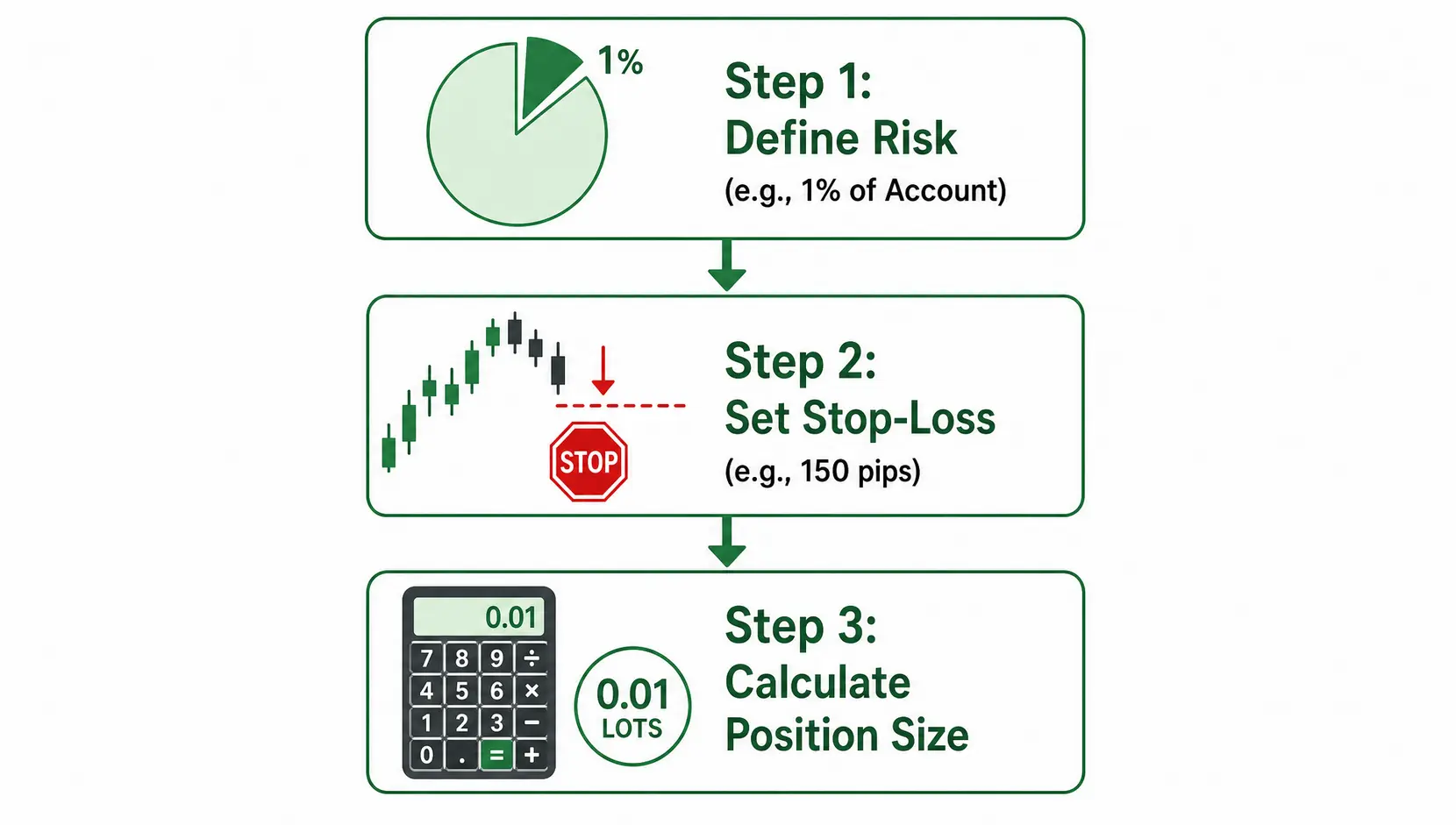
Let’s say your account is $10,000 and you accept a 1% risk per trade. Your maximum acceptable loss is $100. If your stop-loss distance for a EUR/MYR trade is 150 pips, your position size is calculated to ensure that a 150-pip move against you results in a $100 loss.
This discipline ensures that a string of losses—which is inevitable in trading—is just a manageable drawdown, not an account-ending event.
| Technique | Description | Best For | Pros | Cons |
|---|---|---|---|---|
| Stop-Loss Order | An automated order to close a position at a pre-defined price level to cap losses. | All active traders, essential for short-term trading. | Defines exact risk, removes emotion, prevents catastrophic loss. | Can be triggered by short-term volatility (whipsaws), slippage can occur in fast markets. |
| Position Sizing | Calculating the number of units to trade based on account size and stop-loss distance. | All traders and investors. Non-negotiable. | Ensures survival, standardises risk across all trades regardless of setup. | Requires discipline; can feel like it’s limiting profit in a ‘high conviction’ trade. |
| Hedging (Options) | Buying an options contract to protect an existing spot position. | Long-term position holders, traders managing large exposure around major events. | Defines risk to a fixed cost (premium), allows participation in favourable moves. | Adds cost (premium decay), requires understanding of options pricing. Not always accessible to retail. |
Frequently Asked Questions
1. What are the most common risks when trading the Euro against the Malaysian Ringgit?
From my experience, the two biggest risks are liquidity gaps and policy divergence. Liquidity can vanish outside of European and Asian trading hours, causing your stop-loss orders to slip significantly.
Secondly, the monetary policies of the ECB and Bank Negara Malaysia can diverge sharply. The ECB is focused on the entire Eurozone, while BNM is very focused on Malaysia’s specific economic conditions, including commodity prices.
A sudden policy shift from BNM can overwhelm a trend that was based purely on European economic data.
2. How can a beginner start managing risk in EUR/MYR trading?
A beginner must do two things without fail. First, never trade without a stop-loss order placed from the moment you enter the trade. Second, use a position size calculator.
Before you even think about where to enter, you must know exactly how much of your account capital you are risking. Risking 1% or less per trade is a professional standard for a reason. Master these two elements, and you are already ahead of 90% of novice traders.
3. Is hedging a necessary strategy for trading this currency pair?
For the average retail trader doing short-to-medium term trading, I would say no. Proper use of stop-losses and position sizing provides sufficient risk management.
Hedging with options or forwards is more appropriate for corporate treasurers with commercial exposure, or institutional investors holding very large, long-term positions.
For a retail trader, the complexity and cost of hedging often outweigh the benefits compared to simply using a stop-loss.
4. How does political news in Malaysia or the EU affect EUR/MYR risk?
Political news is a major source of ‘event risk’. An unexpected election result in a key Eurozone country or political instability in Malaysia can cause immediate and severe volatility. The market hates uncertainty.
My approach is to avoid holding large positions leading into a known, high-impact political event. If you are already in a profitable trade, you might consider tightening your stop-loss or taking partial profits.
It’s better to miss out on some potential gains than to have a solid profit turn into a major loss because of a headline.
Danny’s Final Thoughts
Sources & Methodology
Danny strictly relies on primary regulatory data and authoritative official information to ensure accuracy. Data cited in this guide is sourced from:
*Disclaimer: The content of this article represents the personal views of the author (Danny) and is for educational and reference purposes only. It does not constitute professional investment or financial advice. Trading and investing involve significant risk; proceed with caution.*
