

As a financial planner, I’ve spent years helping Malaysian families build stable financial futures.
A common question that arises, especially after covering fundamentals like savings and insurance, is: ‘David, where else can I grow my money besides local unit trusts or the KLCI?’ This is a fantastic question.
For those looking to truly fortify their portfolios for the long term, exploring international markets is the logical next step. This guide is designed to demystify the process of buying European shares from Malaysia.
We will explore exactly how to start investing in European stocks and compare the best platforms for European shares in Malaysia, providing you with a clear, actionable plan for 2026.
Why Invest in European Shares as a Malaysian?
Pro Tip: Investing in European shares is a core strategy for mitigating country-specific risk. By allocating a portion of your capital outside of Malaysia and the wider Asian market, you protect your portfolio from localised economic downturns and gain exposure to different growth cycles and world-leading industries.
Many of my clients are very comfortable with the Malaysian market, which is excellent for its familiarity. However, concentrating all your investments in one country is like relying on a single crop for your entire food supply.
A single bad season—or economic downturn—can be devastating. Let’s break down why looking towards Europe is a sound financial planning decision.
Benefits of Portfolio Diversification Beyond the Asian Market
The principle of diversification is the most fundamental concept in risk management. In simple terms, it’s about not putting all your eggs in one basket. By buying European shares from Malaysia, you are geographically diversifying your investment portfolio.
The economies of Europe (e.g., Germany, France, Switzerland, the UK) are driven by different factors than the Malaysian economy. While one market might be facing headwinds, another may be thriving.
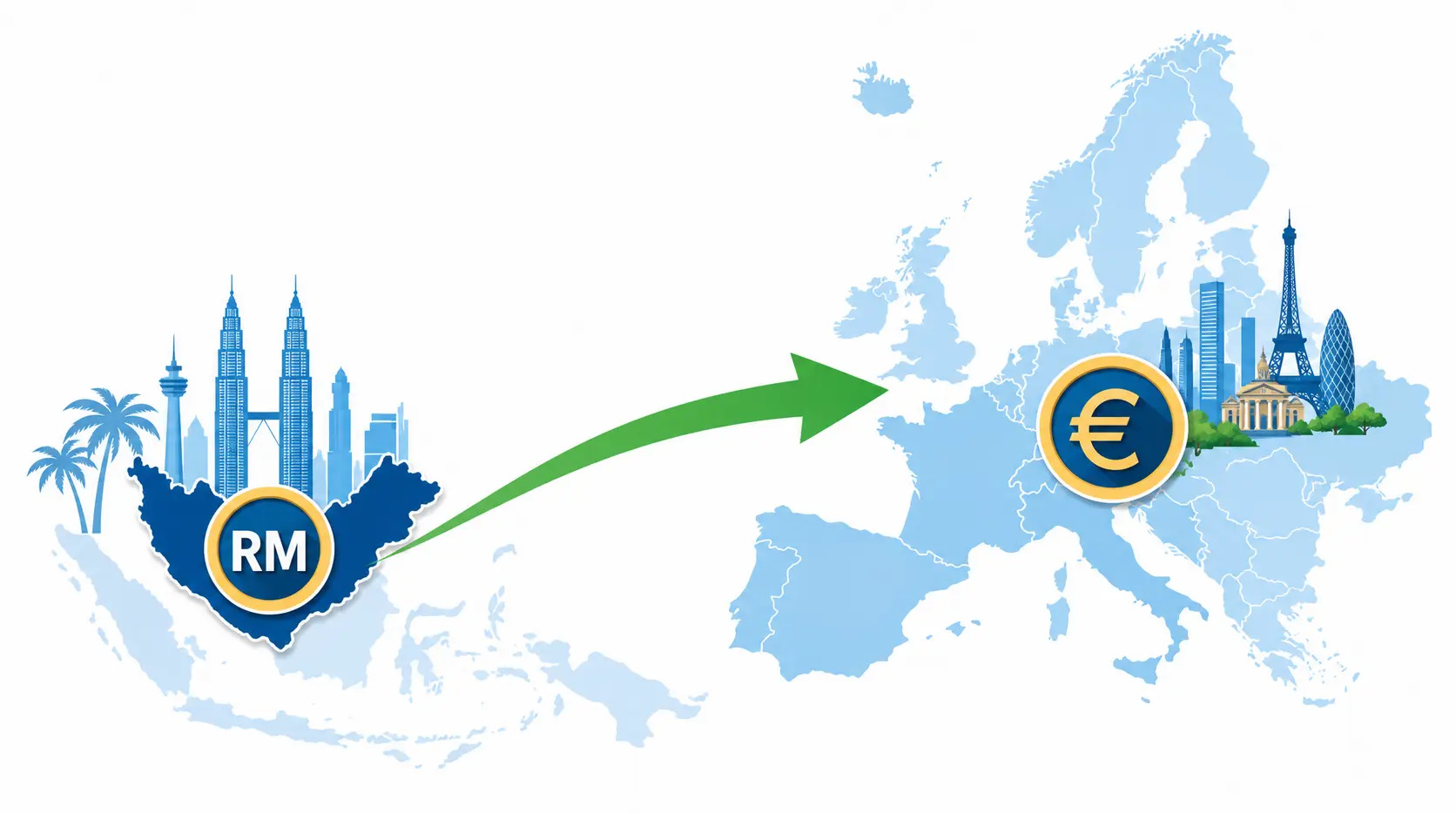
This approach creates a more stable, balanced portfolio that is less susceptible to shocks.
It smooths out your long-term returns, which is crucial for predictable financial planning, whether you’re saving for retirement, your children’s education, or other major life goals. A well-diversified portfolio provides peace of mind.
Accessing Global Industry Leaders and Growth Opportunities
Europe is home to a vast number of globally recognised, blue-chip companies that are leaders in their respective fields. These are businesses with long histories of stability, innovation, and consistent dividend payments.
When you invest in European shares, you’re not just buying a stock; you’re owning a small part of a global powerhouse.
Consider companies like:
- LVMH (France): A luxury goods conglomerate owning brands like Louis Vuitton and Christian Dior.
- ASML (Netherlands): A critical supplier of photolithography systems for the semiconductor industry.
- Nestlé (Switzerland): The world’s largest food and beverage company.
- Siemens (Germany): An industrial manufacturing giant in automation and digitalisation.
- AstraZeneca (UK): A global pharmaceutical and biotechnology company.
These firms offer exposure to sectors—such as high-end luxury, advanced technology, and pharmaceuticals—that may not be as accessible on the Bursa Malaysia. Investing in them is a direct way to participate in global economic growth.
The performance of these markets is often tracked by indices like the STOXX Europe 600, which provides a broad measure of the European equity market’s health.
How to Buy European Shares from Malaysia: A Step-by-Step Guide
Pro Tip: The process can be summarised in four simple steps: 1. Select a regulated broker that offers access to European markets. 2. Open and verify your account online. 3. Fund your account, paying attention to currency exchange. 4. Research and execute your first trade.
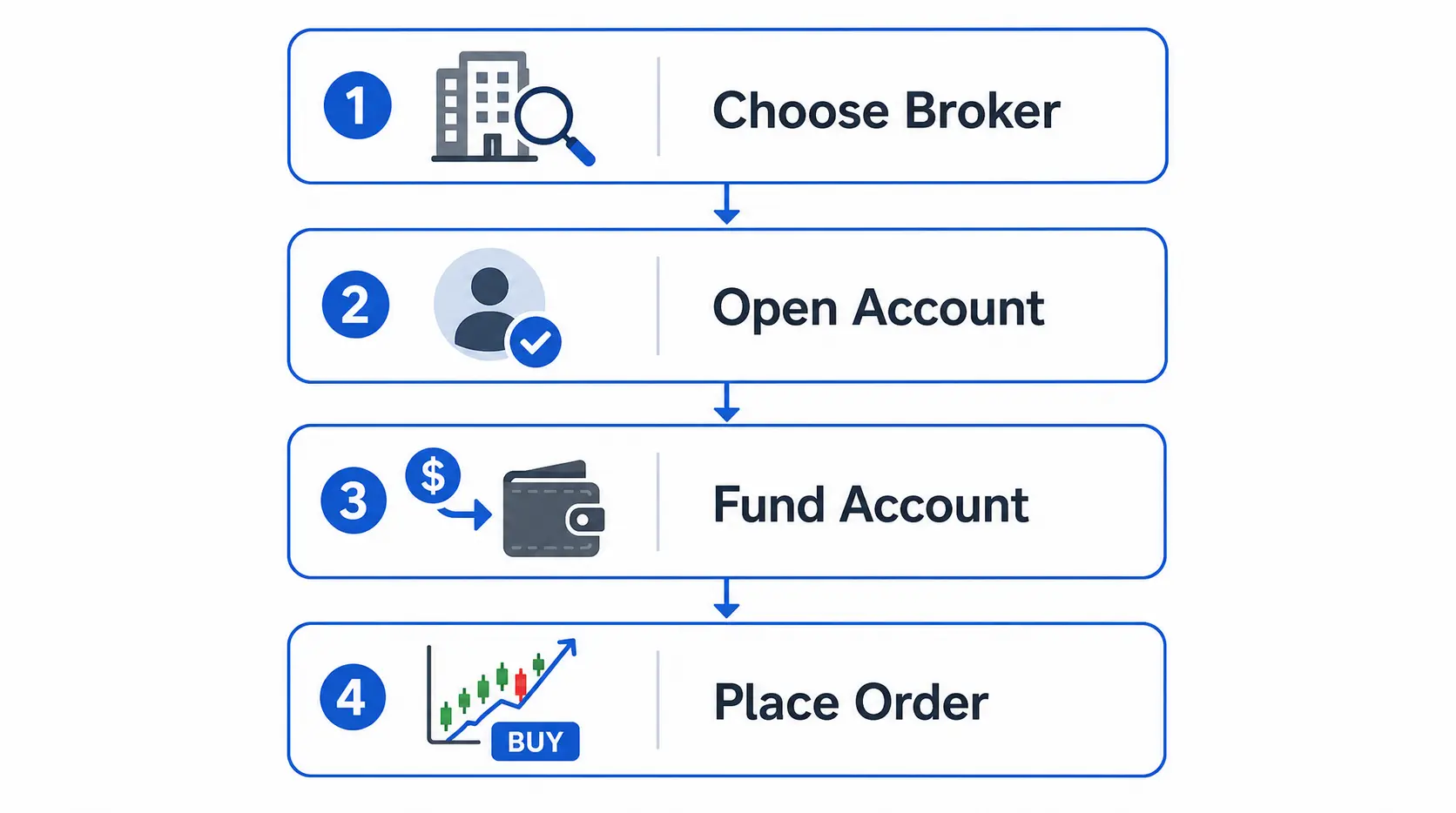
Getting started is more straightforward than many people think. Modern technology has made international markets accessible from your home in Malaysia. Here’s a detailed breakdown of each step.
Step 1: Choose the Right Trading Platform (Broker Comparison)
A broker is a company that acts as an intermediary to execute buy and sell orders for securities on your behalf. You cannot buy shares directly from an exchange like the London Stock Exchange or Euronext Paris; you need a licensed broker.
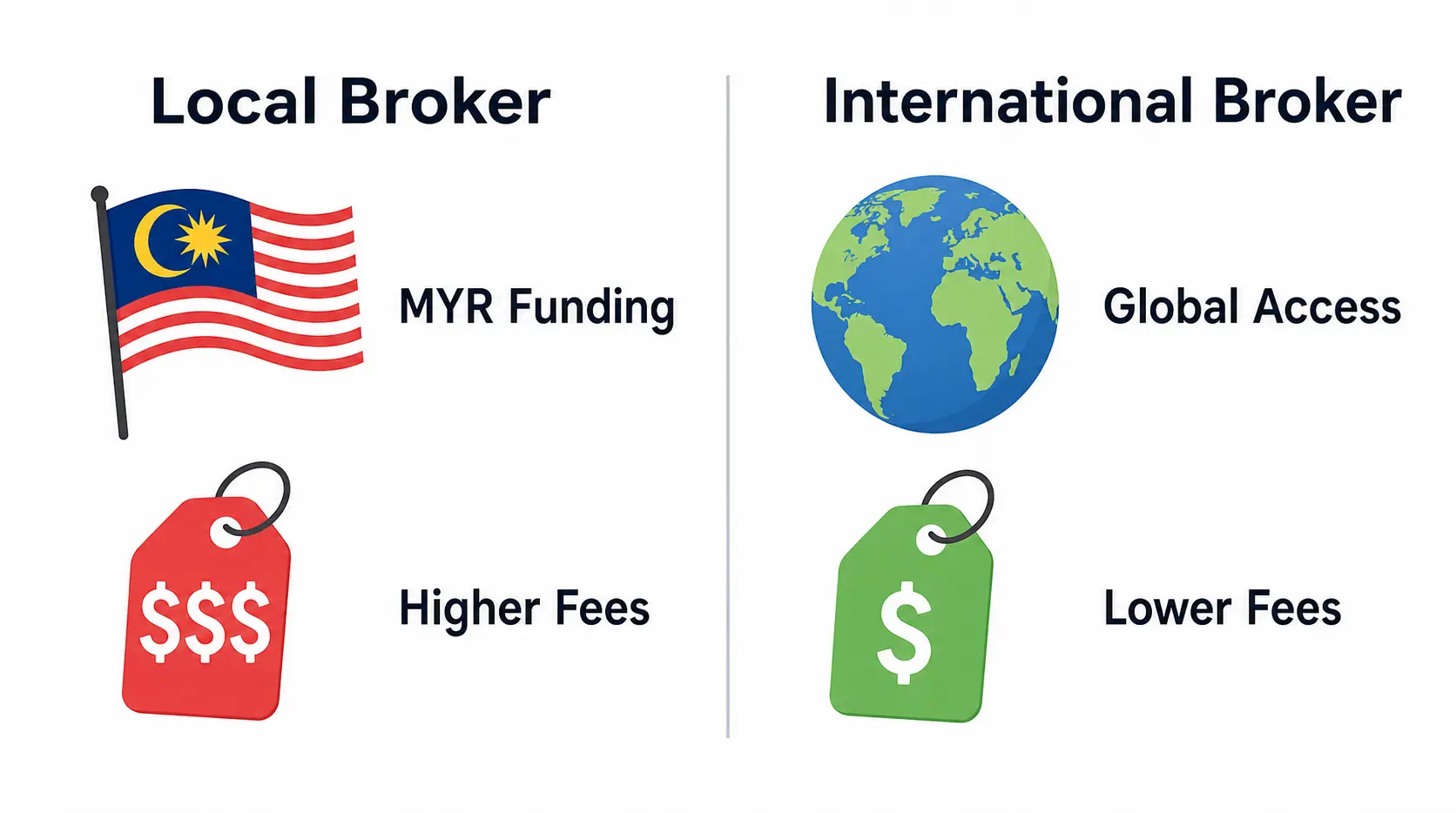
For a Malaysian investor, the choice is generally between a local broker with international market access or a dedicated international broker.
- Local Brokers (e.g., Maybank, CGS-CIMB): These are familiar, regulated by the Securities Commission Malaysia (SC), and often allow you to fund your account directly in MYR. However, their fee structures for foreign markets can be higher, and the range of available stocks might be more limited.
- International Brokers (e.g., Interactive Brokers, IG): These platforms are specialists in global investing. They typically offer lower brokerage fees, a wider selection of stocks across numerous European exchanges, and more advanced trading tools. The main consideration is that you will likely need to fund your account in a foreign currency like USD, EUR, or GBP.
We will compare specific platforms in the next section.
Step 2: Open and Set Up Your Trading Account
Once you’ve selected a broker, the account opening process is almost always done online. It’s a regulated process designed to protect you, so be prepared to provide personal information. This process is often referred to as KYC (Know Your Customer).
Typically, you will need to:
- Complete an online application form: This includes your personal details, financial standing, and investment experience. Be honest in your assessment; it helps the broker understand your risk profile.
- Submit verification documents: You will usually need to upload a clear copy of your Malaysian identity card (MyKad) and a recent proof of address (like a utility bill or bank statement from the last 3-6 months).
- Undergo verification: Many brokers now use an electronic KYC (e-KYC) process, which may involve taking a selfie or a short video to verify your identity against your documents.
The entire process can be completed in as little as 15 minutes, with account approval taking anywhere from a few hours to a few business days.
Step 3: Funding Your Account and Understanding Fees
This step is crucial for managing your investment costs. To buy European shares, you need to have funds in your brokerage account. How you do this depends on the broker.
- For local brokers: You can often transfer MYR directly from your Malaysian bank account. The broker will then handle the currency conversion to EUR, GBP, etc., when you place a trade.
- For international brokers: You will typically need to perform a foreign telegraphic transfer from your bank to the broker’s segregated client account. This means you are subject to your bank’s exchange rates and transfer fees.
It’s vital to be aware of all associated costs:
- Brokerage Fee: A commission charged for executing your trade. This can be a flat fee (e.g., €5 per trade) or a percentage of the trade value.
- Currency Exchange Spread: This is a hidden cost. When you convert MYR to EUR, the broker or bank gives you an exchange rate that includes a small margin for them. Even a 0.5% spread can add up.
- Other Fees: Look out for custody fees (for holding your shares), inactivity fees, or charges for withdrawing funds.
Step 4: Researching and Placing Your First European Share Order
With your account funded, you’re ready for the final step. Avoid the temptation to buy a stock based on a news headline or a rumour. From a financial planning perspective, you should invest in businesses you understand and believe have long-term potential.
- Research: Use the broker’s platform and reputable financial news sites to research companies. Look at their financial health, competitive advantages, and growth prospects.
- Placing an Order: You’ll need to find the stock’s ‘ticker’ symbol (e.g., ‘ASML’ on the Amsterdam exchange). You will then choose your order type:
- Market Order: Buys the share immediately at the best available current price. It’s simple, but the price can slip slightly from what you see on screen.
- Limit Order: Lets you set the maximum price you are willing to pay. The order will only execute if the share price hits your target or lower. This gives you control over your entry price.
For your first trade, it’s often wise to start with a small amount that you are comfortable with. This allows you to get familiar with the process without taking on excessive risk.
Top Platforms for Buying International Stocks in Malaysia
Pro Tip: For beginners prioritizing convenience and local support, a local bank-backed broker like Maybank is a solid start. For cost-conscious investors or those needing access to a wider range of stocks, a global platform like Interactive Brokers (IBKR) is generally the superior choice, provided you are comfortable with funding in foreign currency.
Choosing the right platform is the most critical decision you’ll make. It affects your costs, the range of investments available, and your overall experience. Below is a comparison of popular options for Malaysians in 2026.
Review of Local Brokers
Local brokers offer the comfort of a familiar brand and the ease of funding in MYR. They are an excellent entry point for investors who are just beginning their journey into buying european shares from malaysia.
| Feature | Maybank Trade | Rakuten Trade |
|---|---|---|
| Primary Regulator | Securities Commission Malaysia | Securities Commission Malaysia |
| European Markets | Limited access (e.g., LSE, Euronext) | None (Focused on US & HK markets as of 2026) |
| Account Funding | MYR (via Maybank account) | MYR |
| Pros | – Integrated with local banking – Simple for existing Maybank customers – Strong local support |
– Low fees for its available markets – User-friendly platform – Rewards program |
| Cons | – Higher brokerage fees for foreign stocks – High currency conversion spread – Limited selection of European stocks |
– No access to European markets |
| Best For | Investors prioritizing simplicity and who are already Maybank clients. | Investors focused on US shares who want a simple, low-cost platform. |
Review of International Brokers
International brokers are built for global investors. They provide a far more comprehensive and cost-effective service for accessing European markets, but require a bit more familiarity with international fund transfers.
| Feature | Interactive Brokers (IBKR) | IG | StashAway |
|---|---|---|---|
| Primary Regulator | Multiple Tier-1 (e.g., FCA, SEC) | Multiple Tier-1 (e.g., FCA, ASIC) | SC Malaysia (for local offering) |
| Investment Type | Direct Share Ownership | Direct Share Ownership & CFDs | Robo-advisory (ETFs) |
| European Access | Vast (most European exchanges) | Good (major exchanges) | Via European-domiciled ETFs |
| Account Funding | Foreign Currency (e.g., USD, EUR, GBP) | Foreign Currency or MYR (via card) | MYR |
| Pros | – Extremely low brokerage fees – Excellent currency exchange rates – Widest market access |
– User-friendly platform – Good research tools – Offers CFDs for advanced traders |
– Simple, hands-off investing – MYR funding – SC regulated |
| Cons | – Platform can be complex for beginners – Requires foreign currency funding |
– Higher fees than IBKR – CFDs are high-risk instruments |
– Cannot pick individual stocks – Management fees on top of ETF fees |
| Best For | Serious, long-term investors looking for the lowest costs and best access. | Investors who want a balance of user-friendliness and good market access. | Investors who want diversified, passive exposure to global markets without picking stocks. |
Frequently Asked Questions
1. How can a Malaysian legally buy foreign shares?
It is perfectly legal for a Malaysian citizen to buy foreign shares. Under Bank Negara Malaysia’s (BNM) Foreign Exchange Administration (FEA) rules, resident individuals are permitted to invest in foreign currency assets, including stocks and bonds, up to a certain limit.
For most retail investors, this limit is very generous and unlikely to be a constraint. The key is to use a licensed and regulated channel, which means going through a broker that is authorised either by the Securities Commission Malaysia or a reputable international regulatory body.
2. Is it worth buying European stocks in the current economic climate of 2026?
From a financial planning perspective, the decision to invest should be based on a long-term strategy, not on trying to ‘time the market’.
While there will always be short-term volatility and economic uncertainty, Europe is home to many resilient, globally diversified companies that have weathered numerous economic cycles.
Instead of asking if ‘now’ is the right time, the better question is ‘what is the role of European equities in my long-term financial plan?’ For diversification and access to quality companies, they remain a valuable component of a portfolio regardless of the current climate.
A strategy like dollar-cost averaging (investing a fixed amount regularly) can help mitigate the risk of investing a lump sum at a market peak.
3. What are the taxes involved when buying foreign stocks from Malaysia?
This is an excellent and important question. There are primarily two tax considerations.
First, dividends paid by European companies are often subject to a ‘withholding tax’ in their home country. The rate varies (e.g., it could be 15-30%). Your broker should provide you with documentation on this.
Second, regarding capital gains (profits from selling a share at a higher price), Malaysia currently does not impose a capital gains tax on individuals for investments in foreign stock markets.
Tax laws can change, and your individual circumstances may vary, so I always recommend consulting with a qualified tax advisor for personalised advice.
David Lim’s Final Thoughts
Sources & Methodology
David Lim strictly relies on primary regulatory data and authoritative official information to ensure accuracy. Data cited in this guide is sourced from:
*Disclaimer: The content of this article represents the personal views of the author (David Lim) and is for educational and reference purposes only. It does not constitute professional investment or financial advice. Trading and investing involve significant risk; proceed with caution.*
