

As a fund research analyst, my focus is perpetually on the underlying value and long-term viability of investment vehicles. However, the allure of short-term market access via instruments like Contracts for Difference (CFDs) is undeniable for many active traders.
This guide provides an analytical deep dive into CFD Trading, moving beyond the surface-level pitches to dissect precisely what is cfd trading and how does it work.
We will critically evaluate the mechanics, including the double-edged sword of leverage, and meticulously break down the inherent risks and costs of CFD trading that every participant must comprehend before committing capital in 2026.
What is CFD Trading and How Does It Work?
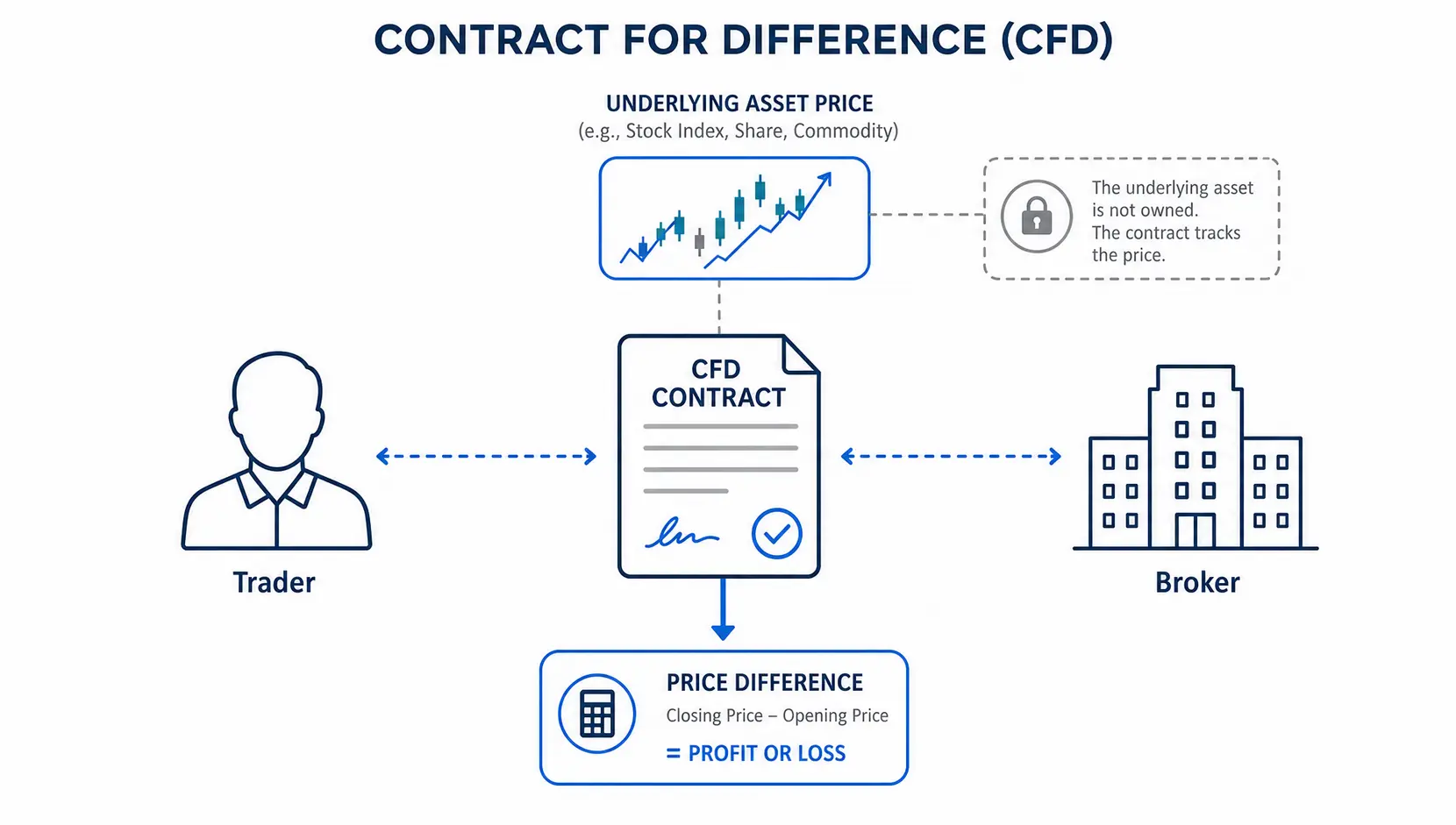
Pro Tip: CFD trading is a form of derivative trading where you speculate on the price movement of an underlying asset without owning it. You are entering into a contract with a broker to exchange the difference in the asset’s price from when the contract is opened to when it is closed. Success hinges on correctly predicting the direction of the market.
To truly grasp CFD trading, one must look past the marketing and analyse its structural components. It is not an investment in the traditional sense, but a speculative tool with a unique risk/reward profile.
Defining the Contract for Difference (CFD)
A Contract for Difference is a financial derivative agreement between a trader and a CFD provider (typically a broker). This contract stipulates that the buyer will pay the seller the difference between the current value of an asset and its value at contract time.
Conversely, if the difference is negative, then the seller pays the buyer instead. The key point is that no physical asset is ever exchanged. You are purely speculating on price fluctuations.
This is a crucial distinction, as confirmed by regulatory bodies like the UK’s Financial Conduct Authority (FCA), which classifies CFDs as complex financial instruments.
The Core Mechanics: Understanding Leverage, Margin, and Long vs. Short Positions
The mechanics of CFD trading revolve around three central concepts:
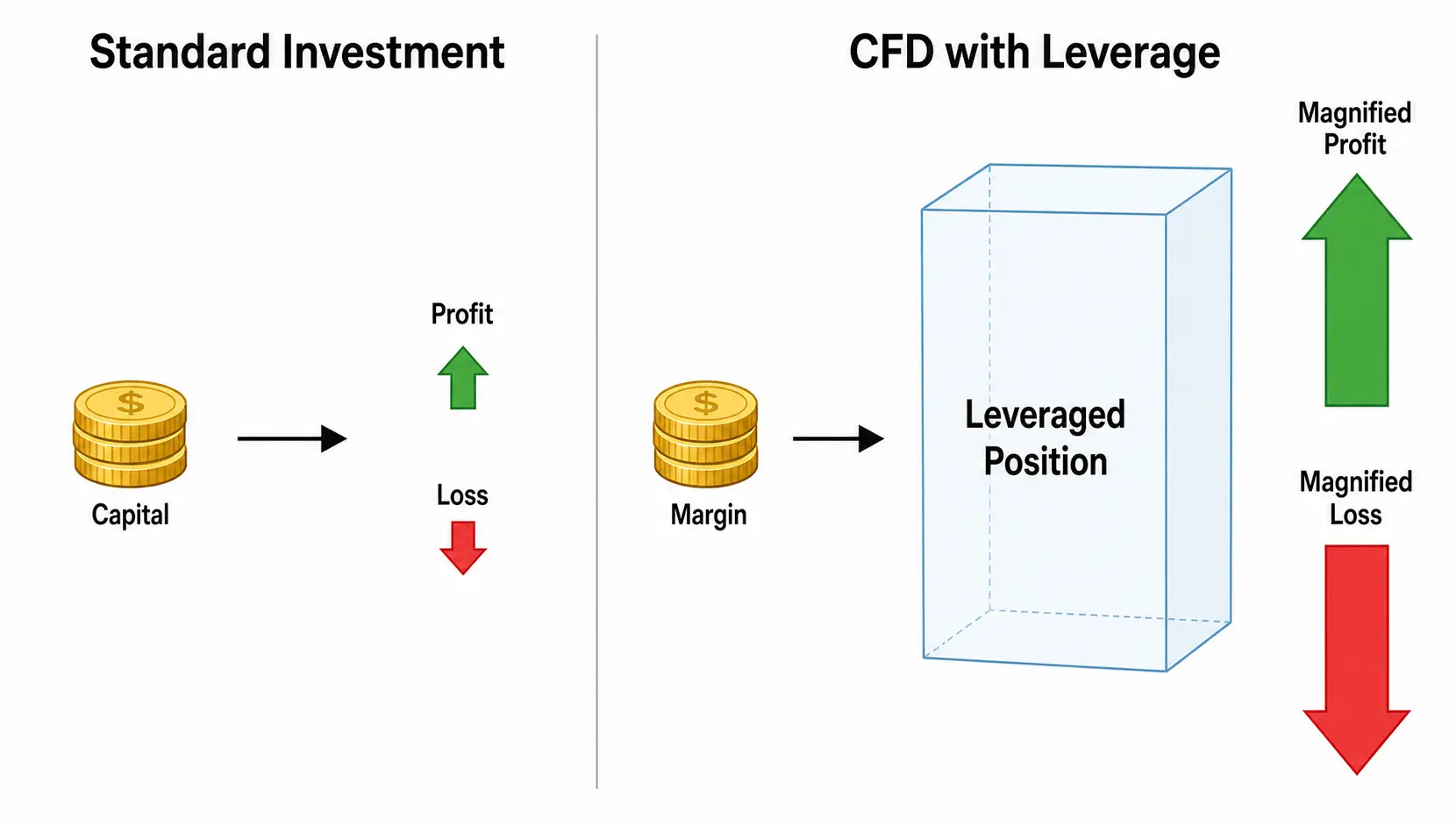
- Leverage: This is the most compelling and dangerous feature. Leverage allows you to open a large position with a relatively small amount of capital. For example, a leverage ratio of 10:1 means you can control a position worth £10,000 with only £1,000 of your own money. While this magnifies potential profits, it equally magnifies potential losses.
- Margin: This is the capital required to open and maintain a leveraged position. The ‘initial margin’ is the deposit needed to open the trade. ‘Maintenance margin’ is the additional capital that may be required if the trade moves against you to keep the position open. A ‘margin call’ occurs when your account equity falls below the maintenance margin level, forcing you to either deposit more funds or close your position at a loss.
- Long vs. Short Positions: Unlike traditional investing, CFD trading allows you to profit from both rising and falling markets.
- Going ‘long’ means you are buying the CFD in anticipation that the underlying asset’s price will rise.
- Going ‘short’ means you are selling the CFD in anticipation that the underlying asset’s price will fall.
Getting Started: A Step-by-Step CFD Trading Example
Pro Tip: Before executing a live trade, always define your maximum acceptable loss (stop-loss level) and your target profit (take-profit level). A trade without a plan is a gamble, not a strategy. This non-negotiable step is the foundation of disciplined risk management in a CFD trading environment.
Let’s simulate a trade to illustrate the mechanics in a practical scenario. We will use a hypothetical CFD on the UK 100 Index (a proxy for the FTSE 100).
From Setup to Execution: Placing a Sample Trade
Imagine the UK 100 Index is currently trading at a price of 8,500. Based on your market analysis, you believe the index is undervalued and will rise.
- Action: You decide to go long (buy) 10 CFD units on the UK 100.
- Position Value: The notional value of your position is 8,500 (index price) * 10 (units) = £85,000.
- Margin Requirement: Your broker requires a 5% margin for indices. Therefore, the margin needed to open this trade is 5% of £85,000 = £4,250. This is the capital you must have in your account.
- Trade Execution: You place the buy order, and your position is now open. Your account shows a position controlling £85,000, secured by your £4,250 margin.
Calculating Profits and Losses in a Live Scenario
Let’s explore two potential outcomes for your trade:
Scenario 1: Profitable Trade
Your analysis is correct. The UK 100 Index rallies to 8,550. You decide to close your position.
- Closing Price: 8,550
- Opening Price: 8,500
- Difference: 50 points
- Gross Profit: 50 points * 10 units = £500 (Each point move in the index is worth £1 per unit in this CFD).
- Return on Capital: Your profit of £500 was generated from a margin of £4,250, resulting in a return of approximately 11.76% (ignoring costs for simplicity).
Scenario 2: Losing Trade
Unfortunately, unexpected negative economic data is released, and the UK 100 Index falls to 8,460. You decide to cut your losses and close the position.
- Closing Price: 8,460
- Opening Price: 8,500
- Difference: -40 points
- Gross Loss: -40 points * 10 units = -£400.
- Impact on Capital: This £400 loss is deducted from your margin, reducing your account balance.
| Feature | CFD Trading | Traditional Share Investing |
|---|---|---|
| Ownership | No ownership of the underlying asset. | Direct ownership of company shares. |
| Leverage | Inbuilt. Magnifies gains and losses. | Generally none (unless using a margin account, which is different). |
| Market Direction | Can profit from both rising (long) and falling (short) markets. | Primarily profit from price appreciation and dividends. |
| Stamp Duty | No Stamp Duty in the UK. | Stamp Duty Reserve Tax (SDRT) applies when buying UK shares. |
| Holding Period | Typically short-term due to overnight financing costs. | Suitable for both short and long-term holding. |
Key Considerations: Costs and Risks of CFD Trading
Core Focus: The profitability of a CFD trading strategy is not just about correct market calls; it is fundamentally determined by the management of costs and risks. High-frequency trading, in particular, can see profits eroded rapidly by transaction costs if not carefully monitored and factored into the strategy’s expected value.
A Breakdown of Trading Costs: Spreads, Commissions, and Overnight Fees
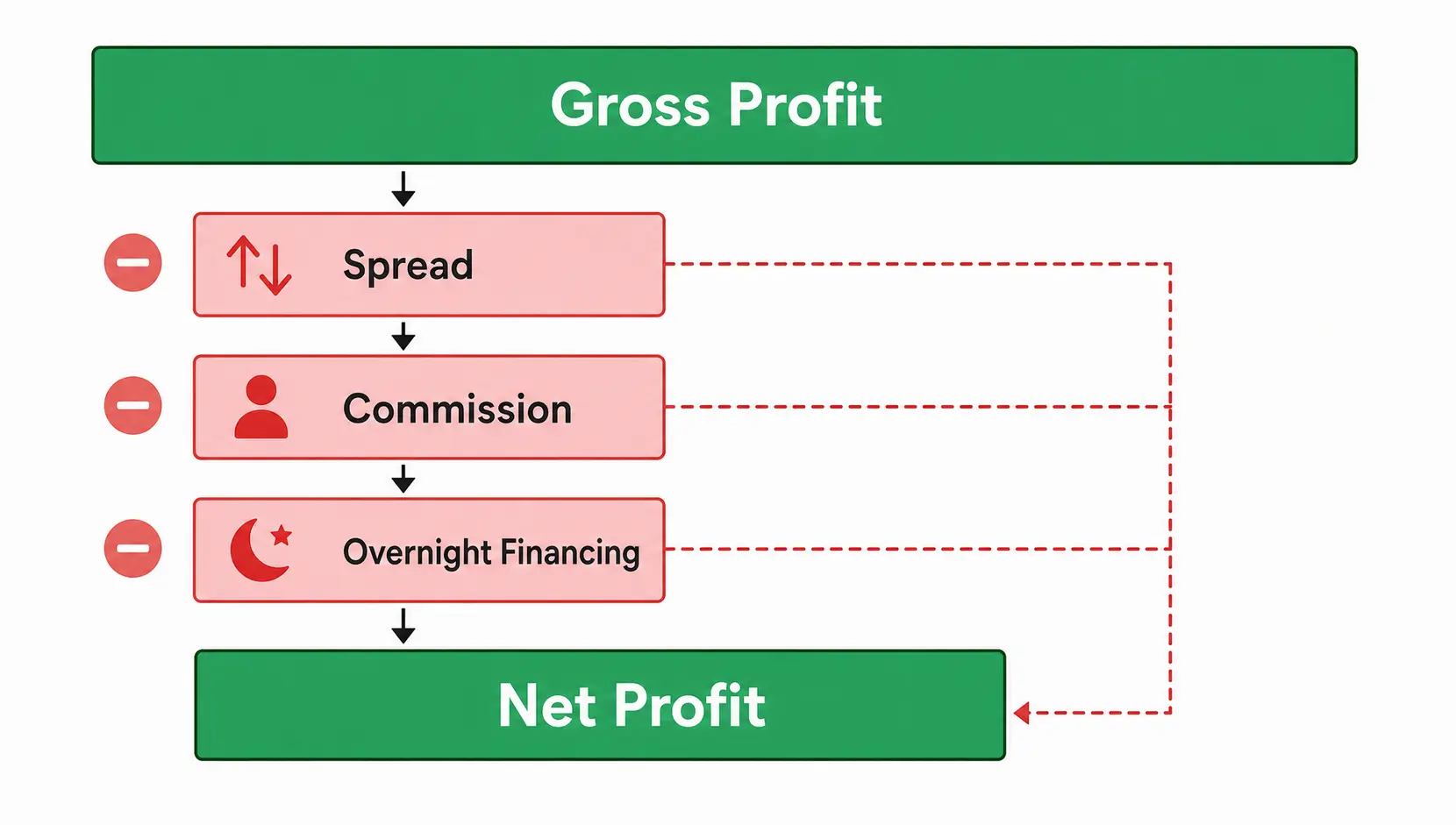
Transactional costs are a persistent drag on performance.
They include:
- The Spread: This is the difference between the buy (ask) and sell (bid) price of a CFD. To break even on a trade, the market must move in your favour by an amount equal to the spread. Wider spreads mean higher entry costs.
- Commissions: Some brokers, particularly for share CFDs, charge a commission on top of the spread. This is usually a percentage of the trade’s notional value or a flat fee per trade.
- Overnight Financing (Swap Fees): If you hold a CFD position open past a certain time (usually around 10 PM UK time), you will incur an overnight financing fee. This cost reflects the cost of borrowing the capital you have been leveraged on. For long positions, this is a charge; for short positions, you might occasionally receive a small credit, but typically it is also a charge. This cost makes CFDs generally unsuitable for long-term holding.
| Cost Component | Impact on Trading | Analyst’s Note |
|---|---|---|
| Spread | The primary cost of opening and closing a trade. A hurdle to profitability. | Compare spreads across brokers, especially during volatile periods when they can widen significantly. |
| Commission | An additional explicit cost, most common on equity CFDs. | Factor this into your calculations. A seemingly small commission erodes net profit over many trades. |
| Overnight Financing | Makes holding positions for extended periods costly. Punishes swing/position traders. | This cost structurally incentivises short-term speculation over long-term market views within the CFD framework. |
Essential Risk Management Strategies You Must Implement
Given the high-risk nature of CFDs, risk management is not optional; it is essential for survival.
- Use Stop-Loss Orders: A stop-loss is an order you place with your broker to automatically close your position if the market moves against you to a certain price level. This caps your potential loss on any given trade.
- Use Take-Profit Orders: Similarly, a take-profit order automatically closes your position when it reaches a specified profit target, locking in your gains.
- Position Sizing: Do not risk more than a small percentage (e.g., 1-2%) of your trading capital on a single trade. This ensures that a single losing trade does not wipe out your account.
- Stay Informed: Be aware of economic announcements, political events, and market sentiment that could cause sudden and significant price gaps, which can cause your stop-loss to execute at a worse price than intended (slippage).
Frequently Asked Questions
1. What is the main difference between CFD trading and investing?
The primary difference lies in ownership and intent. Investing, such as buying shares in a company like Shell PLC, involves taking direct ownership of the asset with the expectation of long-term growth and possibly dividends.
CFD trading is a form of speculation where you do not own the asset. You are using a derivative to bet on short-to-medium-term price movements, often with leverage, which makes it a higher-risk, higher-turnover activity.
2. Is CFD trading legal in my country?
The legality and regulation of CFD trading vary significantly by jurisdiction. In the United Kingdom and Malaysia, it is legal and regulated for retail clients, though with strict rules on leverage set by bodies like the Securities Commission Malaysia.
However, CFDs are famously banned for retail traders in the United States by the SEC. Other regions, including Hong Kong and Brazil, also have prohibitions or severe restrictions.
It is imperative to check the specific regulations in your country of residence before attempting to trade CFDs.
3. What financial markets can I access with CFDs?
One of the main attractions of CFDs is their ability to provide access to a wide array of global markets from a single platform.
Common markets include:
- Indices: Speculate on the performance of major stock indices like the FTSE 100, S&P 500, and Nikkei 225.
- Shares: Trade on the price movements of individual company shares from major exchanges (e.g., Apple, Barclays, Petronas).
- Forex: Access the global foreign exchange market, trading major, minor, and exotic currency pairs.
- Commodities: Trade on the prices of hard and soft commodities like Gold, Crude Oil, and Wheat.
- ETFs & Bonds: Some providers also offer CFDs on Exchange-Traded Funds and government bonds.
William Lee’s Final Thoughts
Sources & Methodology
William Lee strictly relies on primary regulatory data and authoritative official information to ensure accuracy. Data cited in this guide is sourced from:
*Disclaimer: The content of this article represents the personal views of the author (William Lee) and is for educational and reference purposes only. It does not constitute professional investment or financial advice. Trading and investing involve significant risk; proceed with caution.*
