

I’ve been trading the markets for over a decade, and if there’s one thing I’ve learned—often the hard way—it’s that the biggest risk isn’t always a bad trade; it’s a bad broker.
Learning how to identify fake forex and CFD trading platforms is not just a helpful skill, it’s the most critical step in capital preservation. As the markets get more accessible, the number of predators looking to exploit newcomers grows.
This guide isn’t about complex theories; it’s a field-tested checklist to help you spot the common red flags of scam brokers and protect your hard-earned money before you ever place a trade.
We’ll cover exactly how to verify a platform’s regulation, because in this game, your broker is your single most important partner.
Key Red Flags of a Fraudulent Trading Platform
Pro Tip: A fraudulent platform’s business model is not based on facilitating trades; it’s based on preventing withdrawals. Their tactics are designed to get your money in and then make it impossible to get it out. Every red flag, from unrealistic profit promises to a lack of regulation, points back to this fundamental truth. Treat your broker selection process with more scrutiny than any single trade analysis.
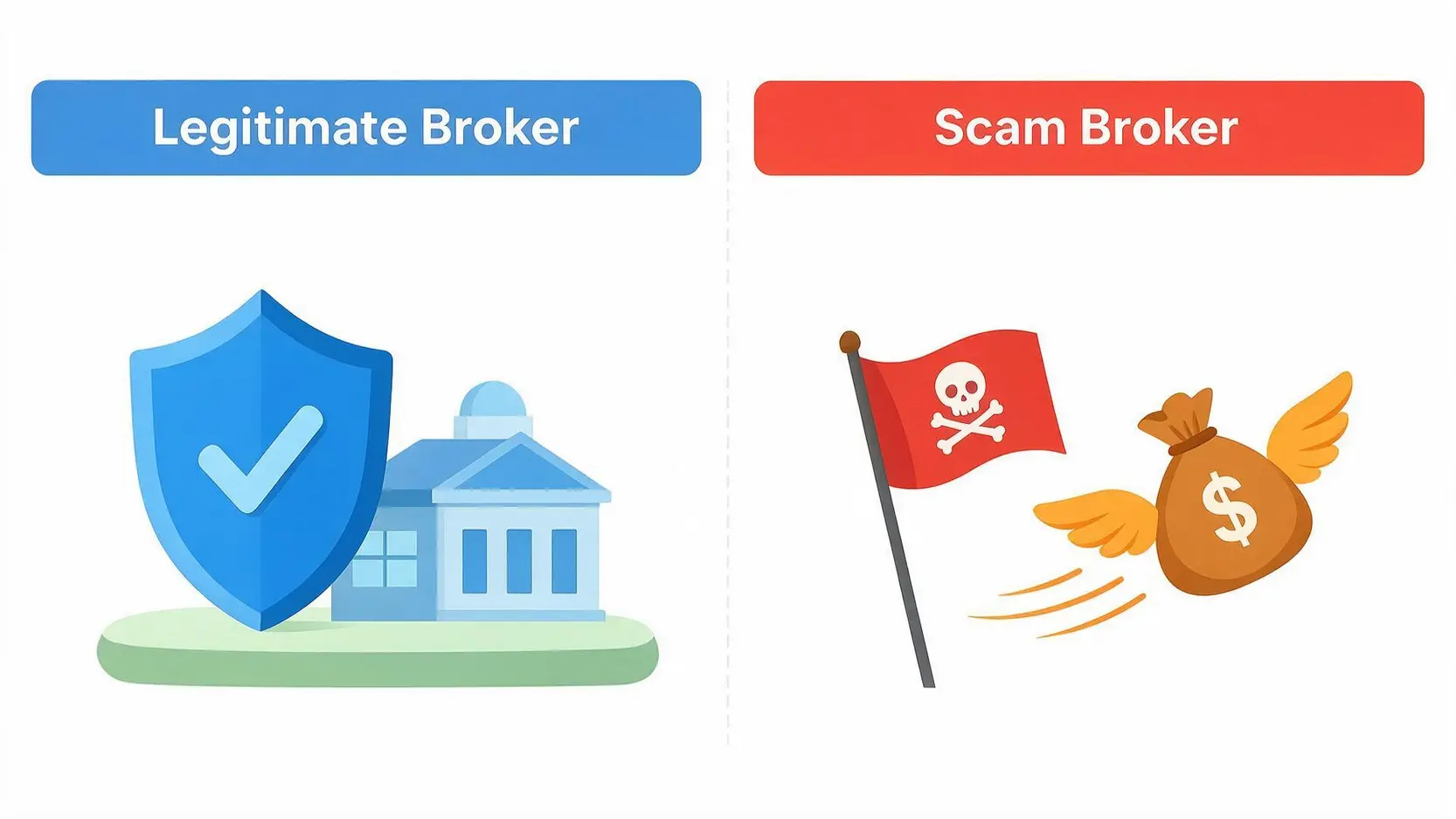
Spotting a fake platform comes down to recognising patterns. These operations are remarkably unoriginal, recycling the same handful of tricks for years. They rely on investor greed, inexperience, and a lack of regulatory checks.
Here are the tells I’ve learned to spot from a mile away.
Guarantees of High or Unrealistic Profits
This is the oldest trick in the book. You’ll see adverts on social media or receive unsolicited messages promising returns of ‘20% a month’ or ‘guaranteed profits with our AI bot’.
The professional trading world deals in probabilities, not certainties. Any entity that guarantees profit in a market driven by global economic forces and systemic risk is lying. There are no exceptions.
Lack of Proper Regulation or Fake Credentials
Regulation is non-negotiable. A regulated broker is legally required to segregate client funds from their own operational capital, meaning your money is protected if they go insolvent. Unregulated entities can do whatever they want with your deposits.
Scammers often claim to be regulated but are either lying or are ‘registered’ in a jurisdiction with no meaningful oversight (e.g., St. Vincent and the Grenadines, Marshall Islands). Some even clone the details of legitimate firms.
Your job is to verify their claims directly at the source. Don’t trust the certificate they show you on their website; go to the regulator’s official register and check for yourself. If they are not on that list, they are not regulated. Full stop.
Pressure Tactics and Aggressive Sales
A professional broker provides a platform and support; they don’t function like a high-pressure sales room. If you are getting constant calls from an ‘account manager’ urging you to deposit more funds, especially with time-sensitive ‘bonus’ offers, this is a major red flag.
They often use language like, ‘The market is moving, you need to deposit another £5,000 now to catch this big move!’
This tactic is designed to create a sense of urgency and bypass your logical thinking. It is a classic sign of a fraudulent forex platform, as their goal is to maximise your ‘investment’ before you realise you can’t withdraw it.
How to Proactively Verify a Trading Platform’s Legitimacy
Pro Tip: Spend one hour on due diligence before depositing a single penny. That one hour can save you thousands of pounds and months of heartache. The verification process is your first and most important trade. Always assume a broker is fake until you can prove otherwise with official documentation.
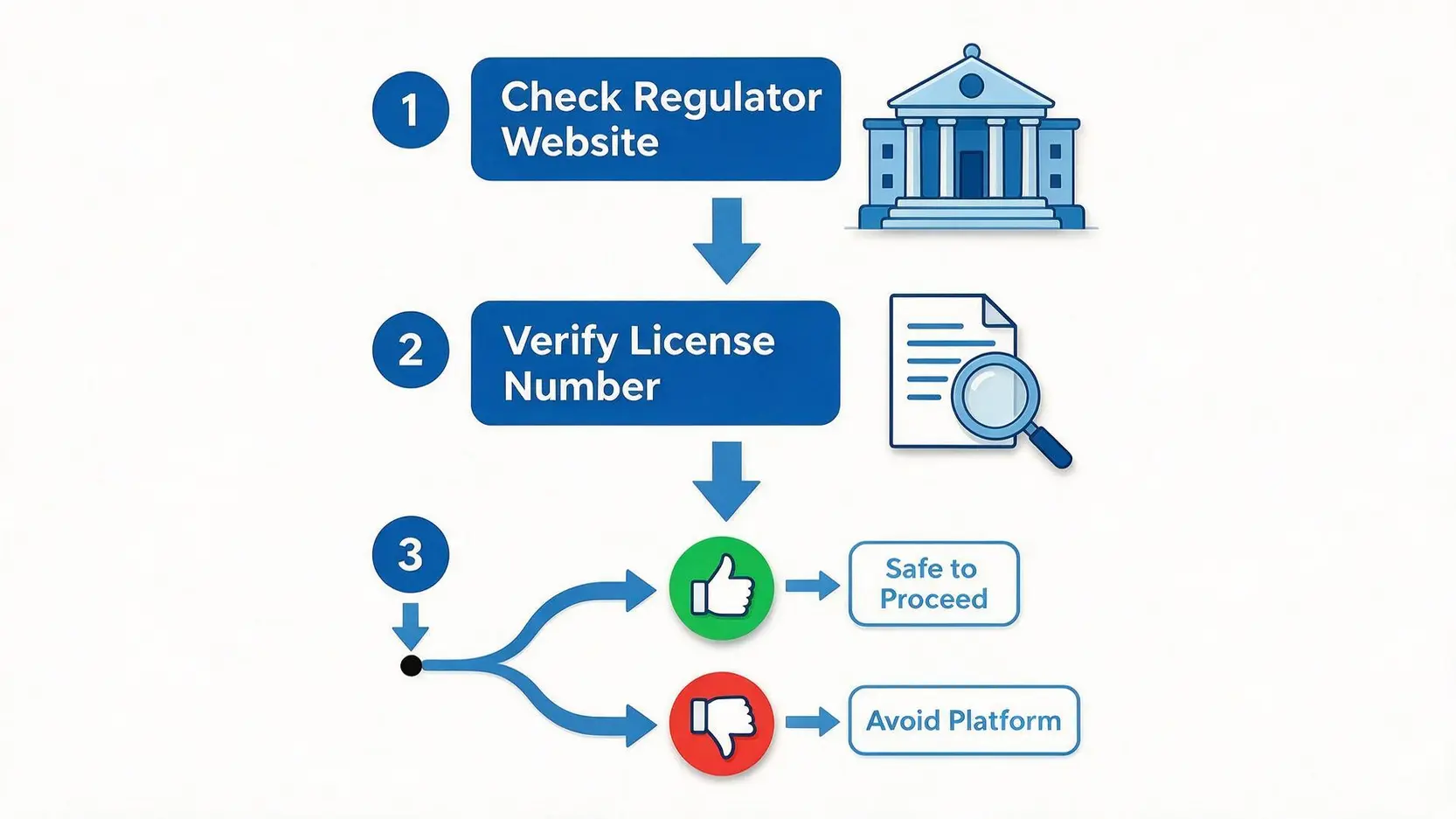
Trust is earned, and in finance, it is verified through third-party, official sources. Never take a broker’s word for it. Here is a practical, step-by-step process for conducting your own background check on any platform you consider using.
Checking with Official Regulatory Bodies
This is the most crucial step. A top-tier regulator provides a significant layer of protection. For traders in the UK or Malaysia, these are your primary checkpoints:
- For UK Traders: The Financial Conduct Authority (FCA): The FCA is one of the world’s most respected regulators. You can search their Financial Services Register to confirm if a firm is authorised. Check the FCA Register here. Ensure the firm’s reference number (FRN) and contact details on the register match the website you are using.
- For Malaysian Traders: The Securities Commission (SC) Malaysia: The SC oversees capital markets in Malaysia. You must verify that your broker is on their list of Licensed and Registered Persons. Check the SC Malaysia’s Public Register here.
- Check the Alert Lists: Both regulators, and the central bank, maintain lists of unauthorised firms. Before you invest, check the Bank Negara Malaysia (BNM) Financial Consumer Alert List and the FCA’s warning list. If the broker is on this list, it’s a confirmed scam.
Using Third-Party Broker Check Tools and Reviews
After regulatory checks, look at the broker’s reputation. Websites like Trustpilot or dedicated review sites can offer some insight, but they must be approached with caution.
Fraudulent brokers are known to pay for fake positive reviews to drown out the negative ones from people they’ve scammed. Look for patterns in the negative reviews.
Are clients all complaining about the same issue, such as withdrawal problems or platform manipulation?
That’s more telling than a hundred generic five-star ratings. Also, cross-reference information on authoritative financial sites like Investopedia, which often have articles on avoiding forex scams.
| Feature | Legitimate Broker | Fake Platform (Red Flag) |
|---|---|---|
| Regulation | Authorised by a top-tier regulator (e.g., FCA, SC, ASIC) and verifiable on the regulator’s official website. | Unregulated, regulated by a weak offshore entity, or provides fake registration details. |
| Profit Claims | Provides mandatory risk warnings stating that a high percentage of traders lose money. | Guarantees high, unrealistic, or ‘risk-free’ profits. |
| Communication Style | Professional support, provides educational materials, does not pressure clients to deposit. | Aggressive sales calls, high-pressure tactics, urgent demands for more funds. |
| Withdrawals | Clear, straightforward withdrawal process with defined timelines. | Delayed or refused withdrawals, sudden requests for high ‘taxes’ or ‘fees’ to release funds. |
| Transparency | Clearly stated physical address, contact numbers, and regulatory details on their website. | Vague or no physical address, uses only mobile numbers or web forms for contact. |
Common Types of Forex and CFD Scams
Pro Tip: Scams evolve with technology. The underlying trick is the same—a promise of easy money—but the delivery mechanism changes. Be skeptical of any trading offer that originates from social media or an unsolicited message. Real trading opportunities don’t come looking for you in your DMs.
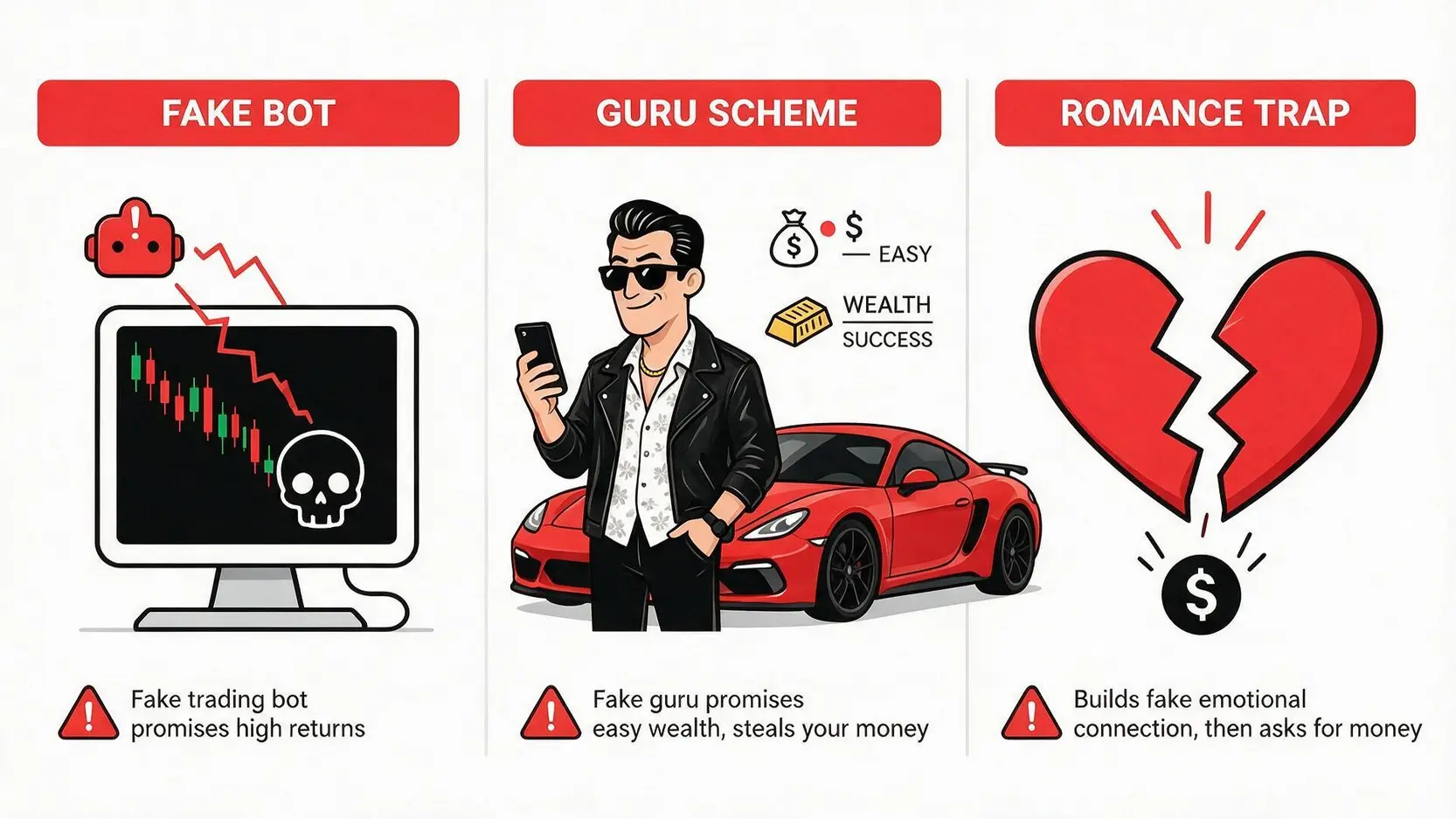
Understanding the different forms these scams take can help you recognise them before you are caught. Scammers are adaptable, but they tend to operate within a few common frameworks.
Fake Trading Software and Mobile Apps
This scam preys on the desire for a ‘set and forget’ trading solution. Scammers will promote expert advisors (EAs), trading bots, or signal software that supposedly generates guaranteed profits.
In reality, this software is often designed to manufacture fake winning trades to encourage you to invest more, only to then generate a series of catastrophic losses. Similarly, fake trading apps can appear on app stores.
They might look professional but are simply tools to collect your deposits, with no real trading ever taking place on the backend. Always verify the company behind the app is a regulated broker.
Romance Scams and Social Media Traps
This is a particularly cruel type of fraud that merges investment scams with romance scams. A fraudster will build a relationship with a target over weeks or months on social media or dating apps.
Once trust is established, they will begin to talk about their success in forex or crypto trading and encourage the victim to invest on a specific ‘highly profitable’ platform—which they, of course, control.
They guide the victim through the deposit process and show them fake profits. When the victim tries to withdraw, the scammer (and the money) disappears.
Another common social media trap involves ‘gurus’ flaunting a lavish lifestyle and offering to manage your trading account for a share of the profits. You send them money, and you never hear from them again.
| Scam Type | Primary Lure | How to Avoid |
|---|---|---|
| Unregulated Broker | High leverage, large bonuses, ‘easy’ account opening. | Strictly stick to brokers regulated by top-tier authorities like the FCA or SC. Verify their license number on the official register. |
| Fake Trading Software/Bots | Promise of automated, ‘hands-free’ guaranteed profits. | Understand that no software can guarantee profits. Backtest any tool on a demo account. Never buy software from unsolicited sources. |
| Social Media ‘Gurus’ | Showcasing a lavish lifestyle (rented cars, fake watches) and offering to trade on your behalf. | Never allow anyone to trade your capital for you. If their strategy was so profitable, they wouldn’t be selling it on Instagram. |
| Romance/Pig Butchering Scam | Building emotional trust before introducing a ‘secret’ investment platform. | Be extremely wary of anyone you meet online who quickly steers the conversation towards investing money on a specific, unknown site. |
What to Do If You Suspect You’ve Been Scammed
Pro Tip: Act immediately and methodically. Stop all communication with the scammers, gather all your records, and report the incident to the appropriate authorities. Do not pay any supposed ‘taxes’ or ‘withdrawal fees’, as this is a common tactic to extract more money from victims.
Realising you’ve been scammed is a painful experience. It’s crucial to move past the emotion and take clear, decisive action to protect yourself from further losses and to help authorities track these criminals.
Immediately Stop All Deposits
Your first move is to stop the bleeding. Do not send any more money, no matter what they promise. A common follow-up scam involves telling you that you need to pay a ‘tax’, ‘commission’, or ‘processing fee’ to unlock your withdrawal.
This is a lie. The money is already gone, and they are simply trying to get more. Cease all contact and block them.
Reporting to Authorities and Regulators
Reporting the scam is vital. While it may not always lead to recovering your funds, it helps regulators and law enforcement build a case and warn other potential victims.
Gather all evidence: screenshots of conversations, transaction records, and website details.
- In Malaysia: Lodge a formal complaint with the Securities Commission Malaysia’s Investor Affairs & Complaints Department. You can also report to the Royal Malaysia Police.
- In the UK: Report the scam to the Financial Conduct Authority (FCA). They have a dedicated consumer helpline and online reporting forms. You should also report it to Action Fraud, the UK’s national reporting centre for fraud and cybercrime.
Frequently Asked Questions
1. What is the first thing to check on a trading platform?
The absolute first thing to check is its regulatory status. Go to the website of a top-tier regulator like the UK’s FCA or Malaysia’s SC and search their official public register for the company’s name and license number.
If you cannot find them there, do not proceed. Everything else is secondary to this.
2. Can I recover money from a fake forex platform?
Honestly, it is extremely difficult and rare. These operations are often based overseas, use cryptocurrency to move funds, and are designed to be untraceable. Reporting them to the authorities is the correct step, but you should be realistic about the chances of recovery.
Be very wary of ‘fund recovery services’ that contact you after a scam; they are often part of the same criminal network running a follow-up scam.
3. Are all trading apps on the App Store or Google Play trustworthy?
No, not at all. While app stores have review processes, malicious apps can and do get through. A professional-looking app is not a substitute for proper regulation.
Scammers can create a very convincing user interface that does nothing but collect deposits. Before downloading and funding any trading app, first verify the company behind it is a regulated broker using the steps outlined in this guide.
4. Why do scammers ask for deposits via cryptocurrency or wire transfer?
They prefer these methods because they are largely irreversible and difficult to trace. Credit card payments often have chargeback protections, which is a risk for the scammers.
If a ‘broker’ strongly insists on you using crypto (like Bitcoin or Tether) or a bank wire for your deposit, this is a significant red flag. Legitimate brokers offer a variety of standard payment methods.
Danny’s Final Thoughts
The market is a tough enough opponent on its own; you don’t need to be fighting a fraudulent broker at the same time. The temptation of easy money is powerful, but there are no shortcuts in trading.
Every promise of guaranteed profit is a trap. Your best defence is a healthy dose of scepticism and a methodical approach to due diligence.
Remember my core philosophy: ‘Check Before You Trade.’ Your trading capital is your lifeblood in this business. Protect it fiercely, starting with who you choose to entrust it to.
Sources & Methodology
Danny strictly relies on primary regulatory data and authoritative official information to ensure accuracy. Data cited in this guide is sourced from:
*Disclaimer: The content of this article represents the personal views of the author (Danny) and is for educational and reference purposes only. It does not constitute professional investment or financial advice. Trading and investing involve significant risk; proceed with caution.*
