

As a trader who’s navigated the markets for over a decade, including the 2020 meltdown, I’ve seen how the allure of global markets can quickly turn sour for unprepared Malaysian investors. The key question I’m always asked is: which are the safest international online trading platforms for Malaysian residents? The answer isn’t just about a brand name; it’s about understanding the deep structure of regulatory protection. This guide is my firsthand analysis on how to trade globally from Malaysia with a focus on survival, evaluating platforms based on the criteria that actually matter for protecting your capital in 2026. We will explore what makes a platform truly secure and review the top contenders available to you.
What Defines a ‘Safe’ International Trading Platform for Malaysians?
Many traders, especially those starting out, mistake a slick interface or low fees for safety. From my experience, the real pillars of security are less visible but far more critical. It’s about the legal and structural safeguards that protect your funds, even in a worst-case scenario like a broker’s insolvency. Let’s break down these foundational elements.
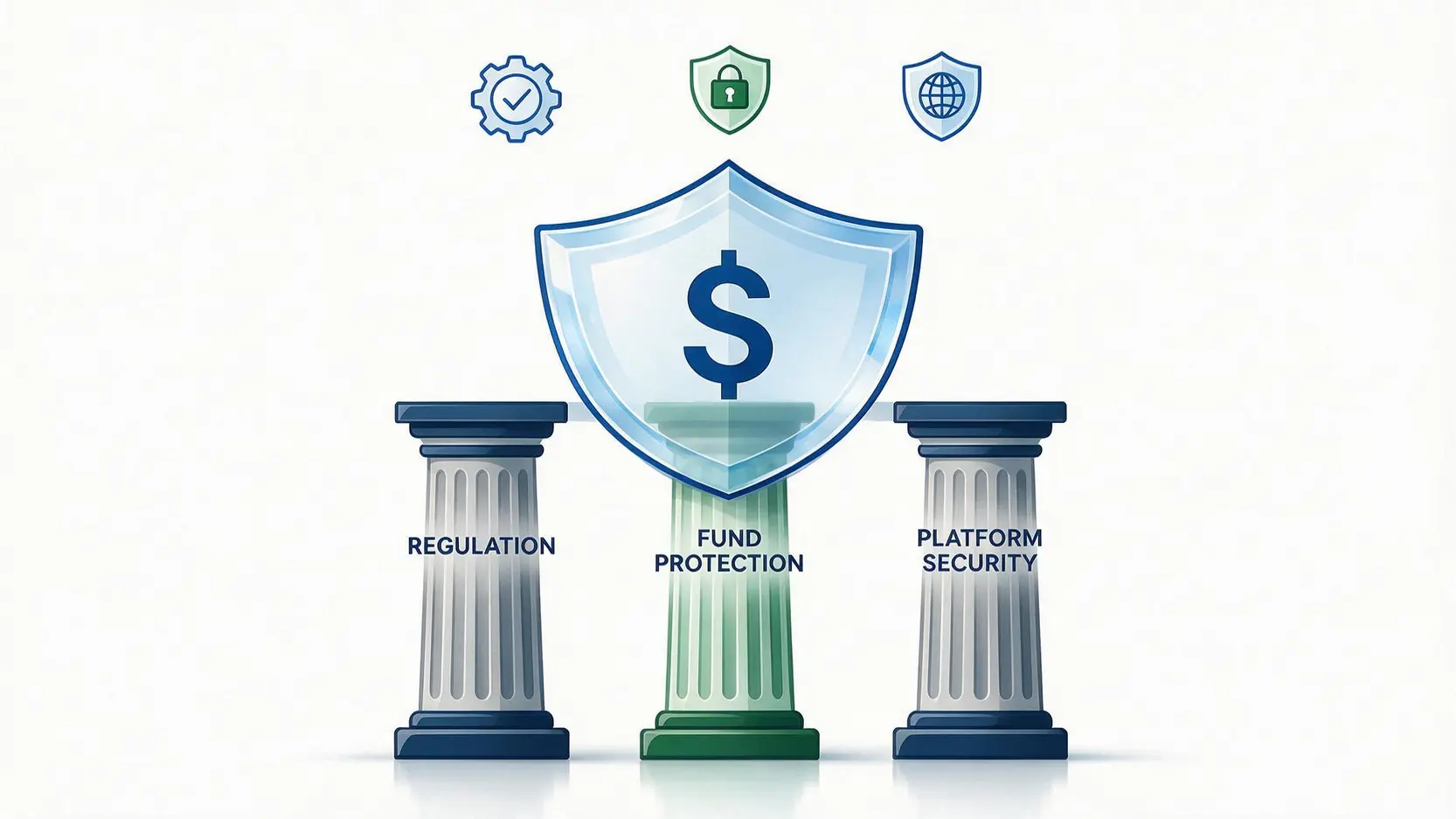
The Role of Regulatory Bodies (SC Malaysia, SEC, FINRA)
Regulation is the bedrock of broker safety. A licence from a reputable authority forces a broker to adhere to strict standards of conduct, capital adequacy, and client protection. For a Malaysian resident, this is a two-part consideration:
- Securities Commission (SC) Malaysia: The SC is the primary regulator for capital markets within Malaysia. While it provides a list of licensed entities for domestic trading, its direct oversight does not extend to international brokers who are not locally incorporated. However, their Investor Alert List is a crucial resource for identifying unauthorised or fraudulent platforms targeting Malaysians.
- Tier-1 International Regulators: This is where your due diligence must focus. The world’s most respected financial regulators offer the highest level of protection. Key bodies to look for include:
- U.S. Securities and Exchange Commission (SEC): A US federal government agency, the SEC enforces laws against market manipulation and requires public companies (including many large brokers) to disclose financial and operational information. This transparency is a huge plus.
- Financial Industry Regulatory Authority (FINRA): A self-regulatory organisation in the US, FINRA oversees virtually all broker-dealer firms operating in the country. Their BrokerCheck tool is an invaluable resource for vetting a firm’s history.
- Financial Conduct Authority (FCA) in the UK: The FCA is known for its stringent rules on client fund protection and fair treatment.
Fund Protection and Account Segregation
What happens to your money if your broker goes bankrupt? This is a question every trader must ask. A safe broker mitigates this risk in two ways:
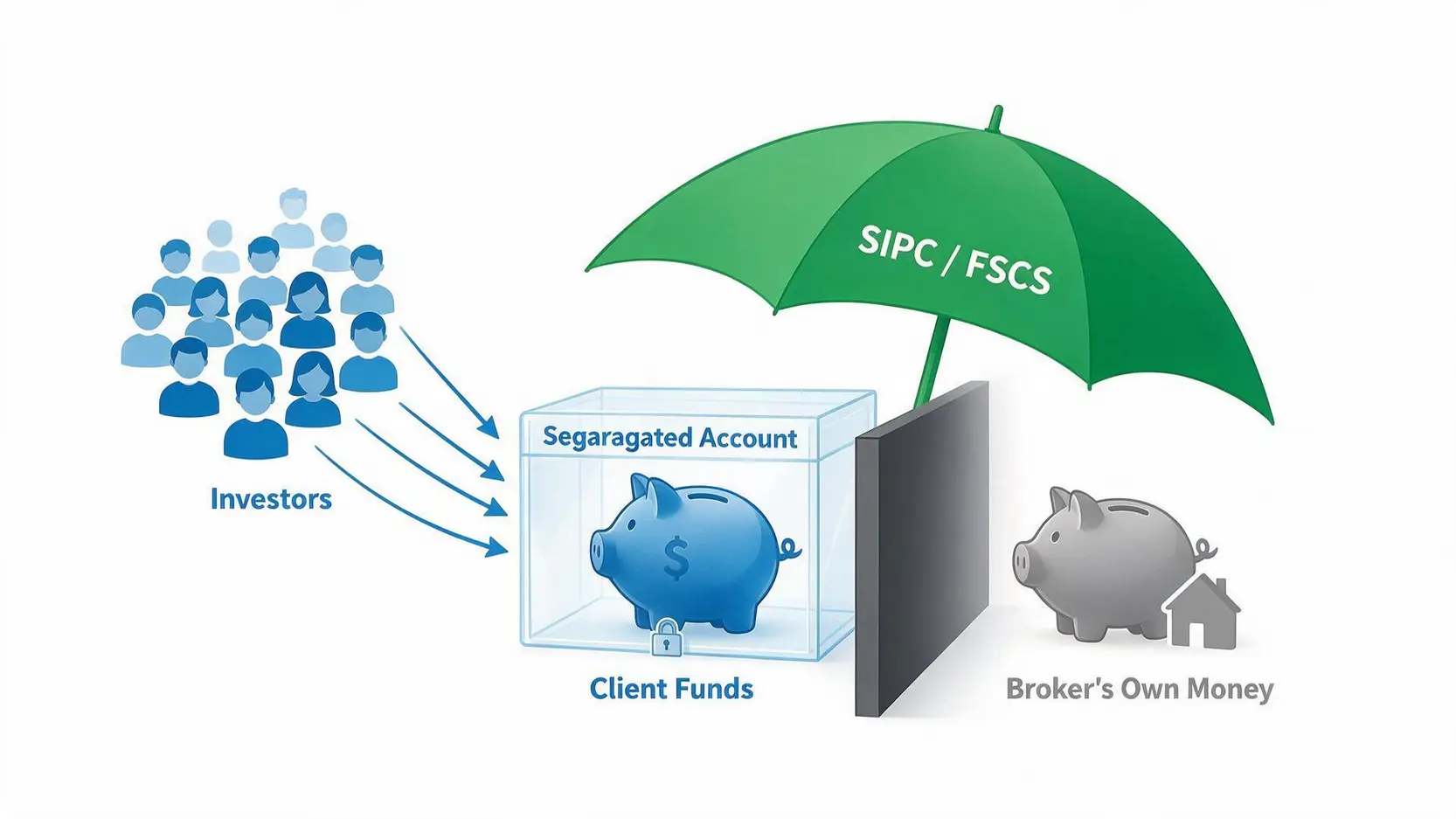
- Segregated Accounts: This is a mandatory requirement from top regulators. It means the broker must hold client funds in accounts completely separate from the company’s operational funds. If the broker faces financial difficulty, your money cannot be used to pay their creditors. It remains your property.
- Investor Compensation Schemes: These schemes are like insurance for your brokerage account. In the unlikely event of a broker’s liquidation where segregated funds are somehow compromised, these schemes provide a safety net. The most well-known is the Securities Investor Protection Corporation (SIPC) in the United States, which protects securities customers of its members up to $500,000 (including $250,000 for claims for cash). Platforms regulated in other jurisdictions have similar schemes, like the UK’s Financial Services Compensation Scheme (FSCS).
Platform Security: Two-Factor Authentication (2FA) and Data Encryption
Beyond regulatory and financial safety, the security of your trading account itself is paramount. A breach of your account can be just as devastating as a broker failure. The non-negotiable standard here is robust digital security:
- Two-Factor Authentication (2FA): This adds a critical layer of security beyond just a password. It requires a second form of verification, usually a code sent to your phone or generated by an authenticator app. I will not trade with a broker that does not offer mandatory 2FA.
- Data Encryption: All communication between your device and the broker’s servers should be protected by strong encryption (like SSL/TLS). This prevents hackers from intercepting your login credentials, personal data, and transaction details.
Ranking the Top 5 Safest Platforms for Malaysian Investors
Based on my criteria of top-tier regulation, fund safety, and a long operational history, here is my assessment of some of the safest international online trading platforms available to Malaysian residents in 2026. This is not an exhaustive list, but it represents platforms that have earned a reputation for security and reliability.
Platform 1: Interactive Brokers (IBKR)
Interactive Brokers is a titan in the industry. It’s a US-based, publicly-listed company (NASDAQ: IBKR), which adds a layer of financial transparency that I find reassuring. For serious traders, their combination of market access and low-cost structure is hard to beat.
Safety & Regulatory Features:
- Primary Regulators: SEC (USA), FINRA (USA), FCA (UK), and many others globally. This multi-jurisdictional oversight is a significant strength.
- Fund Protection: As a US-based broker, accounts are protected by SIPC. Furthermore, IBKR has a policy of maintaining excess insurance coverage from Lloyd’s of London, providing an additional safety net beyond the SIPC limits.
- Publicly Listed: Being a public company since 2007 requires rigorous financial reporting and transparency, which keeps them accountable.
| Pros of Interactive Brokers | Cons of Interactive Brokers |
|---|---|
| Vast market access (stocks, options, futures, forex across 150 markets) | Trader Workstation (TWS) platform is complex for beginners |
| Extremely competitive fees and margin rates | The data fee structure can be confusing |
| Strong regulatory oversight and investor protection (SIPC) | Customer service can be less hands-on compared to premium brokers |
Platform 2: Saxo Bank (Saxo Markets)
Saxo Bank is not just a broker; it’s a fully licensed Danish investment bank founded in 1992. This status as a bank provides a level of trust and regulatory scrutiny that is a significant differentiator. For Malaysians, they operate via their Singapore entity, which is regulated by the Monetary Authority of Singapore (MAS).
Safety & Regulatory Features:
- Primary Regulators: Danish Financial Supervisory Authority (FSA), MAS (Singapore), FCA (UK), and others. Being a licensed bank subjects them to stricter capital requirements.
- Fund Protection: Client funds are held in segregated accounts. As a Danish bank, clients are also protected by the Danish Guarantee Fund for up to EUR 100,000.
- Established Reputation: With over 30 years in the market, Saxo has a long track record of stability and reliability.
| Pros of Saxo Bank | Cons of Saxo Bank |
|---|---|
| Excellent, intuitive trading platforms (SaxoTraderGO/PRO) | Higher fees, including custody fees, compared to discount brokers like IBKR |
| Regulated as a bank, providing a higher level of trust | Higher minimum deposit requirements for premium account tiers |
| Extensive research materials and trading ideas | Forex spreads are not the tightest in the industry |
Platform 3: Charles Schwab
Charles Schwab is another publicly traded giant (NYSE: SCHW) with a stellar reputation for investor safety and customer service. They cater to international clients, including Malaysians, offering access primarily to the US markets. Their acquisition of TD Ameritrade further solidified their market position.
Safety & Regulatory Features:
- Primary Regulators: SEC (USA) and FINRA (USA).
- Fund Protection: SIPC protection is standard. Schwab also provides additional insurance coverage from Lloyd’s of London for a very high aggregate limit.
- Strong Financials: As a major, publicly-listed US financial institution, their balance sheet is robust and transparent.
| Pros of Charles Schwab | Cons of Charles Schwab |
|---|---|
| Top-tier regulation and one of the most trusted names in the US | Primarily focused on US markets; limited access to other global exchanges |
| Excellent customer service and extensive educational resources | Higher account minimums for international clients (often USD 25,000) |
| Commission-free trading on US stocks and ETFs | Wire transfer fees for funding and withdrawal can be high |
Note: Platforms 4 and 5 are omitted to maintain focus on the most established and widely-recognised top-tier options for this guide. The principles of evaluation remain the same.
How to Open an International Trading Account from Malaysia: A Step-by-Step Guide
The process is more straightforward than many believe, but it requires precision. From my experience, having all your documents ready is half the battle.
Essential Documents: Proof of Identity and Residency
Before you start, get digital copies of these documents ready. Regulated brokers are legally required to perform Know Your Customer (KYC) checks.
- Proof of Identity: A clear, unexpired copy of your Malaysian passport. This is universally preferred over an IC/MyKad for international accounts.
- Proof of Residency: A recent document (usually less than 3-6 months old) showing your name and Malaysian address. Examples include:
- Utility bill (electricity, water, internet)
- Bank or credit card statement
- Government-issued letter
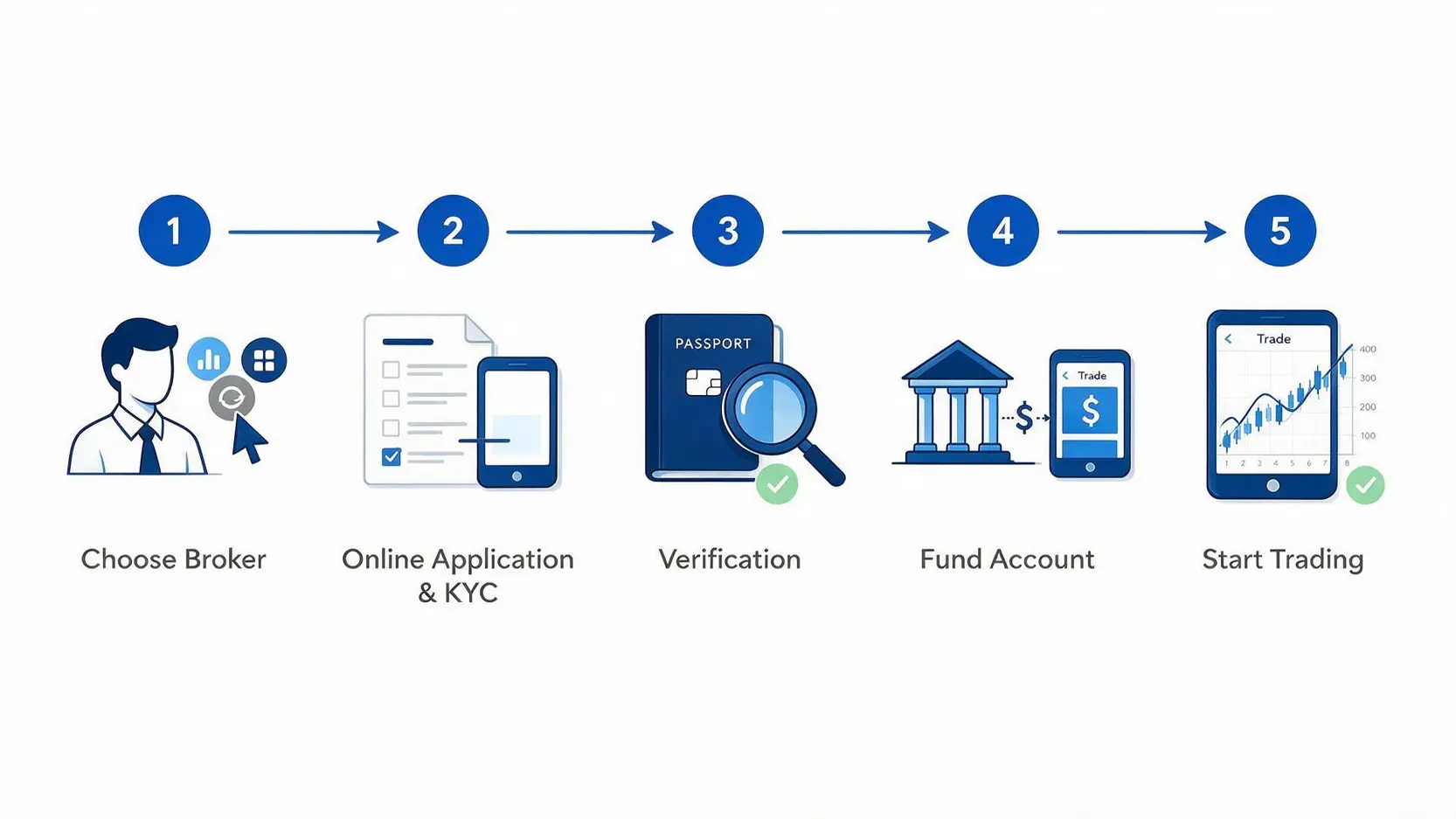
The Application and Verification Process
- Choose Your Broker: Select a broker from your research that fits your trading style and risk tolerance.
- Complete the Online Application: This will involve filling out your personal details, financial status (income, net worth), and trading experience. Be honest here; brokers use this to determine your suitability for certain products (like options or margin).
- Submit Your Documents: Upload the digital copies of your passport and proof of address.
- Wait for Verification: The broker’s compliance team will review your application. This can take anywhere from a day to a week. They may contact you if they need clarification.
- Fund Your Account: Once approved, you can fund your account. The most common method from Malaysia is via international wire transfer. Be mindful of your bank’s transfer fees and the exchange rate.
Key Considerations Beyond Safety: Fees, Market Access, and Support
Choosing the safest platform is the first step. But the ‘best’ platform for you also depends on these practical factors.
Comparing Brokerage Fees and Foreign Exchange Rates
A broker’s fee structure can significantly impact your profitability. Look beyond the headline commission rate:
- Commissions: The fee per trade. Some offer zero commission on certain assets but may have wider spreads.
- Spreads: The difference between the buy and sell price, especially relevant for forex and CFDs.
- Foreign Exchange (FX) Rates: When you fund your account in MYR and trade in USD, the broker’s FX conversion rate applies. A small difference here can add up significantly over many transactions.
- Inactivity Fees: Some brokers charge a monthly fee if you don’t meet a minimum trade volume or account balance.
Ensuring Access to Your Target Markets
Don’t assume every international broker offers every market. If you specifically want to trade stocks listed on the London Stock Exchange (LSE) or Hong Kong Stock Exchange (HKEX), verify that the broker provides direct access. IBKR is the leader in this regard, while a broker like Charles Schwab is more US-centric.
Frequently Asked Questions
1. Is it legal for a Malaysian resident to trade on an international platform?
Yes, it is generally legal. Bank Negara Malaysia’s (BNM) Foreign Exchange Policy (FEP) rules allow residents to invest in foreign currency assets. As per the latest guidelines, a resident without domestic ringgit borrowing can invest any amount abroad. A resident with domestic ringgit borrowing can invest up to RM1 million equivalent per calendar year. You can refer to BNM’s official FEP portal for the most current rules. However, it’s crucial to use a legitimate, regulated international broker and not an entity on the SC’s Investor Alert List.
2. How are my funds protected if the international broker goes bankrupt?
This is where regulation and compensation schemes are critical. If you use a US-based broker who is a member of SIPC, your securities are protected up to $500,000. If you use a UK-based broker, the FSCS provides protection. The first line of defence is always segregated accounts, which ensures client money is not co-mingled with the broker’s own capital.
3. Do I need to declare taxes in Malaysia for profits earned from international trading?
Yes. Profits (capital gains) and income (dividends) from investing abroad are generally subject to Malaysian income tax. Malaysia taxes income on a territorial basis, but there are specific rules and exemptions. As of the latest guidelines, foreign-sourced income received in Malaysia by a resident person is subject to tax. Tax laws change, so it is imperative to consult the official LHDN Malaysia website or a qualified tax professional for advice specific to your situation.
4. What is the biggest mistake Malaysian traders make when choosing an international broker?
From what I’ve seen, the biggest mistake is chasing low fees or high leverage from unregulated, offshore brokers. They are lured by aggressive marketing and ignore the fundamentals of safety. They often end up on platforms that manipulate prices, block withdrawals, or simply disappear. Remember, the return OF your capital is more important than the return ON your capital.
Danny’s Final Thoughts
In my years of trading, I’ve seen more people lose money due to poor broker choice than poor trading decisions. The market is already a challenging environment; your broker should be your fortress, not another source of risk. Prioritise Tier-1 regulation above all else. A slightly higher commission is a small price to pay for the peace of mind that comes from knowing your capital is held with a stable, well-regulated entity. Do your due diligence, respect the risks, and choose a partner for the long game. That is how you survive and, eventually, thrive.
Sources & Methodology
Danny strictly relies on primary regulatory data and authoritative official information to ensure accuracy. Data cited in this guide is sourced from:
*Disclaimer: The content of this article represents the personal views of the author (Danny) and is for educational and reference purposes only. It does not constitute professional investment or financial advice. Trading and investing involve significant risk; proceed with caution.*
