
You line up the perfect trade. Your analysis is solid, the setup is clean, and you click the button to execute. But the price you get is noticeably different from the price you saw on screen.
This gap, this ghost in the machine, has a name: Slippage. For any serious participant in the financial markets, understanding slippage in trading is not optional; it is fundamental to survival.
This phenomenon can quietly erode your profits or, in some cases, surprisingly work in your favour.
The key is not to fear it, but to understand its mechanics, anticipate its occurrence, and implement strategies to minimize its negative impact. We will break down what causes slippage and how you can navigate it like a professional.
What Is Slippage in Finance and Why Does It Occur
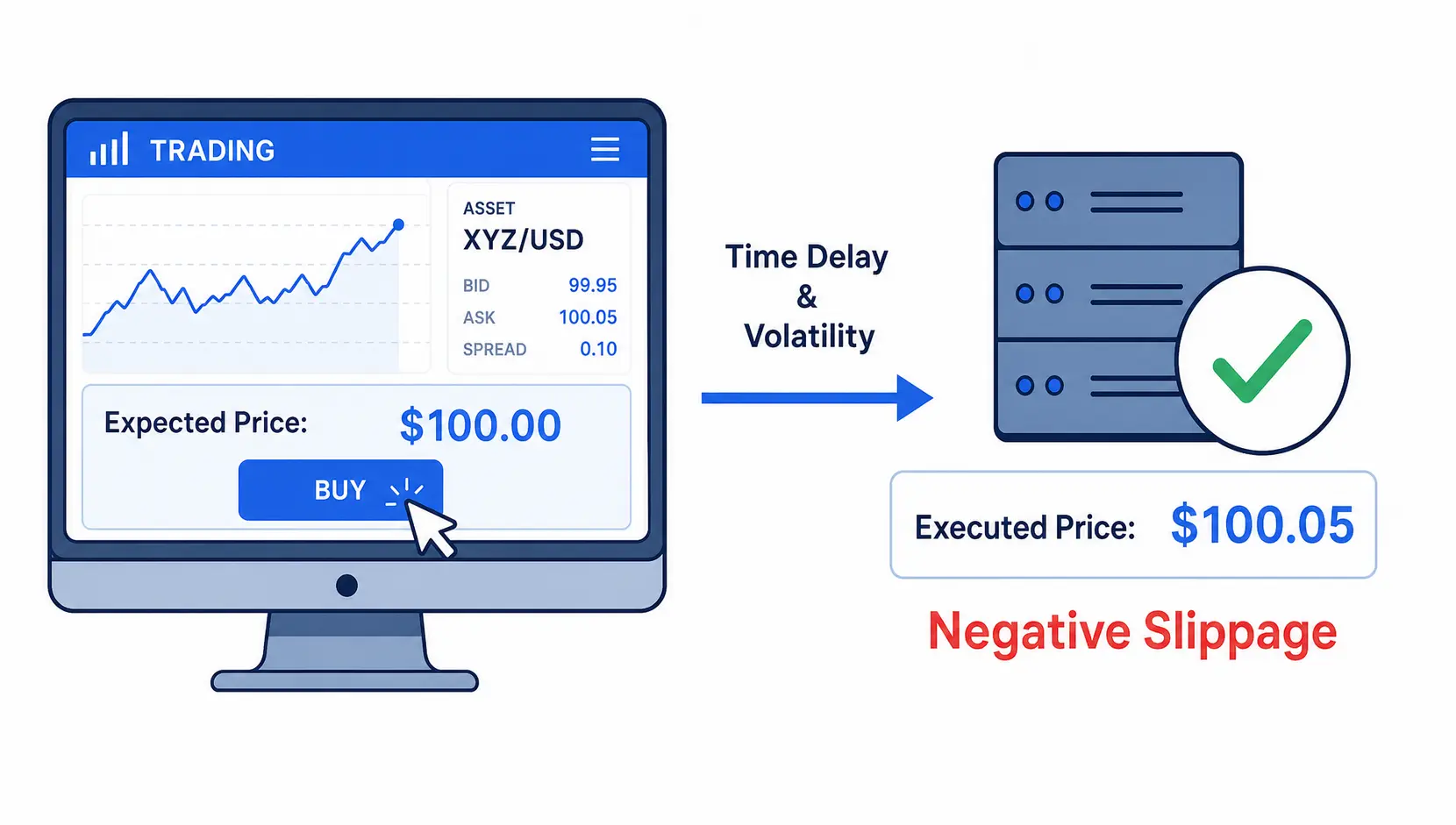
Pro Tip: At its core, slippage is the difference between the price at which you expect a trade to be executed and the actual price at which it is executed. It is a natural byproduct of the time delay between you placing an order and a liquidity provider or exchange filling it, especially in a fast-moving market.
Think of it as the market taking a breath. Between the moment you send your buy or sell order and the moment it’s processed on the server, the market price can move. This discrepancy is slippage. It can be negative (you get a worse price), positive (you get a better price), or zero.
While many newcomers focus on finding the perfect entry signal, seasoned traders know that managing the execution is just as critical. The primary drivers behind this phenomenon are market volatility and liquidity.
Defining Slippage The Difference Between Expected and Executed Price
To be precise, if you place a market order to buy EUR/USD at 1.0850, but by the time the order is filled, the best available price is 1.0852, you have experienced 2 pips of negative slippage. Conversely, if the order fills at 1.0849, you’ve received 1 pip of positive slippage.
This happens because a market order is an instruction to buy or sell at the best available price at the moment of execution, not at the moment you clicked the button.
Common Causes of Slippage Market Volatility and Liquidity
The two main culprits behind slippage are intertwined: high volatility and low liquidity. They are two sides of the same coin.
- Market Volatility: When prices are changing rapidly, the likelihood of the price moving between order placement and execution increases dramatically. This is most common during major economic news releases (like the U.S. Non-Farm Payrolls report), geopolitical events, or central bank announcements. During these periods, the bid-ask spread often widens, and the price can jump several pips or points in milliseconds. As an authoritative source like Investopedia explains, high volatility means there’s a greater chance the executed price will differ from the requested price.
- Liquidity Provision: Liquidity refers to the availability of buyers and sellers at current prices. In a high-liquidity market (like major forex pairs during London/New York session overlap), there are many participants, and large orders can be absorbed with minimal price impact. In a low-liquidity market (e.g., an exotic currency pair or a small-cap cryptocurrency), even a moderately sized order can consume all the available volume at the current price level, forcing the execution engine to move to the next best price, causing slippage.
Managing Slippage in Your Trading A Professional’s Approach
Pro Tip: The most effective way to manage slippage is to control what you can control. This means using the right order types, choosing the right time to trade, and understanding the specific market structure you are operating in. Complete avoidance is impossible, but significant mitigation is achievable.
A professional trader accepts slippage as a cost of doing business and builds a framework to manage it. The goal is to ensure that, over the long term, the costs of slippage do not significantly compromise the profitability of your trading strategy.
This involves a combination of tactical execution and strategic awareness.
Practical Strategies for Minimizing Slippage Impact
Here are battle-tested methods I’ve used over the years to keep slippage in check:
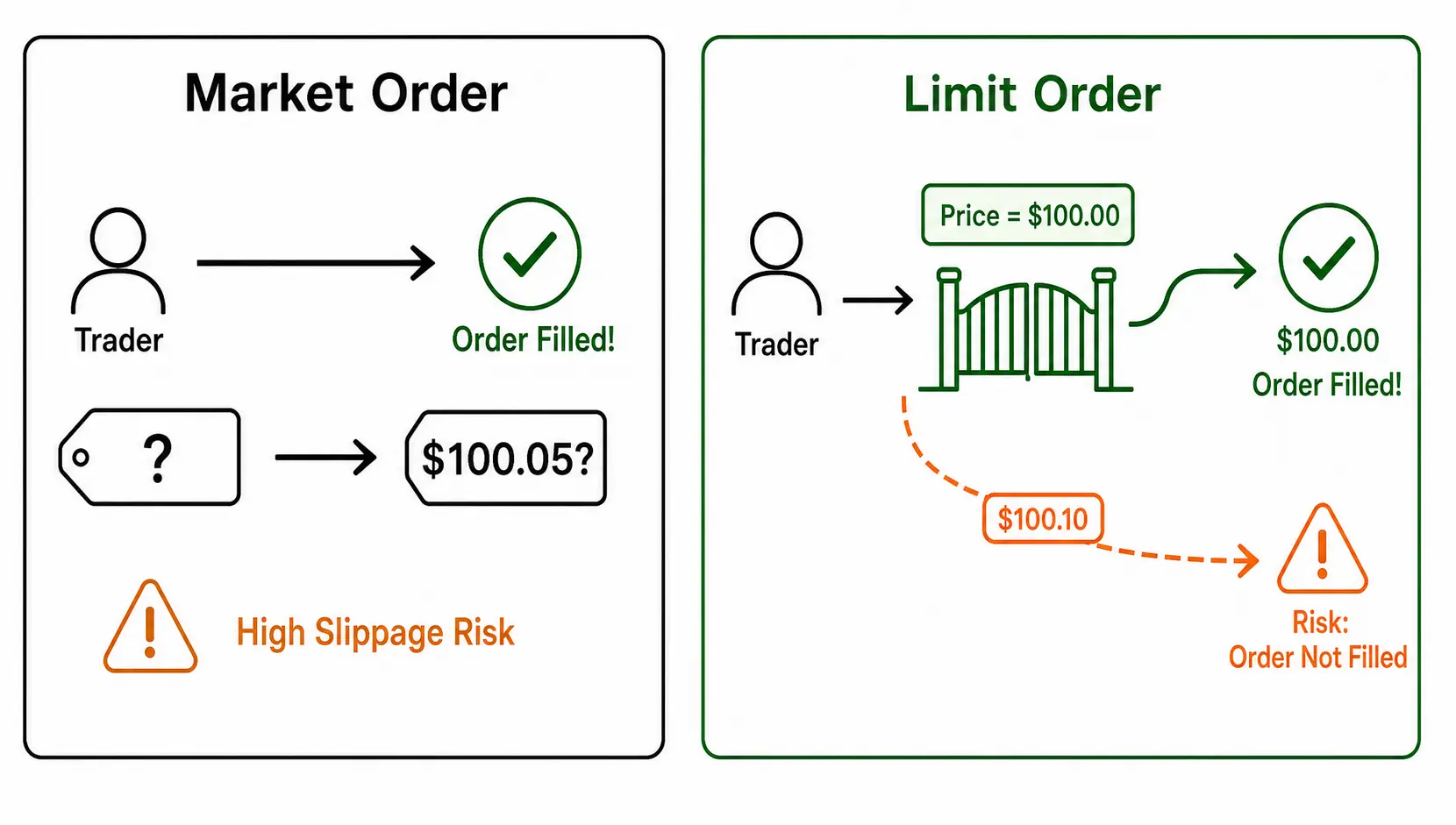
- Use Limit Orders: A market order says, ‘Get me in now, at any price.’ A limit order says, ‘Get me in at this price or better.’ By using a limit order, you define the maximum price you are willing to pay (for a buy) or the minimum price you are willing to accept (for a sell). This gives you price certainty.
- Avoid Low-Liquidity Hours: Be aware of when market liquidity is typically thin. For forex, this includes the period after the New York close and before the Tokyo open, as well as major public holidays. For crypto, it might be specific times of day when certain geographic regions are less active.
- Set Slippage Tolerance on DEXs: When trading on Decentralized Exchanges (DEXs), platforms like Uniswap or PancakeSwap allow you to set a ‘slippage tolerance’ percentage. This is the maximum percentage of price change you’re willing to accept. If the slippage exceeds this, the transaction will fail, protecting you from a very bad fill.
- Break Up Large Orders: If you are trading a significant size relative to the asset’s typical volume, entering the entire position at once can cause substantial slippage. It may be more effective to break the order into smaller pieces (iceberging) to feel out the liquidity.
| Order Type | Execution Certainty | Price Certainty | Slippage Risk |
|---|---|---|---|
| Market Order | High (guaranteed fill) | Low (filled at next best price) | High |
| Limit Order | Low (may not be filled) | High (filled at your price or better) | Low/None |
Slippage in Different Markets Forex vs Crypto
The nature and magnitude of slippage vary significantly across different asset classes, primarily due to their underlying market structures.
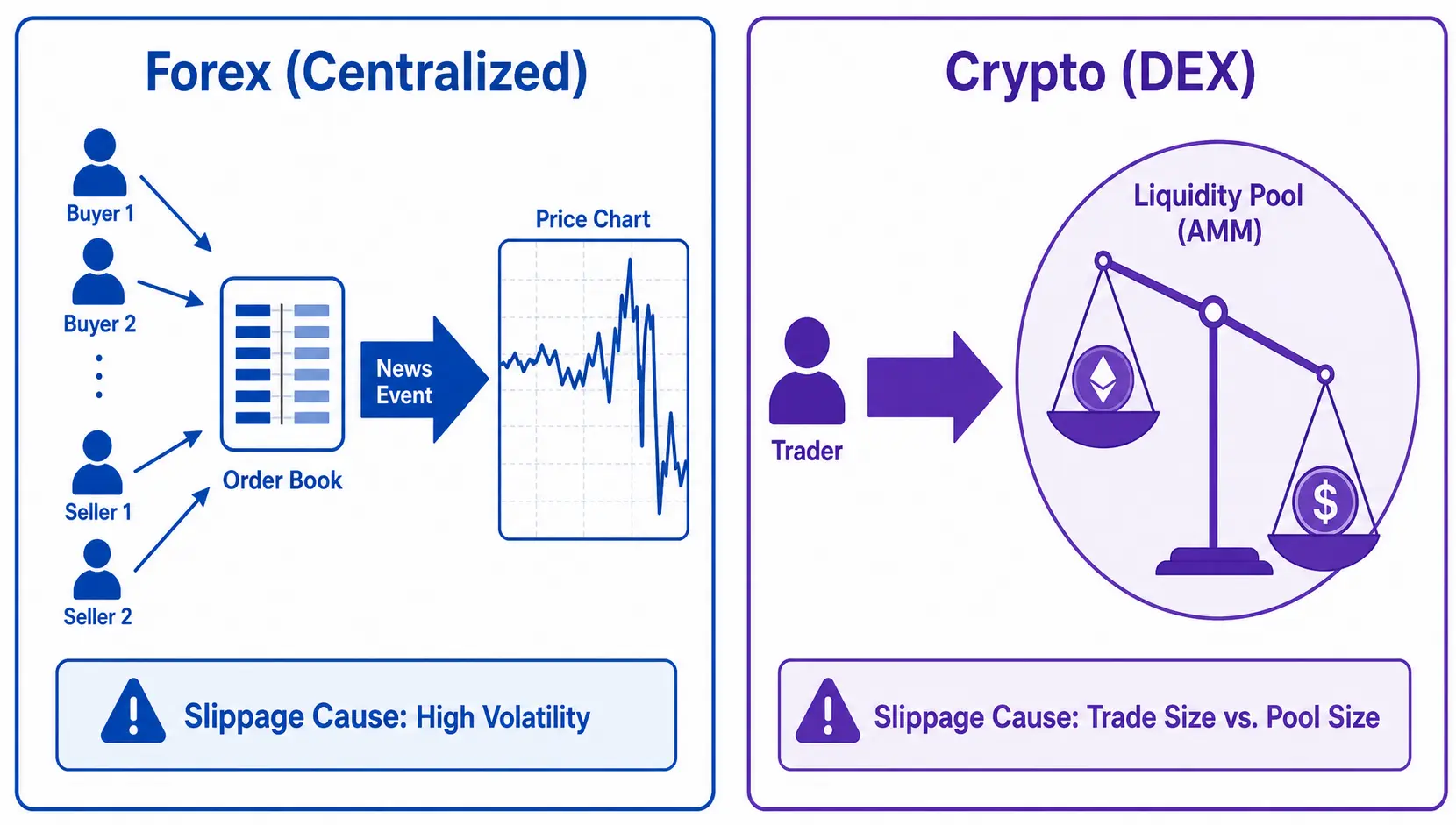
In Forex, the market for major pairs is extremely deep and liquid. Slippage is generally minimal during normal trading conditions. However, it becomes a major factor during high-impact news or ‘market-moving’ events.
The infrastructure is centralized, with execution happening through brokers and their liquidity providers.
In Cryptocurrency, especially on Decentralized Exchanges (DEXs), the landscape is entirely different. DEXs use Automated Market Makers (AMMs) instead of traditional order books.
As explained by sources like CoinDesk, the price on an AMM is determined by a formula based on the ratio of assets in a liquidity pool.
Large trades relative to the pool’s size cause significant price changes, making slippage a constant and critical factor to manage. This is why slippage tolerance settings are a standard feature on DEX platforms.
| Factor | Forex (Major Pairs) | Crypto (DEXs) |
|---|---|---|
| Primary Cause | High-impact news, low-liquidity sessions | Trade size vs. pool liquidity, high on-chain activity |
| Typical Magnitude | Low to moderate (can be extreme in crises) | Moderate to very high (structurally inherent) |
| Key Mitigation Tool | Limit orders, avoiding news | Slippage tolerance setting, using aggregators |
Frequently Asked Questions
1. What does a 2% slippage mean?
A 2% slippage means that the executed price of your trade was 2% worse than your expected price. For example, if you placed an order to buy an asset at $100, a 2% negative slippage would mean your order was filled at $102.
On a DEX, setting a 2% slippage tolerance means you are willing to accept an execution price up to 2% worse than the quoted price before the transaction is reverted.
2. Is positive slippage a good thing?
Yes, positive slippage is beneficial. It means you received a better price than you expected. For a buy order, you paid less. For a sell order, you received more.
While you should not build a strategy that relies on it, positive slippage is a welcome bonus that can occur in markets with sufficient volatility and liquidity, and it demonstrates that your broker’s execution engine is not biased against you.
3. How can I set a slippage tolerance on an exchange?
This feature is most common on Decentralized Exchanges (DEXs). In the trading interface, usually near the ‘Swap’ or ‘Trade’ button, you will find a settings icon (often a gear).
Clicking this will reveal an option to set your slippage tolerance, typically with preset values like 0.5%, 1%, or a custom input field. On centralized exchanges, you do not typically set a slippage tolerance; instead, you manage slippage risk by using limit orders instead of market orders.
4. Does slippage only happen to retail traders?
No, slippage affects everyone, including large institutions. However, institutions often have access to more sophisticated execution algorithms, direct market access (DMA), and ‘dark pools’ of liquidity designed to execute large orders with minimal price impact.
The principles are the same, but the tools to manage it are more advanced. For the retail trader, the key is to use the tools available to you wisely.
Danny’s Final Thoughts
Sources & Methodology
Danny strictly relies on primary regulatory data and authoritative official information to ensure accuracy. Data cited in this guide is sourced from:
*Disclaimer: The content of this article represents the personal views of the author (Danny) and is for educational and reference purposes only. It does not constitute professional investment or financial advice. Trading and investing involve significant risk; proceed with caution.*
